 5-star Fitness
TRANSFORM YOUR LIFE TODAY! 1(888)488-8936
Book a Consult
 5-star Fitness
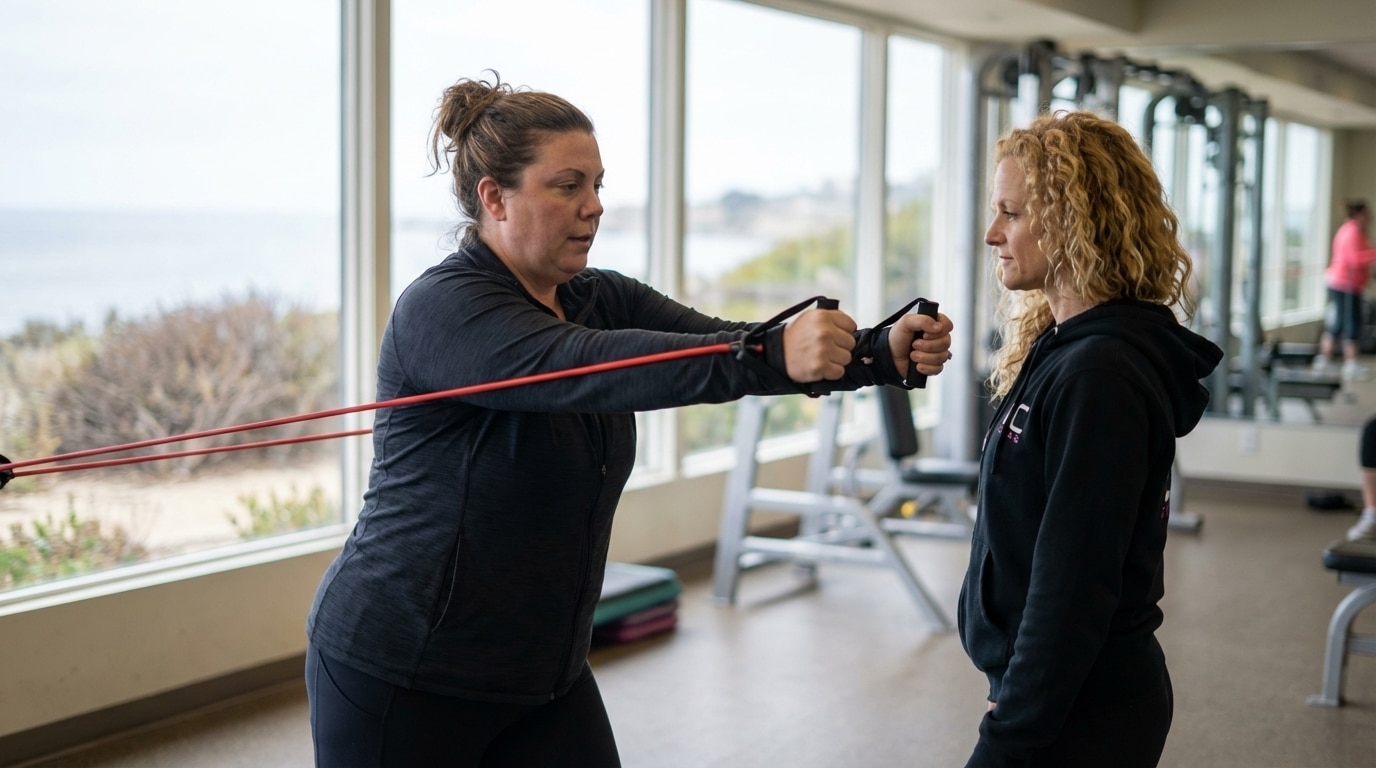
How it works: BIA devices send low-level electrical currents through your body to estimate fat, muscle, and water content. BIA is a practical, validated tool commonly used to assess body composition parameters like muscle and fat percentage in athletes, with high convenience and reliability for tracking seasonal changes and training adaptations.
|
Pros |
Cons |
Accuracy |
|
Quick, non-invasive, widely available |
Highly sensitive to hydration, affected by recent food intake |
±3-5% error |
In fitness camps: Staff typically perform BIA scans weekly during fasted morning hours to keep conditions consistent. Non-invasive bioelectrical body composition scans are used monthly or as part of treatment plans in health programs to track body fat, muscle mass, and hydration beyond the scale.
At PFC, body fat percentage from BIA feeds directly into the 17-point report card. Clients see weekly snapshots of body fat changes alongside strength, endurance, and health markers.
How it works: Trained professionals use calipers to pinch and measure skinfold thickness at 7 to 9 standardized sites. They then apply equations to estimate overall body fat percentage.
|
Pros |
Cons |
Accuracy |
|
Inexpensive, portable, effective for tracking trends |
Requires skilled technician, results depend on technique |
±3-5% error |
In fitness camps: Calipers work best for tracking changes over time rather than giving a perfect single reading. The structured environment and trained staff at fitness camps support consistent technique that most gym-goers cannot match on their own.
PFC’s body composition tracking blends caliper data with other tools inside the 17-point report card for greater precision.
Ready to experience precision tracking with expert support? Book a free consultation to see how PFC’s multi-method approach supports lasting results.
How it works: Tape measurements at key sites such as neck, waist, umbilicus, upper arm, chest, hip, and quad track inches lost or gained. These changes reveal shifts in body shape that the scale may hide.
|
Pros |
Cons |
Accuracy |
|
Simple, inexpensive, highlights “non-scale victories” |
Cannot separate fat from muscle, depends on consistent tape placement |
Reliable for trends |
In fitness camps: Body measurements every 2-4 weeks under similar conditions reveal fat loss and muscle gains in specific areas. Camps control timing and conditions so each measurement session stays comparable.
PFC tracks circumference measurements within its 17-point system. Clients often see dramatic inch loss at the waist even when the scale barely moves, while maintaining or gaining muscle in other areas.
How it works: Advanced laser technology creates a 360-degree scan and builds a detailed 3D model of your body. The system then calculates volume-based measurements and highlights posture and shape changes.
|
Pros |
Cons |
Accuracy |
|
Highly visual, precise measurements, tracks posture and symmetry |
Costly equipment, not available everywhere |
High precision for volume |
In fitness camps: 3D scanning creates 3D models for visual tracking of shape, muscle, and composition changes with high precision for businesses. Before-and-after models give powerful motivation during plateaus.
3D scanning does not sit in PFC’s standard protocol, yet it represents cutting-edge visualization. Clients focused on body recomposition rather than pure weight loss often benefit most from this technology.
How it works: Dual-energy X-ray absorptiometry uses low-dose X-rays to measure fat mass, lean muscle mass, and bone density across the body. DEXA is the gold standard for assessing body composition in athletes, though expensive and requiring technical licenses.
|
Pros |
Cons |
Accuracy |
|
Most accurate method, measures bone density, offers regional breakdown |
Higher cost, requires appointments, involves low-dose radiation |
±1-2% error |
In fitness camps: DEXA provides visceral fat, bone, and regional detail with minimal hydration impact. Camps often use it for baseline testing and long-term progress checks.
PFC offers optional DEXA scans that supplied data for the UCSD case study. Researchers confirmed that 94% of client weight loss at PFC came from fat while lean muscle stayed stable or increased.
To explore gold-standard tracking with expert guidance, book a free consultation and discuss DEXA options with the PFC team.
How it works: Functional fitness assessments measure strength and endurance through standardized tests such as plank holds, push-up counts, and mile times.
|
Pros |
Cons |
Accuracy |
|
Shows functional improvement, highly motivating, practical for everyday life |
Affected by technique and effort, does not measure body composition directly |
Reliable for tracking fitness gains |
In fitness camps: Performance tests highlight how improved body composition translates into daily function. Exercise triggers metabolic health improvements like better glucose regulation, lipid profile, and blood pressure independent of substantial weight loss.
PFC tracks plank time, push-up count, and mile time in its 17-point report card. These tests sit alongside blood markers such as LDL, HDL, triglycerides, and glucose to show cardiovascular, strength, and metabolic progress.
How it works: Leading fitness camps combine several measurement tools into a single tracking system. Clients then receive regular progress reports across many health and fitness metrics.
|
Pros |
Cons |
Accuracy |
|
Gives a complete picture, includes expert interpretation, highly motivating |
Takes time to administer, requires trained staff |
High when consistently applied |
PFC’s 17-Point System: Premier Fitness Camp leads the field with weekly report cards that track weight, body fat percentage, eight circumference measurements, blood pressure (systolic and diastolic), mile time, plank hold time, push-up count, and four blood markers (LDL, HDL, triglycerides, glucose).
|
Sample PFC Report Card |
Week 1 |
Week 4 Progress |
|
Waist (inches) |
40 |
-4 (36) |
|
Body Fat % |
35% |
-5% (30%) |
|
Plank (seconds) |
30 |
+30 (60) |
|
Mile Time |
12:00 |
-2:00 (10:00) |
|
Push-ups |
5 |
+10 (15) |
This multi-metric approach, combined with PFC’s 3-4:1 trainer-to-client ratio, ensures every metric receives expert review and recognition during weekly one-on-one sessions.
Healthy body composition ranges give context to your numbers. For women, healthy body fat often falls between 21% and 33%. Men usually target 8% to 19%.
Improvements in body composition such as increasing lean muscle mass while reducing body fat lead to a toned, stronger body even if scale weight remains similar, as muscles are denser than fat.
At PFC, clients typically lose 3 to 4 pounds per week of pure fat while maintaining or building muscle mass. These results tend to last long after camp, reflected in the 50% of annual revenue that comes from returning alumni.
Immersive fitness camps remove many variables that disrupt accurate tracking at home. The controlled environment and expert staff support consistent testing protocols and clear interpretation.
PFC’s luxury setting at the Omni La Costa Resort in Carlsbad, California, combines 4 to 5 hours of daily training with detailed health monitoring. The 450-acre campus offers Pacific coast beach workouts, Torrey Pines hikes, and other outdoor activities that support the “Think, Eat, Move” philosophy while still maintaining rigorous measurement standards.
Fasted morning measurements usually provide the most consistent results. PFC conducts weekly assessments first thing in the morning before breakfast to reduce the impact of hydration shifts and recent meals.
DEXA scans deliver the highest accuracy for single tests. The combination approach at PFC, however, offers the most complete picture over time. Weekly body fat tracking, circumference measurements, and performance tests capture changes that DEXA alone might miss between scans.
PFC’s 17 metrics exist for this exact situation. Many clients see “scale stalls” while losing inches, gaining strength, improving blood markers, and lowering body fat percentage. The report card highlights progress that a simple scale reading would hide.
GLP-1 users often lose muscle along with fat, which can create a “skinny fat” look and weaker body. PFC’s resistance training focus and protein-rich nutrition plan target muscle preservation and rebuilding so weight loss comes mainly from fat stores.
The UCSD-validated 94% fat loss rate and more than 1,200 reviews with over 90% five-star ratings highlight PFC’s approach. Unlike competitors such as Live In Fitness, Canyon Ranch, or Pritikin, PFC combines comprehensive tracking with a luxury resort setting for a highly supportive, sustainable experience.
To experience this level of tracking and coaching, book a free consultation and explore how PFC can reveal your true progress.
Effective body composition tracking goes far beyond stepping on a scale. The seven methods used by leading fitness camps, from BIA scans to multi-metric report cards, create a complete view of your transformation.
Key takeaways for your fitness journey:
Premier Fitness Camp’s 17-point weekly report card, UCSD-validated outcomes, and luxury resort environment set a high standard for body composition tracking. With 94% of weight loss coming from fat instead of muscle, PFC delivers sustainable results that typical programs rarely match.
Transform how you measure progress and how you feel about your body. Book a free consultation with Premier Fitness Camp today and see how comprehensive body composition tracking can unlock your potential.