 5-star Wellness Resort
 5-star Wellness Resort
Written by: Chris Butt, Certified Personal Trainer & Weight Loss Coach, Premier Fitness Camp | Last updated: July 27, 2026
A single boot camp session is a standalone group workout with a warm-up, main circuit, and cool-down. It fits inside a lunch break or an evening and delivers a solid cardiovascular stimulus, but it remains a single workout.
A residential boot camp program is a full-time, live-in experience lasting one week to several months. Participants eat, sleep, train, and learn on-site, accumulating 4–5 hours of structured daily training alongside nutrition education and behavioral health support. The two formats are not interchangeable. The table below highlights how they differ in duration, training volume, habit focus, and typical results.

| Aspect | Single Session | Full Residential Program |
|---|---|---|
| Duration | 45-60 minutes | typically 6 weeks to 6 months or longer |
| Daily Training Volume | One 45–60 min class, several times per week | 4–5 hours per day, Monday–Friday |
| Habit Focus | None, episodic stimulus only | Structured daily routine targeting the 66-day average habit formation window |
| Typical Results | Improved cardiovascular fitness over weeks of attendance | Average 3–4 lbs of fat loss per week; 94% of weight lost is pure fat in programs of 4+ weeks |
Local boot camp classes come in three common formats, and each one serves a different purpose.
Thirty-minute express sessions focus on core work, stretching, or beginner conditioning. They suit lunchtime schedules but deliver limited training stimulus for adults seeking noticeable body composition change.
Forty-five-minute sessions hit a practical sweet spot for busy adults 40–60. The American College of Sports Medicine (ACSM) recommends regular exercise for long-term weight-loss maintenance, and a 45-minute format supports that target without the joint load of a longer high-intensity session. For adults over 40, doing high-intensity boot camp formats four to six times per week can create a cortisol load that becomes catabolic to muscle tissue and disruptive to sleep and hormones, so both session length and frequency become meaningful health variables, not just scheduling preferences.
Sixty-minute sessions allow a more complete warm-up, strength circuit, and cool-down. A 60-minute boot camp session burns nearly 600 calories on average, which is a meaningful cardiovascular dose. It still represents a single data point in a week that needs consistent accumulation before body composition shifts.
Program length is the most consequential decision a prospective camper makes. The accumulation of daily training and structured support is what separates a short kickstart from deep, lasting change.
1 Week — Kickstart. One week removes a person from their environment, establishes a structured routine, and delivers measurable early results. It functions as a powerful proof of concept. Many clients book one week and extend on-site after experiencing the program firsthand.
2–3 Weeks — Momentum. Trainers and exercise physiologists generally report that clients see initial physical changes within four to six weeks and measurable results within eight to twelve weeks. Two to three weeks begins to close that gap meaningfully, especially when training volume reaches 4–5 hours per day instead of 3–4 hours per week.
4 Weeks — Fat-Loss Transformation. Four weeks is the threshold at which case study data was collected. Participants who stayed four or more weeks and received DEXA scans showed that 94% of their total weight loss was purely fat, compared to the 60/40 fat-to-muscle ratio typical of standard dieting programs. Lean muscle mass was preserved or increased. This matters for adults 40–60, because muscle preservation directly supports metabolic rate and long-term weight maintenance.
8–12 Weeks — Deep Habit Change. Research published in the European Journal of Social Psychology found that exercise habit formation takes an average of 66 days. The popular 21-day habit idea understates the actual timeline for exercise to feel automatic instead of forced. Eight to twelve weeks covers that full window, and behavioral health coaching, nutrition education, and community reinforcement compound the effect. In 12-month behavioral weight-loss programs, roughly 20–25% of participants reach peak weight loss by month 4 and 43–52% by month 6, with the remainder reaching it later, and an 8–12 week residential program places participants squarely inside that window with expert support at every step.
Call (888) 488-8936 or discuss which program length fits your goals with a Premier Fitness Camp advisor.
The right stay length depends on the specific outcome a person wants. Most decisions cluster around three goals: significant weight loss, automatic exercise habits, or rebuilding muscle after GLP-1 medication. The table below connects each goal to a recommended stay and realistic outcome expectations.
| Goal | Recommended Stay | Expected Outcome |
|---|---|---|
| Weight Loss (40–70 lbs) | 4–8 weeks minimum | Average 3–4 lbs of fat loss per week; case study data showed the 94% pure-fat result at 4+ weeks |
| Habit Formation | 8–12 weeks | Covers the ~66-day average habit formation window; exercise shifts from effortful to automatic |
| GLP-1 Exit / Muscle Rebuilding | 4–8 weeks | Resistance-inclusive training preserves and rebuilds lean mass; combined diet-and-exercise programs preserve lean mass while reducing fat mass in older adults; metabolic rate stays protected |
The 3–4 lbs per week average applies to a typical Reset Seeker, an adult 40–60 with 40–70 lbs to lose. Individual results vary based on hormones, medications, and baseline biology. Weekly tracking covers 17 data points, including weight, body fat, seven body measurements, blood pressure, blood glucose, cholesterol markers, mile time, push-up count, and plank hold. This breadth of data makes progress visible even when the scale moves more slowly than expected.
The most important structural difference between a residential program and a local gym boot camp is not the exercises performed. The real gap lies in daily training volume and the removal of competing priorities.
Local boot camp classes typically run 30–60 minutes and meet on multiple days per week for a committed participant. In contrast, residential clients train 4–5 hours per day, five days per week, often accumulating in a single morning what a local gym member completes over an entire week.

Beyond volume, the residential model removes the friction that derails most adults 40–60: meal decisions, work interruptions, family obligations, and the lack of expert accountability. Every meal is prepared by on-site wellness chefs and designed by registered dietitians, which eliminates the decision fatigue that often leads to overeating or skipped meals at home. That same expert structure carries into training. Every session is led by trainers holding bachelor's or master's degrees at a 3–4:1 client-to-trainer ratio, which allows personalized attention and low-impact modifications for every exercise. Supervised small-group training achieves markedly higher 12-month retention than conventional gym programs, and the 50% alumni return rate reflects that advantage at the residential level.
The setting matters too. The program operates exclusively at the Omni La Costa Resort & Spa in Carlsbad, California, a 450-acre property in North San Diego County with year-round moderate temperatures, dedicated on-site facilities, beach workouts on the Pacific coast, and hikes through Torrey Pines and Batiquitos Lagoon. Three spa treatments per week are included. This is not incidental luxury. Recovery, sleep quality, and stress reduction are measurable inputs to body composition outcomes for adults in midlife.
The program works with clients ranging from 400-pound beginners who can walk only 250 feet to seasoned athletes who train four times per week. Every class is structured so that every fitness level participates and benefits. Trainers offer modifications, progressions, and low-impact alternatives for every exercise in every session.
Progress rarely follows a straight line. Plateaus between weeks three and six are common and expected. Adaptive thermogenesis, hormonal shifts in leptin and ghrelin, and reduced non-exercise activity thermogenesis all contribute to stalls that have nothing to do with effort or commitment. Weekly report card reviews with a trainer reframe these moments using all 17 tracked data points, because strength, blood pressure, glucose, and measurements often improve significantly even when the scale pauses.
Post-program support includes virtual coaching, personalized meal plans, fitness programming for home, and ongoing communication with staff. Clients can email their trainers at any time after leaving, a level of access made possible by low staff turnover and the same team year after year. That continuity creates trust and accountability that extend well beyond checkout, which helps drive the 50% alumni return rate and its 1,200+ reviews with a 90%+ five-star rating.
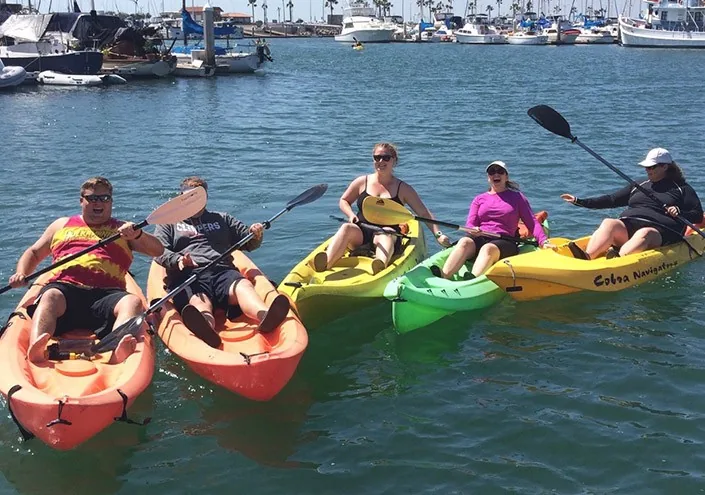
As Scott, a client, noted: "I signed up for two weeks and stayed for eight. The facilities and staff are top notch."
Discuss your fitness level and timeline with a Premier Fitness Camp advisor to see what a personalized program would look like for you. Call (888) 488-8936 or visit the link to get started.
Single boot camp sessions run the standard 45 to 60 minutes, structured around a warm-up, main circuit, and cool-down. Local programs typically run 4 to 6 weeks, with classes meeting several times per week. Residential boot camp programs typically last 6 weeks to 6 months or longer, with participants living on-site and training 4–5 hours per day. These are fundamentally different formats with different outcomes.
Value depends on format and duration. Single sessions and short local programs can improve cardiovascular fitness but rarely produce lasting weight loss because they do not address nutrition, behavioral habits, or the daily training volume needed for meaningful body composition change. Residential programs of four or more weeks, which combine structured daily training, nutrition education, and behavioral health support, produce significantly stronger and more durable outcomes. Case study data found that 94% of weight lost by participants in 4+ week programs came from fat, compared to the 60/40 fat-to-muscle ratio typical of standard dieting.
For meaningful fat loss, four weeks is the evidence-supported minimum in a residential setting. For habit formation, the 66-day average discussed earlier applies, which makes 8–12 week programs the most reliable path to lasting behavioral change. Shorter stays deliver real value as kickstarts, but deeper transformation that prevents weight regain requires enough time to rewire daily patterns around food, movement, and stress.
Short boot camps, whether single sessions or 1–2 week programs, offer limited habit formation, no sustained nutrition education, and insufficient training volume to produce meaningful body composition change for most adults 40–60. High-intensity formats repeated too frequently also carry a cortisol and joint load that can be counterproductive for this age group. The primary limitation is structural, because a short program ends before the behavioral and physiological adaptations needed for long-term success have time to take hold.
Many people lose weight during residential programs with structured nutrition. Clients with 40–70 lbs to lose average 3–4 lbs of fat loss per week. Critically, case study data showed the same 94% pure-fat composition mentioned earlier, so lean muscle mass is preserved or increased and resting metabolic rate stays protected. This matters because metabolic damage from muscle loss is a primary reason weight regain occurs after programs focused solely on calorie restriction. Weight loss during a local boot camp class is possible but more modest and highly dependent on what participants eat outside of sessions.
The 66-day habit formation window discussed earlier applies here, with individual variation ranging from several weeks to several months. A 21-day minimum is often cited as a starting point, but it understates the full timeline. At PFC, the combination of structured daily routine, behavioral health coaching from licensed psychologists, nutrition education from registered dietitians, and community accountability accelerates this process. Most clients targeting lasting lifestyle change benefit from a minimum of 4 weeks, with 8–12 weeks delivering the most durable outcomes.
Single boot camp sessions, 45–60 minutes several times per week, build cardiovascular fitness and offer a valid starting point. For adults 40–60 seeking sustainable fat loss, muscle preservation, and genuine lifestyle change, the evidence points toward immersive residential programs of four weeks or more.
The residential model at the Omni La Costa Resort in Carlsbad, California delivers 4–5 hours of daily expert-led training, registered dietitian-designed meals, behavioral health support, and 17-point weekly progress tracking. All of this unfolds in a luxury setting that supports recovery and long-term commitment. Case study data validating 94% pure fat loss, a 3–4:1 trainer ratio, 1,200+ reviews at a 90%+ five-star rating, and a 50% alumni return rate reflect a program built around outcomes, not optics.
The right duration is the one that matches your goal and your life. A conversation with the team can clarify that fit. Start your personalized program planning today, or call (888) 488-8936 to speak with a team member directly.