 5-star Wellness Resort
 5-star Wellness Resort

Written by: Chris Butt, Certified Personal Trainer & Weight Loss Coach, Premier Fitness Camp
Losing fat, not just water weight, in the shortest safe timeline requires executing seven inputs in sequence. Whether your goal is 10 pounds or 40, these steps stay the same, while the timeline and deficit size adjust to your starting point.
Start by measuring body weight averaged across three mornings under consistent conditions, waist and hip circumference, body fat percentage if available, resting heart rate, and fasting blood glucose. Without this baseline, you have no reference point to separate real progress from normal fluctuation. Every client begins with a comprehensive health assessment covering blood work, vital signs, body composition, BMI, and a fitness test, creating 17 data points that form the foundation of a personalized plan.
A daily deficit of 500–750 kcal is commonly recommended for weight loss, although actual weekly fat loss often runs slower than the classic 1–1.5 pound prediction because metabolism adapts. Protein targets during a caloric deficit should fall between 1.6 and 2.2 grams per kilogram of body weight per day, distributed across 3–4 meals of 25–40 grams each to maximize muscle protein synthesis. The table below shows how these calorie and protein targets translate into daily ranges at three common body weights.
| Body Weight | Daily Calorie Deficit Target | Daily Protein Target (1.6–2.2 g/kg) |
|---|---|---|
| 150 lb (68 kg) | 500–750 kcal/day | 109–150 g/day |
| 180 lb (82 kg) | 500–750 kcal/day | 131–180 g/day |
| 220 lb (100 kg) | 500–750 kcal/day | 160–220 g/day |
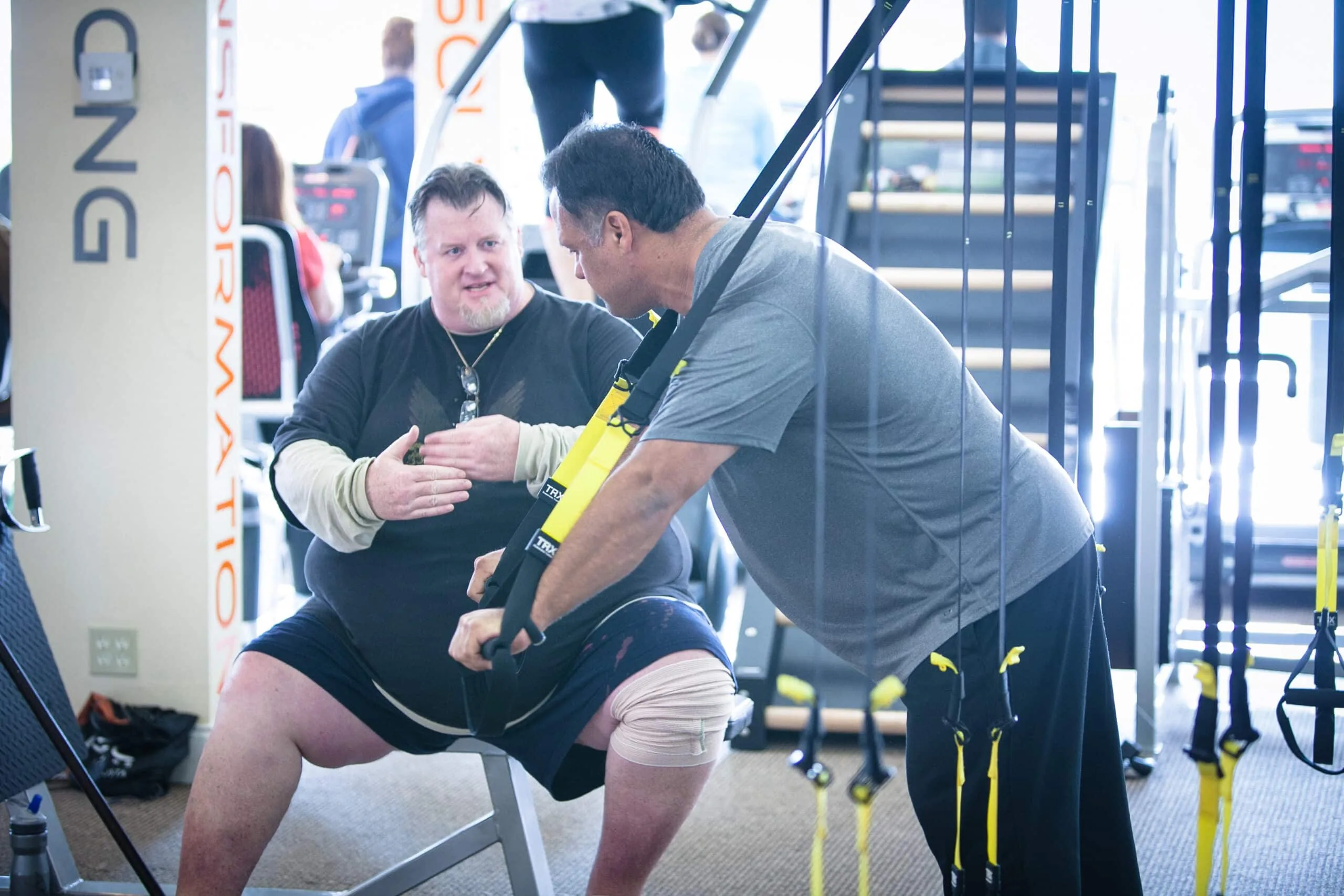
Guidelines recommend resistance training that targets all major muscle groups at least two days per week. Adding resistance training to caloric restriction helps preserve lean mass compared to diet-only approaches. Meeting the minimum is straightforward, but going beyond it accelerates results, which is why clients train 4–5 hours per day, five days per week, with a 3–4:1 trainer-to-client ratio that keeps every session focused, safe, and appropriately intense.
A 2026 systematic review and meta-analysis of 18 randomized controlled trials found that approximately 8,500 daily steps supported long-term weight-loss maintenance rather than additional weight loss during the active phase. A target of 10,000 steps adds meaningful non-exercise activity thermogenesis to your daily deficit without placing extra stress on joints.
When dieters got adequate sleep, more than half of the weight they lost was fat; when they cut back on sleep, only one-fourth of their weight loss came from fat. A 2022 study found that extending sleep by 1.2 hours per night reduced calorie intake by 270 calories per day spontaneously. Licensed psychologists and behavioral health coaches address the emotional and psychological dimensions of this process, a component missing from most competing programs.

Daily weight readings reflect hydration, glycogen, sodium, sleep, hormones, and the last meal far more than actual fat change, while a seven-day rolling average provides a reliable signal. Weigh daily at the same time under the same conditions, then evaluate the weekly average, not any single reading, to decide whether the plan needs adjustment.
Analyses of the National Weight Control Registry have found that successful long-term maintainers typically eat a relatively low-fat diet, eat breakfast almost every day, weigh themselves regularly, and engage in about 1 hour per day of physical activity. The habits built during the wedding-prep phase, including protein targets, step counts, resistance training, and weekly weigh-ins, are the same habits that prevent rebound afterward. With all seven steps now defined, the framework is complete, and the next phase is precise execution with consistent accountability.
Ready to start your transformation? Book a free consultation with the Premier Fitness Camp team to build your seven-step plan with expert guidance. Call (888) 488-8936 or visit our consultation booking page.
Long-term success after the wedding depends on three structural elements: SMART goal architecture, a sustainable nutrition model, and periodized training. Together, these pieces turn a short-term deadline into lasting change.
SMART goals applied to wedding weight loss look like this: “I will lose 20 pounds of fat over 16 weeks by maintaining a 600-calorie daily deficit, consuming 160 grams of protein per day, completing three resistance training sessions per week, and averaging 10,000 steps daily.” That goal is specific, measurable, achievable, relevant, and time-bound, and every variable in it can be tracked weekly.
The plate method provides a practical nutrition framework that does not require calorie counting at every meal. Fill half the plate with non-starchy vegetables, one quarter with lean protein, and one quarter with complex carbohydrates. Registered dietitians and wellness chefs design every meal around this structure, using fresh farm-to-fork ingredients prepared on-site at Omni La Costa Resort, which contrasts with programs that deliver pre-packaged food or rely on off-site catering.

Periodization, or planned variation of training volume and intensity over time, prevents the adaptation plateaus that stall most self-directed programs. As body weight decreases, resting metabolic rate declines because a smaller body requires fewer calories, so the same calorie deficit that produced 2 pounds of loss per week at 220 pounds may only produce half a pound at 180 pounds unless intake is reduced or activity is increased. A periodized plan adjusts both variables proactively instead of waiting for progress to stall.
Three challenges derail many wedding weight loss attempts before the goal is reached: plateaus, motivation dips, and muscle loss associated with GLP-1 medications. Addressing each one directly keeps progress moving.
Plateaus occur when metabolic adaptation begins after 8 to 12 weeks of dieting, as total daily energy expenditure decreases through reductions in non-exercise activity thermogenesis and thyroid hormone output. The evidence-based response is not to slash calories further but to increase daily steps by 1,500–2,500, add one resistance training session per week, or implement a brief diet break at maintenance calories for 1–2 weeks before resuming the deficit.
Motivation dips are predictable and manageable. Licensed psychologists run group workshops on emotional eating, limiting beliefs, and behavioral triggers, which are root causes that no calorie app can resolve. The 3–4:1 trainer-to-client ratio means no client is anonymous or unaccountable, and every session is observed, coached, and adjusted in real time across several hours of daily training.
GLP-1 medications create a specific body-composition risk. Higher protein intake combined with resistance training helps preserve lean body mass during caloric restriction. For clients on GLP-1 medications, protocols shift to emphasize resistance training and higher protein targets, protecting the lean mass and metabolic rate that medication-only approaches often erode.
A scale reading is one data point. Seventeen metrics are tracked each week to create a full picture of health progress that continues to improve even during weeks when the scale is flat. The table below breaks these metrics into categories, showing what gets measured, how often, and why each category reveals changes that scale weight alone can miss.
| Category | Metrics Tracked | Tracking Frequency | Why It Matters |
|---|---|---|---|
| Body Composition | Weight, body fat percentage | Weekly (7-day average for weight) | Rolling averages eliminate hydration and glycogen noise |
| Circumference Measurements | Neck, waist, umbilicus, upper arm, chest, hip, quad | Weekly | Detect recomposition the scale misses |
| Cardiovascular Health | Blood pressure (systolic and diastolic), LDL, HDL, triglycerides, glucose | Weekly / per assessment | A 5% weight reduction improves blood pressure, cholesterol, and blood sugar |
| Performance Markers | Mile time, plank hold duration, push-up count | Weekly | Performance continues rising on weeks when weight is flat, confirming adaptation |
Weekly one-on-one report card reviews with a trainer ensure every win, not just scale movement, is recognized and used to calibrate the following week’s plan. Optional DEXA scans provide the gold-standard body-composition measurement used in the UCSD case study that validated the high proportion of pure fat loss.
For goals of 30 pounds or more, a multi-month structured timeline offers the only approach that aligns with preserving lean mass and metabolic health. The NIDDK recommends aiming for 5% of starting body weight over 6 months as a good initial goal. The table below maps a 6-month timeline, showing how fat loss, focus areas, and program elements evolve as your body adapts.
| Month | Expected Fat Loss (at 1–2 lb/week) | Key Focus | Program Element |
|---|---|---|---|
| Month 1 | 4–8 lb fat (plus initial water loss) | Baseline, habit formation, protein targets | Comprehensive health assessment, nutrition education, resistance training foundation |
| Month 2 | 4–8 lb fat | Consistency, step count, sleep protocol | Weekly report card reviews, behavioral health workshops, periodized training |
| Month 3 | 4–8 lb fat | Plateau management, deficit recalibration | DEXA scan reassessment, calorie and protein target adjustment, habit stacking |
| Month 4–6 | 16–24 lb additional fat | Maintenance skill-building, post-wedding protocol | Cooking demonstrations, home meal planning, virtual coaching, post-camp support |
Habit stacking, which means attaching new behaviors to existing routines, turns short-term compliance into permanent lifestyle change. The “Think, Eat, Move” curriculum teaches clients not just what to do but why it works and how to repeat it at home, which helps explain why 50% of annual revenue comes from returning alumni who have maintained their results and return for continued growth.
Ready to start your transformation? Book a free consultation with the Premier Fitness Camp team to build a multi-month wedding timeline with expert support. Call (888) 488-8936 or schedule your personalized consultation online.
The answer depends on how much time remains before the wedding date and your starting body composition. At a sustainable rate of 1 to 2 pounds of fat per week, the range supported by the CDC and Harvard Health Publishing, a person with 12 weeks until the wedding can expect to lose 12 to 24 pounds of actual fat. Clients with 40 to 70 pounds to lose typically average 3 to 4 pounds per week during an immersive stay, reflecting the compounding effect of several hours of daily training, precise nutrition, and behavioral health support operating together. The UCSD case study confirmed that the vast majority of that weight loss came from fat rather than muscle.
Aggressive caloric restriction without adequate protein and resistance training reliably produces significant lean muscle loss. Research shows that diet-only approaches result in roughly 24% of total weight lost coming from lean tissue. That proportion drops to approximately 11% when structured exercise is added. In practice, a person losing 20 pounds through diet alone may lose nearly 5 pounds of muscle alongside 15 pounds of fat, while someone combining a moderate deficit with resistance training and the earlier protein target loses the same 20 pounds with muscle largely intact. Muscle loss also lowers resting metabolic rate, which becomes a primary driver of post-wedding weight regain.
Protein is the single most important dietary variable for preserving lean mass during a caloric deficit. Current evidence supports the protein target discussed earlier (1.6–2.2 g/kg/day), distributed across 3 to 4 meals of 25 to 40 grams each. For a 180-pound (82 kg) person, that translates to approximately 131 to 180 grams of protein per day. Higher protein intake also increases satiety, reduces cravings, and supports the thermic effect of food, which makes the caloric deficit easier to sustain. Registered dietitians design every meal to hit these targets using fresh, whole-food ingredients prepared on-site by wellness chefs.
Post-wedding weight regain depends on whether the habits built during the loss phase remain sustainable in normal life. Programs that rely on extreme restriction, meal replacements, or environments that cannot be replicated at home often produce rebound because the conditions for success disappear when the program ends. The approach here is designed around transferability. Cooking demonstrations teach clients to prepare nutritionist-designed meals at home, behavioral health workshops address the emotional triggers that drive overeating, and post-camp virtual coaching maintains accountability after departure. The 50% alumni return rate reflects both the quality of the experience and the fact that clients leave with skills, not just short-term results.
The comparison is not between doing it alone and doing it at an immersive program, but between the outcomes each approach reliably produces. Most people working out independently average 3 to 4 hours of exercise per week. Clients in the immersive setting train for several hours per day, five days per week, supported by a 3–4:1 trainer-to-client ratio, licensed psychologists, registered dietitians, wellness chefs, and a structured behavioral curriculum. The UCSD case study result mentioned earlier, with lean muscle preserved or increased, is not achievable through a standard gym membership or self-directed diet. For someone with a fixed wedding deadline, significant weight to lose, and a history of prior attempts that did not hold, the immersive environment removes many of the variables that cause self-directed programs to fail.
A data-driven wedding weight loss plan stays simple but precise. It relies on a defined calorie deficit, the earlier protein target, resistance training two to four times per week, 10,000 daily steps, adequate sleep, and weekly tracking across multiple metrics instead of scale weight alone. Executed correctly, this framework produces 1 to 2 pounds of fat loss per week while preserving lean muscle and metabolic rate, which creates results that last beyond the wedding day.
Premier Fitness Camp delivers every element of this framework inside a luxury resort environment at Omni La Costa in Carlsbad, California, with on-site wellness chefs, licensed psychologists, registered dietitians, and highly educated trainers maintaining a close trainer-to-client ratio across intensive daily training. The UCSD case study validates the outcome, with a very high proportion of weight loss coming from fat, lean muscle preserved or increased, and metabolic rate protected. With over 1,200 reviews, a 90%+ five-star rating, and 50% of annual revenue coming from returning alumni, the long-term results are clear.
Ready to start your transformation? Book a free consultation with the Premier Fitness Camp team to discuss your wedding timeline, your goals, and how the program can help you achieve lasting results. Call (888) 488-8936 or book your consultation online to schedule your personalized consultation today.