 5-star Wellness Resort
 5-star Wellness Resort

Written by: Chris Butt, Certified Personal Trainer & Weight Loss Coach, Premier Fitness Camp | Last updated: August 27, 2026
A luxury spa focuses on how a guest feels at checkout. A transformative health resort focuses on how that guest lives in the year that follows. That distinction between end-of-week feeling and year-long follow-through defines the line between wellness retreats and outcome-focused programs. To evaluate whether a program delivers lasting transformation or temporary relief, assess it across six dimensions that directly shape post-stay outcomes: clinical rigor and measurable results, structured program design with daily education, environment and facilities, personalization and staff quality, cost transparency and value, and aftercare and post-stay support.
California health resort pricing in 2026 spans a wide range based on program type, inclusions, and location. Detox-focused programs such as We Care Spa in Desert Hot Springs offer structured liquid-cleanse packages that include accommodations, daily classes, and colon hydrotherapy. Optional treatments such as massages, facials, and energy healing are booked separately at additional cost. Results-oriented fitness programs occupy a different tier entirely.
The Ashram California charges about US $6,000 per person all-inclusive for one week of intensive daily hiking, yoga, core work, and resistance training led by orthopedic specialists, with no spa, no alcohol, and no negotiation on intensity. Premier Fitness Camp operates at a comparable price point of approximately $6,000 per week, with a broader all-inclusive structure. The rate covers luxury accommodations at the Omni La Costa Resort in Carlsbad, all gourmet meals prepared by on-site wellness chefs, every fitness class and educational workshop, three spa treatments per week, comprehensive health assessments, and weekly 17-point report card tracking.

Reviewers who have compared programs often flag hidden costs at competitor properties, including spa treatments, off-site excursions, and nutrition consultations billed separately. Programs that lack pre-visit consultations or publish no clinical outcomes usually prioritize setting and amenities over measurable results. Premier Fitness Camp offers 0% financing for up to six months with no down payment, and the program may qualify as a tax-deductible medical expense.
Schedule a consultation to get a clear breakdown of what is included and how the investment compares to the long-term cost of approaches that do not produce lasting results. Call (888) 488-8936 or schedule online.
Serious outcome-focused programs require minimum stays of seven nights because measurable adaptations in sleep, recovery, glucose response, and muscular work capacity need eight to ten days of consistent rhythm before they take hold. One week delivers a strong metabolic and behavioral kickstart. Two weeks build real momentum. Three weeks mark the point where habit change begins to consolidate. High-intensity lifestyle interventions with frequent contact can produce up to 8 kg of average weight loss at six months, with sustained benefits when ongoing support continues beyond the initial program.
The average client stays 11 days. Many guests book a single week and extend on-site after experiencing the results firsthand. Scott, a guest, wrote, “I signed up for two weeks and stayed for eight. The facilities and staff are top notch.” Extended stays of up to several months are available for clients pursuing deeper transformation.
Programs that repeat a focused set of daily practices around emotional regulation and habit formation deliver measurable benefits lasting up to 10 weeks after departure, unlike high-variety intensive schedules that guests cannot replicate at home. The “Think, Eat, Move” curriculum follows this principle. Every skill taught, from cooking demonstrations to behavioral health workshops, is designed to transfer directly to daily life after departure.

To find the right stay length for your goals, talk with a program advisor. Call (888) 488-8936.
Staff turnover appears as one of the most consistent complaints in 2026 California health resort reviews. Guests who return to a program expecting familiar faces and find an entirely new team lose the continuity that makes extended or repeat stays effective. Programs that lack verifiable staff credentials or post-visit support often prioritize setting and luxury amenities over measurable results, which makes staff quality and education a primary evaluation criterion rather than a luxury add-on.
The Wellness Tourism Association’s Six Principles for Responsible Retreats framework states that retreat leaders should possess relevant training, certifications, and experience, and maintain transparency regarding qualifications and ongoing professional development. At Premier Fitness Camp, trainers hold bachelor’s and master’s degrees at minimum, and many have been with the program since its founding. The 3–4:1 client-to-trainer ratio means every guest receives individualized attention in every session, rather than a generic group class.
Returning alumni reconnect with the same trainers, dietitians, and behavioral health coaches year after year. That continuity is a structural feature, not a marketing promise. Irene Tchaikovsky, a guest, described the result: “What began as a simple one-week reboot has transformed into a complete lifestyle shift. The program equips you with the knowledge, tools, and support to make meaningful and sustainable changes.”
Connect with the team to ask about staff tenure and credentials before you commit. Call (888) 488-8936.
The education gap is the most common failure pattern across California health resort reviews. Guests lose weight during their stay and regain it within months because no one taught them how to sustain the change. A 2014 meta-analysis found that combined diet, exercise, and behavioral programs produced significantly greater weight loss than diet-only approaches at 12 months, and that interventionists must be trained health professionals following validated weight management protocols.
The “Think, Eat, Move” curriculum addresses all three dimensions at the same time. Registered dietitians design every meal and lead nutrition workshops on macros, portion control, healthy shopping, and meal planning. Wellness chefs conduct cooking demonstrations that show guests how to prepare the same quality of food at home. Licensed psychologists and behavioral health coaches run group workshops on emotional eating, triggers, and limiting beliefs, with one-on-one counseling available for deeper issues. Exercise for Weight Management ranked number three in ACSM’s 2026 Worldwide Fitness Trends, reflecting evidence that continued structured exercise helps maintain greater fat loss and preserve lean mass. Clients train four to five hours per day, five days a week, with every class structured for all fitness levels.
A UCSD case study of participants who stayed four or more weeks found that 94% of total weight loss was purely fat, compared to the 60/40 fat-to-muscle ratio typical of standard dieting programs. Most long-term clients not only maintained lean muscle stores but increased them during their weight loss, which protects the resting metabolic rate that determines whether results last.
Post-stay support is the area where most California health resorts fall short. Even satisfied guests often describe behavioral resets rather than dramatic transformation at wellness retreats and struggle to maintain consistency without the structured environment. Outcome-focused longevity programs treat year-long post-program support, including follow-up calls, data transmission to the guest’s home physician, and written progress reports, as a core part of the offering.
Premier Fitness Camp’s aftercare includes virtual coaching for ongoing accountability, personalized meal plans for home, fitness programming, and direct email access to trainers after departure. Fifty percent of annual revenue comes from returning alumni, which reflects genuine satisfaction and lasting results rather than marketing alone. Lin Vela, a three-time guest, wrote, “Their trainers are knowledgeable, inspiring and make hard work fun.” That kind of loyalty grows from aftercare, not just the in-stay experience.
Applying the six-criteria framework across the California health resort landscape reveals a clear split between relaxation-oriented programs and results-driven ones.
Premier Fitness Camp scores strongly across all six criteria for guests whose primary goal is measurable, lasting transformation. The UCSD case study data, 17-point weekly tracking, licensed multidisciplinary staff, “Think, Eat, Move” curriculum, Omni La Costa Resort setting, and structured aftercare create a combination that no competitor currently matches in full.
Live In Fitness promotes lower price points but places guests in a residential home environment where they drive to access basic gym facilities and receive food delivered from off-site. Staff turnover is higher, and the Arizona location brings extreme heat for half the year, which limits outdoor training options.
Canyon Ranch has decades of operational history and a premium price tag. Its strength lies in the retreat experience, spa, and general wellness programming. Guests seeking a structured, results-driven weight loss program with clinical tracking and behavioral education will find Premier Fitness Camp’s program design more aligned with those goals.
Unite Fitness Retreat operates from a hotel in downtown Salt Lake City, Utah, where cold winters constrain outdoor programming. Guests access additional amenities by driving off-site, which fragments the immersive experience that supports behavioral change.
Pritikin, based in Florida, is a longevity center with a strong medical foundation and a slower pace suited to an older demographic. Its humid Florida climate and narrower activity range, compared with beach workouts, Pacific coast hikes, paddleboarding, tennis, pickleball, and golf, make it a different fit for active adults in the 40–60 age range.
Civana Wellness Resort and Spa and Canyon Ranch both prioritize the retreat and relaxation dimension of wellness over structured fitness and weight loss programming. Guests seeking measurable body composition outcomes rather than a restorative vacation will find those programs less aligned with their goals.
Hilton Head Health, also in Florida, focuses on weight loss and requires guests to find accommodations nearby and be transported to the central facility daily. The logistical separation between lodging and programming reduces the immersive continuity that Premier Fitness Camp delivers by housing training, education, dining, spa, and accommodations within the 450-acre Omni La Costa Resort campus.
Beyond traditional weight loss seekers, a growing segment of health resort guests are people transitioning off GLP-1 medications. Retention for anti-obesity medication users often declines over time, so most GLP-1 users eventually discontinue without a structured plan for what comes next. The consequences are well documented. Muscle loss during pharmacologic weight loss reduces resting metabolic rate, which makes weight regain faster and harder to reverse. ACSM’s 2026 trends data confirms that continued exercise during pharmacologic treatment helps maintain greater fat loss and preserve lean mass.
Premier Fitness Camp does not discourage GLP-1 use. The program adjusts protocols for GLP-1 graduates to emphasize resistance training, elevated protein intake, and sustainable nutrition habits that maintain results after medication is reduced or stopped. The muscle-preserving outcomes documented in the UCSD case study are directly relevant to this population, whose primary risk is metabolic damage from muscle loss rather than insufficient weight reduction.
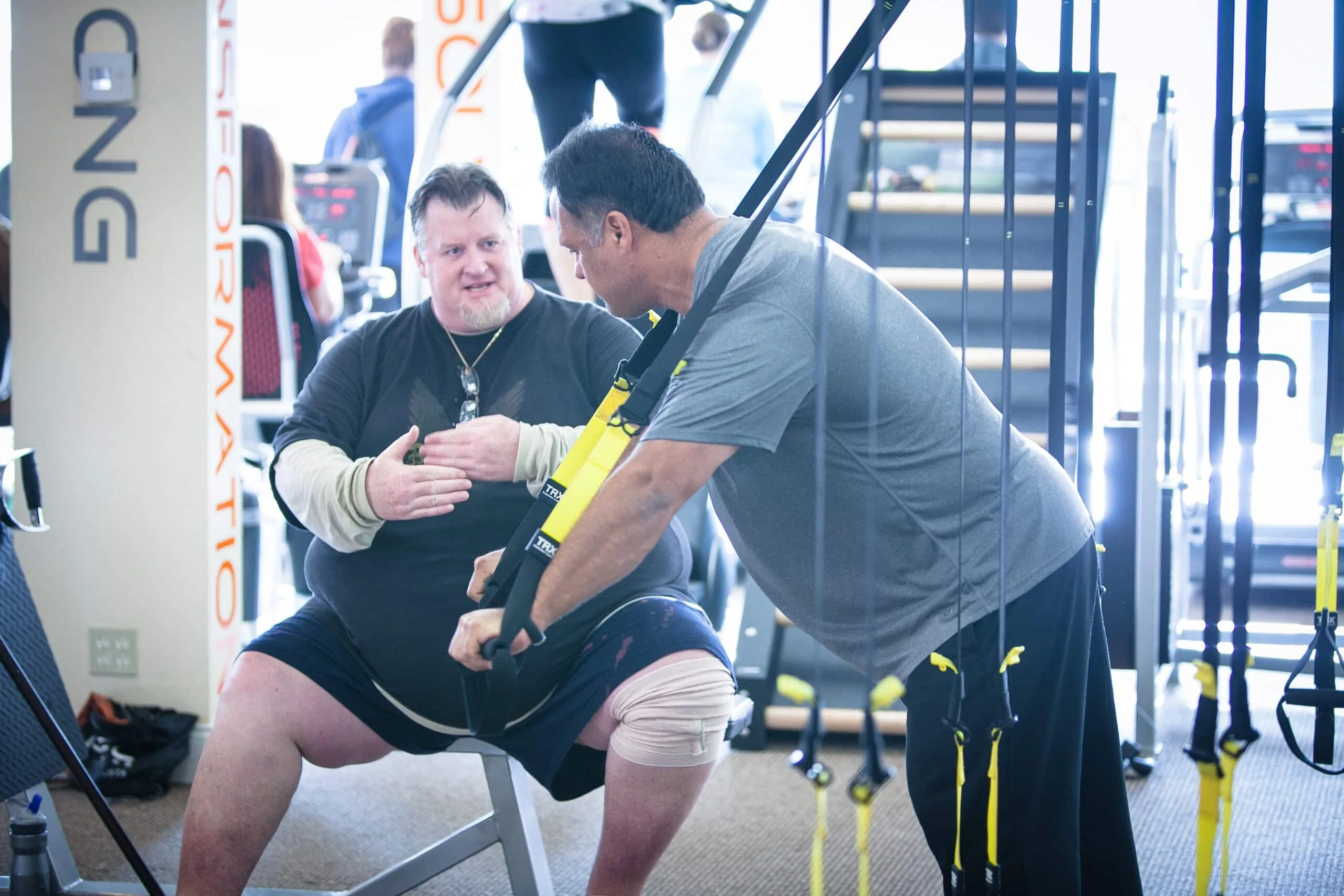
ACSM’s 2026 trends report notes that programs labeled “low intensity,” “functional,” or “active aging” attract more participants than those called “senior fitness,” which highlights the need for age-appropriate, accessible programming that emphasizes resistance training, balance, and low-impact cardio. Premier Fitness Camp reflects this directly. Every class is designed so that a 400-pound guest who can walk only 250 feet and a seasoned athlete who trains four times a week can both participate and progress in the same session.
The 3–4:1 client-to-trainer ratio makes individualized modification possible in real time. Low-impact alternatives are available for guests with orthopedic limitations. The comprehensive health assessment on day one, covering blood work, body composition, vital signs, and a fitness test across 17 data points, ensures that every program is built around the individual’s actual baseline rather than a generic template. Julie Robinson, a guest, noted, “The trainers, the staff, the Chefs! All amazing and work with all levels.”
Costs vary significantly by program type. Detox and cleanse-focused programs in California can range from a few thousand dollars for a basic package, with many treatments and amenities billed separately. Results-oriented fitness programs with all-inclusive structures in California typically cost a few hundred to roughly two thousand dollars per month depending on format and frequency. As detailed in the cost section above, Premier Fitness Camp operates at approximately $6,000 per week with a fully all-inclusive structure and no hidden fees for spa treatments, nutrition consultations, or facility access. Zero-percent financing for up to six months with no down payment is available, and the program may qualify as a tax-deductible medical expense.
Duration of results depends primarily on what the program teaches, not just what it delivers during the stay. Programs that focus only on exercise and calorie restriction during the stay, without teaching nutrition, behavioral habits, and home-compatible movement, tend to produce results that fade within weeks to months. Programs that combine structured fitness with nutrition education, behavioral health support, and structured aftercare produce results that compound over time. The “Think, Eat, Move” curriculum is designed so that every skill, including cooking, macro awareness, emotional eating recognition, and exercise habit formation, transfers directly to daily life after departure. The UCSD case study documented muscle-preserving weight loss, which protects the metabolic rate that supports long-term maintenance. The 50% alumni revenue share reflects sustained engagement rather than one-time visits.
Staff quality has three components: credentials, continuity, and ratio. Credentials matter because registered dietitians, licensed psychologists, and certified trainers with bachelor’s or master’s degrees deliver different outcomes than generalist wellness coaches. Continuity matters because returning guests need to work with staff who know their history, limitations, and goals, and high turnover destroys this. Ratio matters because a 10:1 or 15:1 trainer-to-client ratio makes individualized modification impossible in group settings. As covered in the staff quality section, Premier Fitness Camp maintains the 3–4:1 ratio discussed earlier and employs trainers with bachelor’s or master’s degrees alongside registered dietitians, wellness chefs, psychologists, and behavioral health coaches, all on-site.
Yes. The program works with guests ranging from those who can walk only 250 feet to seasoned athletes who train four times per week. Every class is structured so that all fitness levels participate and progress in the same session, with real-time modifications from trainers maintaining a 3–4:1 ratio. A dedicated low-impact training track is available for guests with orthopedic or health limitations. The comprehensive day-one health assessment, covering blood work, body composition, vital signs, fitness testing, and 17 tracked data points, ensures that every program is built around the individual’s actual starting point. Many first-time guests describe the environment as non-judgmental and encouraging, with the community of fellow guests providing additional motivation and support.
Post-stay support includes virtual coaching for ongoing accountability, personalized meal plans for home, fitness programming and exercise guidance, and direct email access to trainers after departure. Guests can communicate with their trainers indefinitely after leaving. For returning alumni, who represent 50% of annual revenue, multi-visit tracking shows long-term health trends across years of engagement, and the same staff members provide continuity across stays. This structure is designed to prevent the post-retreat regression that affects guests at programs with no formal aftercare component.
The California health resort market in 2026 offers more options than ever and more ways to spend significant money on an experience that does not produce lasting change. The six-criteria framework used throughout this guide, covering clinical rigor, program design, environment, personalization, cost and value, and aftercare, consistently points toward one conclusion. Programs that combine measurable outcomes, multidisciplinary staff with low turnover, structured daily education, and formal post-stay support deliver results that compound. Programs that focus mainly on how a guest feels at checkout do not.
Premier Fitness Camp has supported more than 3,000 clients, earned 1,200+ reviews with a 90%+ five-star rating, and documented the muscle-preserving outcomes discussed throughout this guide. The 50% alumni return rate reflects what happens when education, clinical rigor, and aftercare work together.
To start your transformation, speak with a program advisor about your goals, program structure, and the stay length that fits your life. Call (888) 488-8936 or visit our consultation page to schedule your personalized session today.