 5-star Wellness Resort
 5-star Wellness Resort
Written by: Chris Butt, Certified Personal Trainer & Weight Loss Coach, Premier Fitness Camp | Last updated: August 1, 2026
A results-driven wellness retreat focuses on measurable fat loss, substantive health education, and structured post-stay support, not thread count or spa menus. A spa retreat designs its program around how an experience feels, while a medical or fitness-focused facility designs its program around measurable outcomes such as blood markers, body composition, cardiovascular fitness, and metabolic function. Luxury and results can coexist, yet luxury alone does not create lasting change. To show how that difference plays out in real programs, the next table compares leading retreats on the factors that matter for long-term transformation.
The table below compares eight leading U.S. programs on five dimensions. Price ranges reflect 2026 all-inclusive weekly rates where available. Weekly fat-loss figures reflect program-reported or independently documented averages for participants with 40–70 lbs to lose. Education hours reflect structured daily curriculum, not incidental wellness talks. Post-program support reflects documented, structured aftercare. GLP-1 compatibility reflects whether the program explicitly addresses muscle preservation and habit-building for clients on or transitioning off GLP-1 medications.
| Program | Weekly Price (All-In) | Avg. Weekly Fat Loss | Daily Education Hours | Post-Program Support | GLP-1 Compatible |
|---|---|---|---|---|---|
| Premier Fitness Camp (Carlsbad, CA) | ~$6,000 | 3–4 lbs (94% fat, UCSD case study) | Integrated daily (Think, Eat, Move curriculum) | Virtual coaching, meal plans, trainer access | Yes, explicit protocol |
| Hilton Head Health (SC) | Premium weekly rates | Not independently documented | Workshops and cooking demos (schedule varies) | Limited documented aftercare | Not specified |
| Canyon Ranch Tucson (AZ) | Premium nightly rates | Not independently documented | Wellness consultations, not a structured curriculum | Not structured | Not specified |
| Pritikin Longevity Center (FL) | $450–$750/night | Not independently documented | Medical and nutrition lectures | Limited | Not specified |
| Live In Fitness (AZ) | Lower price point, residential home model | Not independently documented | Basic diet guidance | Not structured | Not specified |
| Unite Fitness Retreat (Salt Lake City, UT) | Mid-range, urban hotel model | Not independently documented | Fitness-focused, limited nutrition curriculum | Not structured | Not specified |
| Civana Wellness Resort (AZ) | Mid-to-premium, retreat-focused | Not a fat-loss program | Wellness classes, not a structured curriculum | Not structured | Not specified |
| Buchinger Wilhelmi (Germany/Spain) | Premium rates, 10-day minimum | Documented in peer-reviewed research (fasting protocol) | Medical supervision, limited lifestyle curriculum | Limited post-stay behavioral support | Not specified |
Every profile in this guide was assessed against six criteria drawn from best practices in residential wellness program design. These dimensions work together to show whether a program can deliver real, repeatable results.
Clinical rigor sets the scientific foundation. It covers validated assessments, objective health markers, and credentialed professionals. Program design shows how that science turns into a daily schedule focused on measurable outcomes rather than guest comfort alone. The environment either supports or limits that structure, depending on climate, outdoor access, and year-round training options.
Personalization reflects how intake assessments, trainer ratios, and daily plans adapt to each person. The cost-to-value ratio compares the all-in price to what you actually receive, including education, aftercare, and any documented outcomes. Aftercare reveals whether support continues in a structured way once you leave, or stops at checkout.
The Wellness Tourism Association’s Six Principles for Responsible Retreats highlight post-retreat follow-up, transparent pricing, qualified staff credentials, and appropriate group sizes as baseline requirements for any program making transformation claims. These principles anchor the evaluation framework used throughout this guide.
Fit for: Concerned Beginner seeking a structured introduction to healthy habits in a supportive environment.
Hilton Head Health offers an all-inclusive experience where most fitness classes, workshops, healthy meals, and facility access are included. The program provides a customizable daily schedule of fitness classes, cooking demonstrations, and workshops. Guests stay at the on-site Sweetgrass Inn, and some activities require off-site transport. The South Carolina coastal climate brings high humidity for much of the year, which can affect outdoor training comfort. Post-stay support is limited and not formally structured. Proof point: A solid entry-level program with documented meal quality and a flexible schedule, but without independently validated fat-loss outcomes or a comprehensive behavioral curriculum.
Fit for: Active Optimizer seeking a premium wellness experience with spa and fitness variety.
Canyon Ranch Tucson earns a 9.0 Vault score and features premium nightly rates. The program is well-regarded for its breadth of wellness offerings and resort quality. Canyon Ranch functions primarily as a retreat experience rather than a results-driven transformation program. There is no structured fat-loss curriculum, no weekly data tracking comparable to a 17-point report card, and no documented post-stay coaching protocol. Canyon Ranch announced plans for a $500 million wellness resort near Austin focused on women’s health, longevity, and preventive care. Proof point: Premium experience and strong brand recognition, but the program is designed around the retreat experience rather than measurable fat-loss outcomes.
Fit for: Reset Seeker with cardiovascular or metabolic health concerns as a primary driver.
Pritikin earns an 8.8 Vault score and charges $450–$750 per night. The program has decades of research behind its cardiovascular and dietary protocols and employs physicians and registered dietitians. The pace is slower and the demographic skews older. Florida’s high humidity can limit outdoor training comfort for much of the year. The activity variety is narrower than programs offering tennis, pickleball, beach workouts, and paddleboarding. Post-stay behavioral support is limited. Proof point: Strong medical pedigree for cardiovascular health, but less suited to clients prioritizing active fat loss, fitness variety, and a luxury resort environment.
Fit for: Budget-conscious beginner who prioritizes cost over environment.
Live In Fitness operates a residential home model in Arizona, where extreme heat limits outdoor training for a significant portion of the year. Clients travel off-site by van to access gym facilities, and meals are prepared and delivered rather than cooked on-site by dedicated wellness chefs. Trainer turnover is higher than programs with long-tenured staff. There is no documented behavioral health curriculum or independently validated fat-loss outcome data. Proof point: A lower-cost entry point, but the environment, food quality, and staff continuity are not comparable to resort-based programs.
Fit for: Active Optimizer who prioritizes fitness intensity and is comfortable in an urban hotel setting.
Unite Fitness Retreat is located in a downtown Salt Lake City hotel, where cold winters limit outdoor programming for months at a time. Clients access additional amenities by driving off-site. The program is fitness-focused but lacks a comprehensive nutrition and behavioral health curriculum. There is no documented post-stay coaching structure or independently validated outcome data. Proof point: Fitness-forward programming in an urban setting, but without the integrated education, outdoor environment, or aftercare that define a full transformation program.
Fit for: Active Optimizer or Reset Seeker seeking a relaxation-forward wellness experience rather than a structured fat-loss program.
Civana is a retreat-focused wellness resort with strong spa and mindfulness programming. It is not designed as a fat-loss or fitness transformation program, and it does not publish outcome data for weight or body composition. Arizona’s desert heat limits outdoor activity for a significant portion of the year. There is no structured behavioral health curriculum or post-stay coaching protocol. Proof point: A quality wellness retreat experience, but not the right fit for clients whose primary goal is measurable, sustained fat loss.
Fit for: Reset Seeker or GLP-1 Graduate seeking a medically supervised fasting protocol with peer-reviewed research behind it.
Buchinger Wilhelmi has operated since 1953 and is the most studied therapeutic fasting clinic, with peer-reviewed research documenting consistent improvements in weight, blood pressure, blood lipids, and metabolic health after medically supervised fasting on roughly 250 calories per day. A minimum 10-day stay is required. The program requires international travel and is not designed around fitness training, behavioral habit-building, or the kind of active lifestyle curriculum that preserves and builds lean muscle. The benefits depend on post-stay behavior. A two-week fast followed by a return to old eating patterns produces only temporary results. Proof point: The gold standard for medically supervised fasting, but not suited to clients whose goals include fitness training, muscle preservation, or a U.S.-based luxury resort experience.
Fit for: All five personas: Reset Seeker, GLP-1 Graduate, Concerned Beginner, Active Optimizer, and Repeat Alumni.
Premier Fitness Camp operates at the Omni La Costa Resort & Spa in Carlsbad, California, a 450-acre property in North San Diego County with year-round moderate temperatures, low humidity, and direct access to Pacific coast beaches, Torrey Pines, Double Peak Park, and Batiquitos Lagoon. Every element of the program is on-site, including training facilities, dining, education, spa, and accommodations.
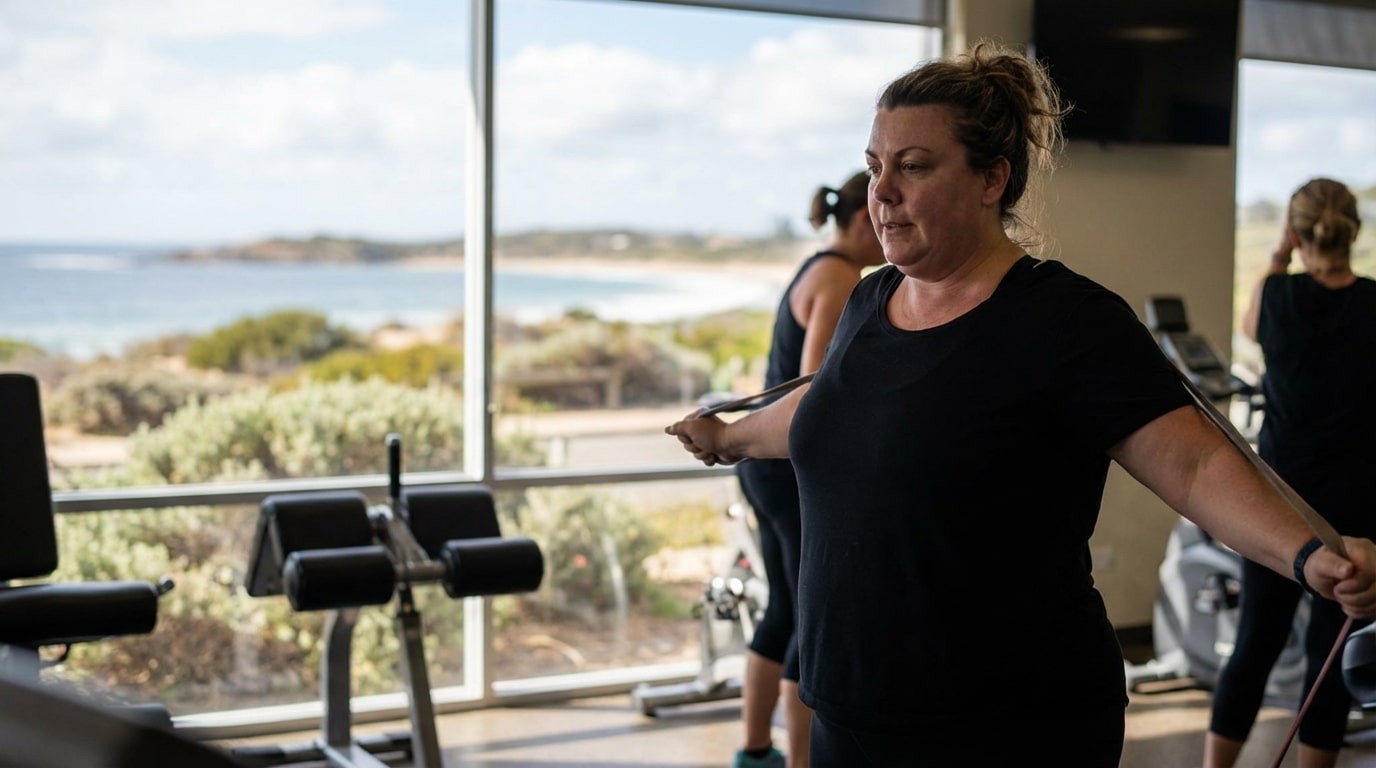
The program follows the “Think, Eat, Move” philosophy. Licensed psychologists and behavioral health coaches lead the Think component. Registered dietitians and on-site wellness chefs preparing farm-to-fork meals drive the Eat component. Four to five hours of daily training Monday through Friday, with a half day Saturday, deliver the Move component. All trainers hold at least a bachelor’s degree, many hold master’s degrees, and staff turnover is exceptionally low. The client-to-trainer ratio stays at 3–4:1 in every session.

A UCSD case study of participants who stayed four or more weeks and received DEXA scans at intake and discharge found that 94% of total weight loss was purely fat, compared to the 60/40 fat-to-muscle ratio typical of standard dieting programs. Lean muscle mass was preserved or increased, bone volume was maintained, and resting metabolic rate was protected. The average client with 40–70 lbs to lose achieves 3–4 lbs of fat loss per week.
Progress is tracked across 17 data points weekly. These include weight, body fat percentage, seven body measurements, blood pressure, LDL, HDL, triglycerides, glucose, push-ups, plank time, and mile time. A trainer reviews these metrics in a one-on-one report card session each week. An optional DEXA scan provides the most precise body composition measurement available.

For GLP-1 graduates, the program adjusts the protocol to emphasize resistance training, prioritize protein intake aligned with Obesity Medicine Association guidelines, and build sustainable behavioral habits that support life after medication. Research shows that without structured behavioral and nutritional support, a substantial amount of lost weight often returns after stopping semaglutide. The curriculum is designed to close that gap.
Post-stay support includes virtual coaching, personalized meal plans, fitness programming for home, and ongoing access to trainers by email. Half of annual revenue comes from returning alumni, which signals genuine satisfaction rather than marketing claims. The program has earned more than 1,200 reviews with a 90%+ five-star rating.

Specialty programs such as Golf Fit, Tennis Fit, Pickleball Fit, and Spa Fit allow clients to combine the full morning curriculum with afternoon instruction in their preferred activity. Three spa treatments per week are included in the standard program at the La Costa Spa. Pricing is approximately $6,000 per week, all-inclusive, with 0% financing available for up to six months.

Proof point: The only U.S. fitness retreat with a UCSD-validated case study showing 94% fat-loss outcomes, 17-point weekly tracking, a 3–4:1 trainer ratio, and a structured post-stay coaching program, all delivered at a luxury resort with year-round outdoor training on the Pacific coast.
To see whether this program matches your goals, talk with an advisor about your specific goals or call (888) 488-8936 to speak with the team.
U.S. wellness retreats in 2026 span a wide range: budget and community weekend stays run $150–$500 per person, mid-range multi-day programs cost $500–$2,000, and premium or luxury options range from $2,000 to $10,000 or more. A typical week-long mid-range retreat costs $1,500–$3,500 all-in, while luxury week-long stays typically run $4,000–$10,000 or more.
Several caveats shape how you should read any sticker price comparison.
The all-inclusive pricing of approximately $6,000 per week at this program covers luxury resort accommodations, all meals prepared by on-site wellness chefs, all fitness sessions, educational workshops, health assessments, weekly report card tracking, three spa treatments per week, and post-stay virtual coaching. There are no hidden add-ons for the core program. The program may qualify as a tax-deductible medical expense. A tax professional can provide guidance specific to your situation. Multi-week discounts and 0% financing for up to six months with no down payment are available.
When you evaluate cost, the relevant comparison is outcome per dollar rather than price per night. A week that produces 3–4 lbs of documented fat loss, measurable improvements across 17 health markers, and the behavioral education to sustain those results at home offers a fundamentally different value than a week of relaxation with no lasting physiological change.
To review pricing, financing options, and what a stay would look like for your specific goals, discuss your options in a free consultation or call (888) 488-8936.
Canyon Ranch, SHA Wellness Clinic, Lanserhof, and Buchinger Wilhelmi are among the programs most frequently associated with high-profile guests. A week at Lanserhof Tegernsee costs $7,000–$12,000 and uses the Mayr digestive-health protocol combined with detailed functional testing such as gut microbiome analysis and food intolerance panels. SHA Wellness Clinic combines Western medical diagnostics with complementary therapies at $5,000–$10,000 per week and employs board-certified physicians across internal medicine, cardiology, and other specialties.
Celebrity association does not reliably predict program effectiveness. Stress relief is frequently cited as a primary motivation for wellness retreat guests. Many guests, regardless of income, are not selecting programs based on documented fat-loss outcomes or educational rigor.
This program’s clientele includes high-net-worth professionals, executives, and individuals who have tried multiple programs and now seek measurable, lasting results rather than a brand name. The program’s reputation is built on documented outcomes rather than celebrity association. The 50% alumni return rate reflects the kind of loyalty that comes from a program that delivers on its promise.
If you are comparing this program to others you have tried, ask an advisor to walk you through outcome data or call (888) 488-8936 to review specifics.
Standard health insurance does not cover wellness retreats in 2026. Most live-in wellness retreats are not covered by standard health insurance, although some Health Savings Account (HSA) or Flexible Spending Account (FSA) funds may be applicable depending on the program’s structure and the plan’s guidelines.
The GLP-1 insurance landscape shapes how many clients think about investing in a structured program.
As GLP-1 insurance coverage contracts, investing in a structured behavioral and fitness program becomes more compelling. A program that builds the habits needed to maintain results with or without medication can reduce long-term reliance on drugs that may not remain covered. This program is eligible for HSA and FSA payment and may qualify as a tax-deductible medical expense. An advisor can provide documentation to support your submission to a tax professional or benefits administrator.
To review HSA or FSA eligibility and financing options, connect with a program advisor for a free call or call (888) 488-8936.
Use the checklist below to identify which program type aligns with your priorities. The more items you check, the stronger the case for a structured, education-based fitness program over a luxury spa or generic wellness retreat.
If you checked five or more of these items, the Think, Eat, Move curriculum, 17-point weekly tracking, independently validated fat-loss outcomes, and structured post-stay coaching align closely with your goals.
The following accounts reflect documented client experiences at this program.
“What began as a simple one-week reboot has transformed into a complete lifestyle shift. This program equips you with the knowledge, tools, and support to make meaningful and sustainable changes.” — Irene Tchaikovsky, Reset Seeker
“This fitness program exceeded all my expectations. The staff is incredibly supportive, knowledgeable, and truly passionate about helping you reach your goals. I not only lost weight but gained confidence, strength, and a healthier lifestyle.” — Jake Younger, GLP-1 Graduate transitioning to sustainable habits
Lauren M. lost 140 lbs at this program, starting at 320 lbs and reaching 180 lbs, and her story was featured on The Today Show. Crissy lost 109 lbs, starting at 512 lbs, and was featured on The Doctors. These outcomes reflect extended stays and individual biology, so results vary. Across more than 3,000 clients, the consistent pattern combines measurable fat loss, improved health markers, and the behavioral education needed to sustain change after leaving.
Next Steps: Choosing Your Retreat with Confidence
Choosing the right wellness retreat is a significant decision. The framework in this guide, which includes clinical rigor, program design, environment, personalization, cost-to-value, and aftercare, gives you the tools to evaluate any program honestly. For clients whose primary goal is measurable, lasting fat loss combined with the education and support to maintain it, this program offers independently validated fat-loss outcomes, 17-point weekly health tracking, a 3–4:1 trainer ratio, and structured post-stay coaching at the Omni La Costa Resort & Spa in Carlsbad, California.
The consultation is free, personalized, and low-pressure. An advisor will walk you through your goals, answer questions about the program, and help you determine whether this program is the right fit. Talk through your goals in a free consultation today, or call (888) 488-8936. The results speak for themselves, and so do the many clients who choose to return year after year.
Frequently Asked Questions
How do I know if a wellness retreat will produce lasting results, or just temporary weight loss?
The most reliable indicator of lasting results is whether a program teaches you why your body responds the way it does to food, exercise, and stress, not just what to do for a week. Programs that combine structured nutrition education, behavioral health support, and fitness training produce fundamentally different outcomes than those focused on calorie restriction and exercise alone. Look for programs that track multiple health markers beyond scale weight, employ registered dietitians and behavioral health professionals, and offer structured post-stay coaching. At this program, the Think, Eat, Move curriculum addresses all three dimensions simultaneously, and a UCSD case study documented that 94% of client weight loss was purely fat, with lean muscle preserved or increased, which forms the physiological foundation for sustained results. The strong alumni return rate reflects clients who achieved lasting change and choose to return for continued growth, not because they regained everything and need to start over.
Is Premier Fitness Camp appropriate for someone who has never exercised regularly or has physical limitations?
Yes.