 5-star Wellness Resort
 5-star Wellness Resort
Written by: Chris Butt, Certified Personal Trainer & Weight Loss Coach, Premier Fitness Camp | Last updated: July 26, 2026
The table below highlights key differences among popular programs for women over 40. It focuses on education, muscle-preservation evidence, staffing, and environment based on publicly available information and published outcomes.
| Program | Education Focus | Muscle-Preservation Evidence | Staffing Snapshot | Program Environment |
|---|---|---|---|---|
| Premier Fitness Camp | Structured Think, Eat, Move curriculum with licensed psychologists, registered dietitians, wellness chefs, cooking demos, and behavioral workshops | UCSD case study: 94% of weight loss was pure fat vs typical 60/40 fat-to-muscle ratio, with lean mass preserved or increased | Bachelor’s and master’s-level trainers with a 3–4:1 client-to-trainer ratio and low staff turnover | On-site at Omni La Costa Resort in Carlsbad, CA, with virtual coaching, personalized meal plans, and ongoing staff communication after camp |
| WW (WeightWatchers) | Points-based app with limited behavioral health or culinary education | No published muscle-preservation metrics and no structured resistance training framework | Peer coaches without a clinical credential requirement and no defined trainer ratio | App and virtual meetings without an immersive environment and limited structured aftercare |
| Noom | Psychology-informed app content without in-person behavioral health staff | No published body-composition outcome data | Virtual coaches with varying credentials and no defined trainer ratio | App-based format without a residential environment, and coaching continuity varies |
| Mayo Clinic Diet | Evidence-based nutrition guidance without behavioral health or culinary immersion | No published muscle-preservation metrics specific to the program | Dietitian-designed content without a live trainer ratio | Online platform without a residential setting and self-directed maintenance |
| Live In Fitness | Exercise and basic diet focus with limited behavioral or culinary education | No published body-composition data comparable to DEXA-validated outcomes | Trainer credentials vary, and clients travel off-site to gym facilities | Residential home setting in Arizona where extreme summer heat limits outdoor training and aftercare is limited |
| Canyon Ranch | Wellness retreat experience with a less structured, results-driven curriculum | No published fat-to-muscle loss ratio data | Credentialed wellness staff with a retreat orientation rather than transformation focus | Luxury resort with a retreat model instead of an immersive weight-loss program and limited post-stay accountability |
| Unite Fitness Retreat | Fitness-focused approach with limited nutrition or behavioral health depth | No published muscle-preservation metrics | Trainer credentials not prominently disclosed in a downtown Salt Lake City hotel setting | Urban environment where cold winters limit outdoor training and clients travel to off-site amenities |
| Pritikin | Longevity and cardiac-focused nutrition education at a slower pace | Longevity-oriented program with limited published fat-to-muscle outcome data for active weight loss | Medical and dietitian staff with an older-adult focus and limited fitness variety | Florida location with high humidity and less activity diversity compared with PFC |
| Civana Wellness Resort | Retreat and spa focus without a results-driven weight loss curriculum | No published body-composition data | Wellness staff within a retreat model not structured for fat-loss outcomes | Arizona resort that functions as a wellness retreat rather than an immersive weight-loss program |
| Hilton Head Health | Weight-loss focused and structured program serving an older-adult demographic | No published DEXA-validated muscle-preservation data | Credentialed staff, while guests stay off-site and travel daily to a central facility | Florida location with high humidity and off-site accommodations that require daily transport with limited activity variety |
The comparison above shows that most programs do not publish evidence of muscle preservation during weight loss. The strategies below explain how PFC supports its 94% pure-fat-loss outcome and how women over 40 can protect metabolism while losing weight.
The following strategies reflect current guidance from leading research institutions and are built into PFC’s Think, Eat, Move curriculum.

Most app-based and outpatient programs measure outcomes by scale weight alone. PFC tracks 17 data points weekly, including body fat percentage, visceral measurements, blood pressure, cholesterol panels, glucose, strength benchmarks, and cardiovascular fitness, through a personalized report card reviewed one-on-one with a trainer each week. Clients can also choose DEXA scans, which are considered the gold standard for body composition measurement.
A case study conducted with the University of California, San Diego evaluated PFC participants who stayed four or more weeks and received DEXA scans at program start and end. The study found that 94% of total weight loss was purely fat. Most aggressive weight loss programs produce a 60/40 fat-to-muscle ratio, and standard dieting usually performs no better. PFC’s combination of resistance training volume, registered dietitian-designed nutrition, and behavioral health support produces a distinctly different outcome.

A 2026 review published in the Journal of Clinical Lipidology concluded that sustained weight management requires registered dietitian nutritionists, exercise specialists, behavioral health professionals, and medical providers working as a coordinated team. PFC fields that full team under one roof at the Omni La Costa Resort.
PFC clients train 4–5 hours per day, Monday through Friday, with a half day on Saturday. Every session maintains a 3–4:1 client-to-trainer ratio. Classes are structured so that a client who can only walk 250 feet and a seasoned athlete who trains four times per week both receive an appropriate, progressive challenge in the same session.
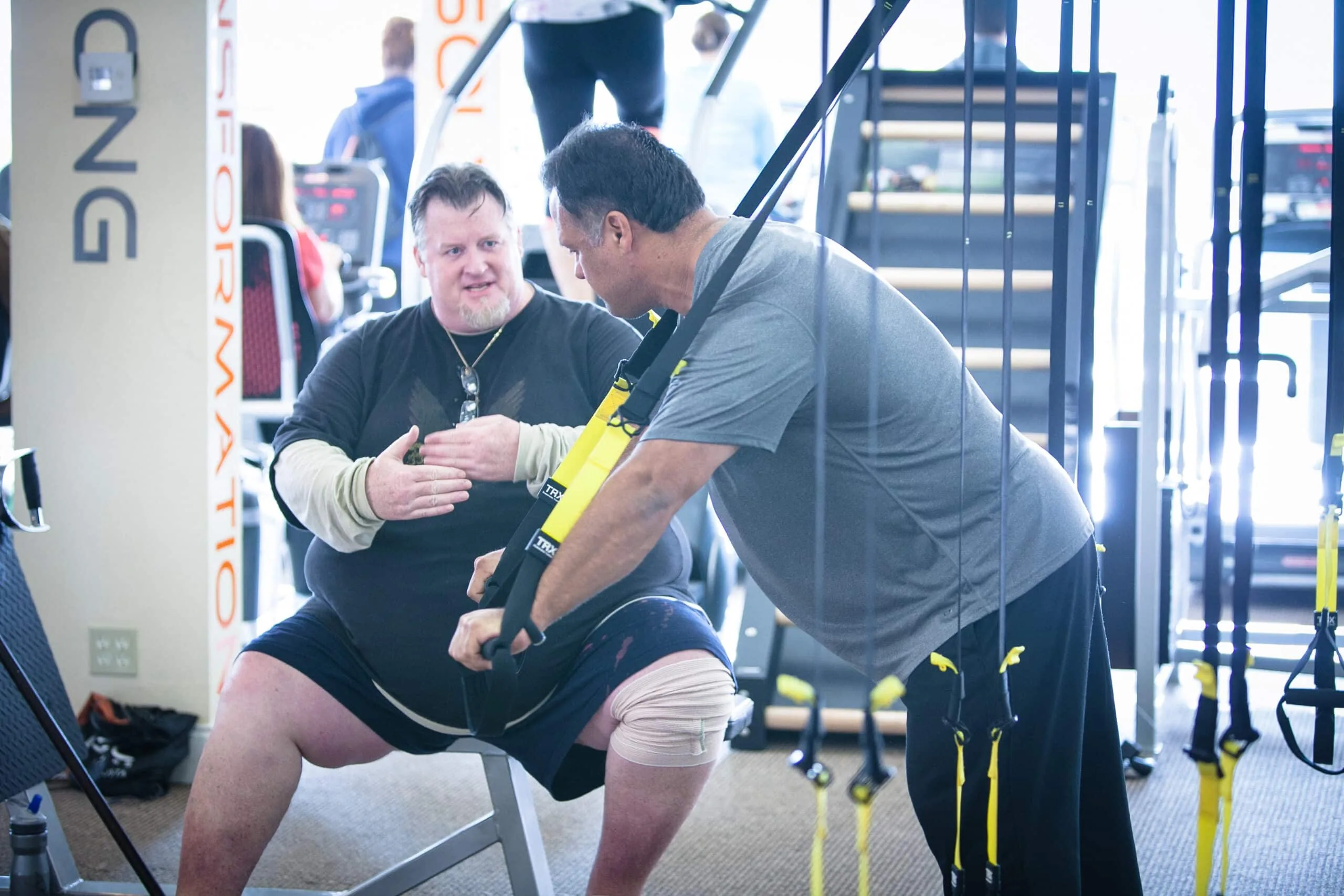
Low-impact modifications are available for every exercise, and a dedicated low-impact track supports clients with health limitations. Every client begins with a comprehensive health assessment that includes blood work, vital signs, body composition, BMI, measurements, and a fitness test. That baseline informs a personalized plan, and progress is reviewed weekly across all 17 tracked metrics.
High-intensity lifestyle programs providing at least 14 treatment sessions in the first six months produce average weight losses of 5–8 kg, while programs with fewer contacts produce significantly smaller losses. PFC’s immersive daily structure exceeds that contact threshold from the first week.
PFC operates exclusively at the Omni La Costa Resort & Spa in Carlsbad, California, a 450-acre property in North San Diego County with a year-round moderate climate, low humidity, and no extreme heat or cold. All PFC facilities, dining, education, fitness, and spa services are on-site, so clients do not need to travel to reach a gym or rely on food delivered from an off-site kitchen.
Outdoor programming includes beach boot camps on the Pacific coast, hikes through Torrey Pines, Double Peak Park, and Batiquitos Lagoon, plus stand-up paddleboarding and kayaking. The La Costa Spa, previously ranked the number-one wellness spa in the nation by Spa Magazine, provides three included treatments per week. Specialty programs in golf, tennis, pickleball, and spa services are available as afternoon add-ons after the core morning program.

Competitors such as Unite Fitness Retreat operate from a downtown Salt Lake City hotel with cold winters and off-site amenities. Live In Fitness is based in Arizona, where summer heat significantly limits outdoor training. Hilton Head Health and Pritikin are located in Florida’s high humidity, and Hilton Head Health guests stay off-site and are transported daily to the central facility. PFC’s integrated resort campus offers an environment that competitors in this category do not replicate.
PFC is all-inclusive at approximately $6,000 per week. This rate covers luxury resort accommodations, all meals prepared by on-site wellness chefs, all fitness classes and training, educational workshops, health assessments, weekly report card tracking, three spa treatments per week, and access to all resort amenities. Zero-percent financing for up to six months with no down payment is available, and multi-week discounts apply to extended stays.
Post-camp support includes virtual coaching, personalized meal plans for home, exercise programming, and ongoing communication with PFC staff. Clients can email their trainers at any time. That continuity, combined with low staff turnover and the same team year after year, contributes to 50% of annual revenue coming from returning alumni. Monthly or more frequent long-term contact with an interventionist after the initial treatment phase is the most effective method for mitigating weight regain following comprehensive lifestyle interventions. PFC’s post-camp structure follows that principle closely.
Book a free consultation to learn about current pricing, financing options, and which program length fits your goals. Call (888) 488-8936 to speak with a team member directly.
Up to 40% of weight lost on GLP-1 medications such as semaglutide and tirzepatide can come from lean muscle mass rather than fat, based on findings from the STEP and SURMOUNT clinical trials. For women over 40 already facing sarcopenia and declining estrogen, that muscle loss compounds an existing metabolic vulnerability.
PFC does not discourage GLP-1 use and is designed to work alongside or after medication. The protocol prioritizes resistance training volume, protein targets of 25–40 g per meal, and the behavioral education needed to sustain results independently of the drug. Clients who arrive as GLP-1 graduates receive a plan focused on rebuilding lean mass, restoring resting metabolic rate, and developing sustainable habits so that medication functions as a tool rather than a permanent dependency.
For a woman between 40 and 60 with 40–70 pounds to lose, a realistic and sustainable rate is 3–4 pounds per week of actual fat loss, not water or muscle. The key distinction is what that weight loss is made of. Most standard dieting programs produce a 60/40 fat-to-muscle ratio at best, which means a meaningful portion of every pound lost comes from lean tissue.
PFC’s UCSD case study found that 94% of client weight loss was purely fat, with lean muscle preserved or increased. That difference influences whether metabolism is protected or damaged and whether results last. Individual results vary based on starting weight, hormonal status, medications, and other factors, and weight is only one of 17 metrics PFC tracks weekly.
PFC serves clients who range from those who can only walk 250 feet to seasoned athletes who train four or more times per week. Every class is structured so that each participant receives an appropriate challenge regardless of starting fitness level. Trainers maintain a 3–4:1 client-to-trainer ratio and provide modifications, progressions, and low-impact alternatives for every exercise.
A dedicated low-impact training track supports clients with health limitations such as joint issues, back problems, or cardiovascular conditions. No one is left behind, and no one is judged for their starting point.
Lasting results depend on education, not willpower, and that principle drives PFC’s Think, Eat, Move curriculum. Before leaving, every client receives a personalized meal plan, exercise programming, and a clear framework for applying what they learned in daily life. Post-camp virtual coaching provides ongoing accountability.
Clients can email their trainers at any time, and many maintain those relationships for years. The nutrition workshops, cooking demonstrations, and behavioral health sessions are designed to transfer to a home environment. They teach grocery shopping habits, meal preparation, portion awareness, and emotional eating strategies that work without a chef or trainer present. The fact that 50% of annual revenue comes from returning alumni reflects the strength of those relationships and the choice many clients make to return for annual resets.
“What began as a simple one-week reboot has transformed into a complete lifestyle shift. PFC equips you with the knowledge, tools, and support to make meaningful and sustainable changes.” — Irene Tchaikovsky
“Before PFC I was not in a good place. I was suffering complications from Type 1 Diabetes and I was very depressed. I immediately discovered little things starting to happen, like tying my shoes easier, breathing better, my posture had improved, I was standing taller. The confidence that came with all of those little wins had me realize it was not so much about losing weight but what I was gaining. Strength, energy, a sense of fun.” — Kerri, lost 31 lbs
Next Steps to Start Your Transformation
Women over 40 benefit from a program built around the biological realities they face, not a generic app or a calorie target that ignores hormonal shifts, sarcopenia, and adaptive thermogenesis. PFC’s Think, Eat, Move curriculum, UCSD-validated 94% pure-fat-loss outcomes, 3–4:1 trainer ratios, and immersive resort environment at Omni La Costa create results that apps and standard diets do not match.
With 1,200+ reviews and a 90%+ five-star rating, PFC has guided more than 3,000 clients through lasting transformations. The consultation is free, personalized, and low-pressure.
Book a free consultation today, or call (888) 488-8936 to speak with a member of the PFC team about your goals, your timeline, and the program that fits your life.