 5-star Wellness Resort
 5-star Wellness Resort
Written by: Chris Butt, Certified Personal Trainer & Weight Loss Coach, Premier Fitness Camp | Last updated: August 12, 2026
Selecting the right program works best when you compare options across six evidence-based dimensions rather than relying on marketing language alone. These dimensions reflect what research links to long-term weight-loss success, from clinical oversight and training volume to personalization and post-program support.
The table below evaluates seven programs across these six dimensions. Premier Fitness Camp publishes UCSD case study results, detailed weekly tracking, a low trainer ratio, and alumni return data. No competitor in this comparison publishes comparable outcome data or offers the same depth of education.
| Program | Clinical & Educational Rigor / Training Volume | Personalization & Tracking | Cost & Aftercare |
|---|---|---|---|
| Premier Fitness Camp (Carlsbad, CA) | Registered dietitians, licensed psychologists, wellness chefs, behavioral health workshops, and 4–5 hours of daily training Monday through Friday. Activities include beach sessions, hiking, paddleboarding, boxing, TRX, Tabata, spin, and more. The ACSM 2026 Position Stand confirms that resistance training individualized to goals and enjoyment maximizes long-term adherence, and PFC applies this through varied modalities. | Low trainer ratio and a comprehensive weekly Report Card that tracks body composition, measurements, cardiovascular markers, and performance tests. A UCSD case study found that nearly all recorded weight loss came from fat rather than muscle, with typical weekly fat loss of 3–4 pounds. Optional DEXA scans are available. | Approximately $6,000 per week, all-inclusive. Pricing covers luxury resort accommodations, all meals, spa treatments, fitness and education programming, health tracking, post-camp virtual coaching, personalized meal plans, and ongoing trainer access. Alumni show a high return rate across 1,200+ reviews with more than 90% five-star ratings. |
| Live In Fitness (Arizona) | Exercise and diet focus in a residential home setting. Clients travel to off-site gym facilities, and Arizona heat limits outdoor training for much of the year. | Trainer ratio and tracking metrics are not publicly published, and no comparable outcome data is available. | Lower price point with food delivered rather than prepared on-site. Reports mention high staff turnover, and aftercare details are not clearly specified. |
| Canyon Ranch (Multiple locations) | Wellness retreat focus with fitness and spa programming. The emphasis leans toward retreat-style experiences rather than a structured, results-driven weight-loss curriculum. | Personalization is available, but trainer ratios, weekly tracking metrics, and outcome data comparable to PFC are not published. | Premium pricing with inclusions that vary by location and package. Aftercare details are not clearly specified. |
| Unite Fitness Retreat (Salt Lake City, UT) | Fitness-focused program based in a downtown hotel. Clients travel by vehicle to additional amenities, and a cold climate limits outdoor training for roughly half the year. | No published trainer ratio, multi-point tracking system, or outcome data comparable to PFC. | Boutique residential retreats in the US typically range from $3,000 to $8,000 per week. Aftercare details are not clearly specified. |
| Pritikin (Florida) | Longevity and cardiovascular health focus with medical oversight available. The pace is slower, Florida humidity can limit outdoor comfort, and the program skews toward older demographics with fewer diverse activity options. | Medical tracking is available, but trainer ratios and multi-point weekly report cards comparable to PFC are not published. | All-inclusive pricing is available, yet aftercare details are not specified at the same level as PFC’s published post-camp support. |
| Civana Wellness Resort & Spa (Arizona) | Wellness resort and spa with fitness programming as a secondary focus. The experience is not specifically structured around measurable weight-loss outcomes. | Trainer ratios, outcome data, and tracking metrics comparable to PFC are not published. | Pricing and inclusions vary by package, and aftercare details are not clearly specified. |
| Hilton Head Health (South Carolina) | Weight-loss focused with a central facility for activities. Guests stay in nearby accommodations and commute daily, and summer humidity resembles Florida conditions. The demographic skews older. | No published trainer ratio or multi-point weekly tracking system comparable to PFC. | Accommodations are off-site with required daily transportation. Aftercare details are not specified at the same level as PFC’s documented post-camp support. |
Different types of clients benefit from different program strengths, so the six-dimension framework helps align each persona with the right fit.
Reset Seekers (40–60 years old, primary persona): Adults who have tried multiple approaches without lasting success need a program that addresses educational and behavioral root causes of weight gain, not exercise volume alone. PFC’s “Think, Eat, Move” curriculum, licensed psychologists, registered dietitians, and detailed tracking make it the primary recommendation for this group.
Another growing segment seeking structured support is GLP-1 Graduates: Individuals who continue exercising during GLP-1 pharmacologic treatment maintain greater fat loss and preserve lean mass after stopping medication compared to medication alone, per ACSM 2026 data. Up to 50% of weight lost on GLP-1s can be lean mass without resistance training. PFC’s resistance-training focus, high-protein nutrition guidance, and UCSD outcomes make it a strong choice for GLP-1 graduates who want a structured exit ramp.
Repeat Alumni: PFC’s high alumni return rate, low staff turnover, and multi-visit tracking that shows health trends across years of engagement make it a natural option for returning clients who want annual resets or continued body recomposition.
Concerned Beginners: The low trainer ratio and structured modification system at PFC support clients ranging from 400+ pounds who can walk only 250 feet to those with joint limitations. Every participant receives an appropriate starting point.
Active Optimizers: Four to five hours of daily training, combined with specialty programs such as Golf Fit, Tennis Fit, Pickleball Fit, and Spa Fit, plus data-driven tracking, challenge even highly conditioned adults.
Premier Fitness Camp costs approximately $6,000 per week, all-inclusive. That rate covers luxury accommodations at the Omni La Costa Resort & Spa in Carlsbad, all meals prepared by on-site wellness chefs using farm-to-fork ingredients, three spa treatments per week at the La Costa Spa, all fitness sessions and educational workshops, comprehensive weekly health assessments, and post-camp virtual coaching with personalized meal plans and ongoing trainer access.
Boutique residential weight-loss retreats in the US typically range from $3,000 to $8,000 per week, with standard inclusions at higher-end programs covering private rooms, chef-prepared menus, spa therapies, small-group coaching, cooking classes, and curated outdoor activities. However, many programs in that range bill meals, spa, and aftercare separately, so the advertised rate often understates the true cost. PFC’s all-inclusive structure removes those hidden charges.
Zero-percent financing for up to six months with no down payment is available. Multi-week discounts apply, and the program may qualify as a tax-deductible medical expense; a tax professional can provide guidance.
“What began as a simple one-week reboot has transformed into a complete lifestyle shift. PFC equips you with the knowledge, tools, and support to make meaningful and sustainable changes.” — Irene Tchaikovsky, PFC alumni
Book a free consultation to receive a detailed breakdown of inclusions, financing options, and program lengths. Call (888) 488-8936.
The American Heart Association advises that gradual, sustainable weight loss supported by a registered dietitian and a personalized eating plan produces the most durable long-term outcomes. Weight often returns after traditional programs because rapid loss can reduce lean muscle and slow metabolism. The UCSD case study on PFC clients showed that nearly all recorded weight loss came from fat, and most long-term clients preserved or increased lean muscle mass, which supports resting metabolic rate and long-term maintenance.
Post-camp support at PFC includes personalized meal plans tailored to home life, virtual coaching sessions for accountability, structured exercise programming, and open-ended email communication with PFC trainers. That access does not expire.
“PFC is a life-changing experience. I signed up for two weeks and stayed for eight. The facilities and staff are top notch.” — Scott, PFC alumni
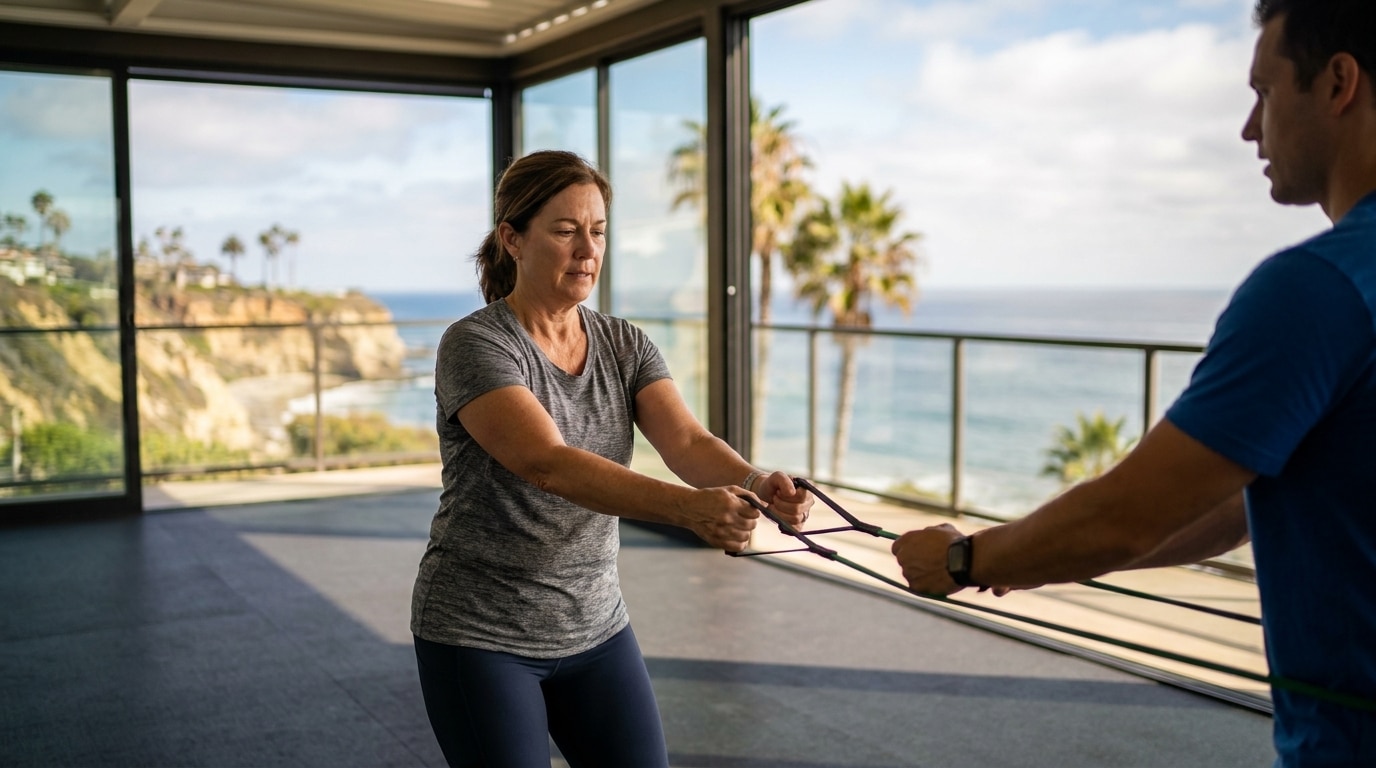
PFC accommodates every fitness level through its low trainer-to-client ratio and structured modification system. Each class is designed so that a 400-pound beginner and a seasoned athlete can train in the same session and still receive an appropriate challenge. Low-impact alternatives support clients with joint limitations, back conditions, or other restrictions. The ACSM 2026 Position Stand confirms that nontraditional resistance training using bodyweight exercises and elastic bands produces marked benefits in strength and physical function for healthy adults, and PFC applies the same principle when designing beginner modifications.
A 2026 scoping review of 219 studies on healthy aging interventions concluded that multicomponent physical activity and nutritional interventions showed consistent benefits for functional ability and wellbeing, with greater benefits at higher weekly doses. PFC’s 4–5 hours of daily training, delivered across varied modalities and adapted to individual capacity, reflects that evidence.
“What a week!! Needed a reset and I found it at PFC! The trainers, the staff, the Chefs! All amazing and work with all levels.” — Julie Robinson, PFC alumni
Adult fitness and weight-loss camps in California vary widely in clinical rigor, training volume, personalization, and aftercare quality. Premier Fitness Camp is the only program in this comparison that publishes UCSD case study results, tracks a broad set of health data points weekly, maintains a low trainer ratio, and reports a high alumni return rate across more than 1,200 reviews with over 90% five-star ratings.
The program operates year-round at the Omni La Costa Resort & Spa in Carlsbad, California, in one of the most favorable climates in the country. It delivers a fully all-inclusive experience that addresses fitness, nutrition, and behavioral health at the same time.
You can book a free consultation with the Premier Fitness Camp team to discuss your goals, review program details, and choose a stay length that fits your life. Call (888) 488-8936 or visit the consultation booking page. The consultation is free, personalized, and carries no obligation.
The approximately $6,000 weekly rate at Premier Fitness Camp covers luxury accommodations at the Omni La Costa Resort & Spa in Carlsbad, California, plus all meals and snacks prepared on-site by PFC’s wellness chefs using fresh, farm-to-fork ingredients. It also includes all fitness sessions and group training classes, nutrition workshops, behavioral health sessions, cooking demonstrations, a comprehensive health assessment on arrival, and a detailed weekly Report Card reviewed one-on-one with a trainer. Guests receive three spa treatments per week at the La Costa Spa, access to all resort amenities across the 450-acre property, and post-camp support that includes virtual coaching, personalized meal plans, and ongoing trainer communication. There are no hidden add-ons for the core program. Optional DEXA scans and specialty afternoon programs such as Golf Fit, Tennis Fit, Pickleball Fit, and Spa Fit are available at additional cost. Zero-percent financing for up to six months with no down payment is offered, and multi-week discounts apply for longer stays.
Wellness retreats and spas focus on relaxation and general fitness programming without a structured, results-driven curriculum. Premier Fitness Camp is built around the “Think, Eat, Move” philosophy, which integrates three pillars. Behavioral health support from licensed psychologists addresses emotional eating and lifestyle triggers. Nutrition education from registered dietitians and wellness chefs includes cooking demonstrations that clients can replicate at home. Daily supervised physical training spans 4–5 hours across a wide range of modalities. Progress is tracked across many data points each week, not just scale weight, and the UCSD case study documented that nearly all recorded weight loss at PFC came from fat rather than muscle, unlike the 60/40 fat-to-muscle ratio typical of standard dieting. The program aims for lasting behavioral change rather than a brief reset. The luxury Omni La Costa setting enhances the experience while still supporting a serious training and education environment.
Yes. Premier Fitness Camp has worked with clients who can walk only 250 feet at the start of their stay as well as seasoned athletes seeking performance breakthroughs. Every fitness class is structured so participants at every level receive an appropriate and safe challenge. The low trainer-to-client ratio allows trainers to observe and adjust each person’s movement in real time, offering low-impact modifications, progressions, and alternative exercises when needed. A dedicated low-impact training track supports clients with joint conditions, back limitations, or other physical restrictions. The comprehensive health assessment on day one, which includes blood work, vital signs, body composition, and a fitness test, establishes a personalized baseline that guides the program from the first session forward. No prior fitness experience is required, and each client progresses at their own pace.
Weight regain after many programs occurs because lean muscle mass is lost, which reduces resting metabolic rate and makes maintenance harder. As the UCSD case study showed, most long-term PFC clients preserved or increased lean muscle during their stay, which protects metabolism and creates a stronger foundation for maintenance. Beyond those biological outcomes, PFC provides structured post-camp support that includes personalized meal plans for home, virtual coaching sessions for accountability, at-home exercise programming, and open-ended email access to PFC trainers with no expiration date. The “Think, Eat, Move” curriculum, which covers emotional eating triggers, sustainable nutrition habits, and practical home cooking skills, is designed to transfer directly into daily life. The high alumni return rate mentioned earlier reflects both the strength of that ongoing relationship and the fact that many clients choose to come back for annual resets.
Premier Fitness Camp welcomes clients who are currently on or transitioning off GLP-1 medications such as Ozempic or Wegovy. The program does not discourage medication use and instead focuses on the key risk associated with GLP-1 treatment, which is lean muscle loss. Without structured resistance training and adequate protein intake, GLP-1 users face the significant lean-mass loss risk discussed earlier, which can damage metabolism and increase the likelihood of weight regain when medication is reduced or stopped. PFC’s training program emphasizes resistance work and is supported by registered dietitians who adjust macronutrient targets, particularly protein, to counteract muscle loss. The UCSD findings on fat-focused weight loss and preserved lean mass are directly relevant for GLP-1 users who want to protect body composition. Clients on medication work with PFC’s team to build sustainable habits and a strong physical foundation for long-term success, whether they continue, reduce, or eventually stop their medication.