 5-star Wellness Resort
 5-star Wellness Resort
Written by: Chris Butt, Certified Personal Trainer & Weight Loss Coach, Premier Fitness Camp | Last updated: June 28, 2026
Not every program delivers the same outcomes. Before committing, evaluate any program across six dimensions: (1) clinical and educational rigor, (2) program design and length, (3) environment and location, (4) personalization and staff qualifications, (5) cost, value, and inclusions, and (6) aftercare and sustainability support. These dimensions shape your experience and directly influence your long-term return on investment.
Return on investment depends on whether a program produces durable change or temporary results. PFC’s outcomes have been validated in partnership with UCSD, with a high percentage of weight loss coming from fat rather than muscle. Alumni satisfaction and repeat enrollment further demonstrate sustained value over time.
Client Irene Tchaikovsky describes the outcome precisely: “What began as a simple one-week reboot has transformed into a complete lifestyle shift. PFC equips you with the knowledge, tools, and support to make meaningful — and sustainable — changes.” This shift from a short reset to a lasting lifestyle change illustrates the type of ROI that matters most. Jake Younger’s experience reinforces the same pattern: “I not only lost weight but gained confidence, strength, and a healthier lifestyle.”
When compared with a lifetime of unused gym memberships, repeated diet programs, and rising medical costs from unmanaged weight, a structured residential program that teaches lasting habits represents a different category of investment.
Commercial insurance plans often do not cover residential weight-loss programs directly. Coverage for weight-related interventions is typically limited to bariatric procedures meeting strict BMI thresholds, and even insured patients frequently face substantial out-of-pocket costs through deductibles, copays, and excluded services.
Several practical options can reduce the upfront burden. PFC offers 0% financing for up to six months with no down payment required. Healthcare-specific installment platforms can provide financing up to $60,000 with terms from 6–84 months and true 0% APR options for qualified borrowers. Residential weight-loss programs may also qualify as a tax-deductible medical expense under IRS guidelines, so a tax professional can help you determine eligibility. Multi-week discounts at PFC further improve value for longer stays.
Financing and tax strategies address affordability. Medication support addresses clinical safety and long-term results, which is where GLP-1 coordination becomes crucial.
GLP-1 medications such as Ozempic and Wegovy can produce significant initial weight loss, yet a large share of that loss often comes from lean muscle rather than fat. When muscle mass declines, resting metabolic rate drops, and the risk of rapid weight regain rises once medication is reduced or stopped.
PFC’s protocol for GLP-1 users addresses this risk directly. The program emphasizes resistance training to preserve and rebuild muscle, and muscle growth requires adequate protein intake, so the protocol also increases protein targets to offset appetite suppression. These physical strategies are reinforced with behavioral and nutritional education that supports a sustainable post-medication transition and helps clients maintain new habits independently. The environment remains non-judgmental about medication use, and PFC functions as the education and lifestyle foundation that makes GLP-1 therapy work long term rather than as a short-term fix.
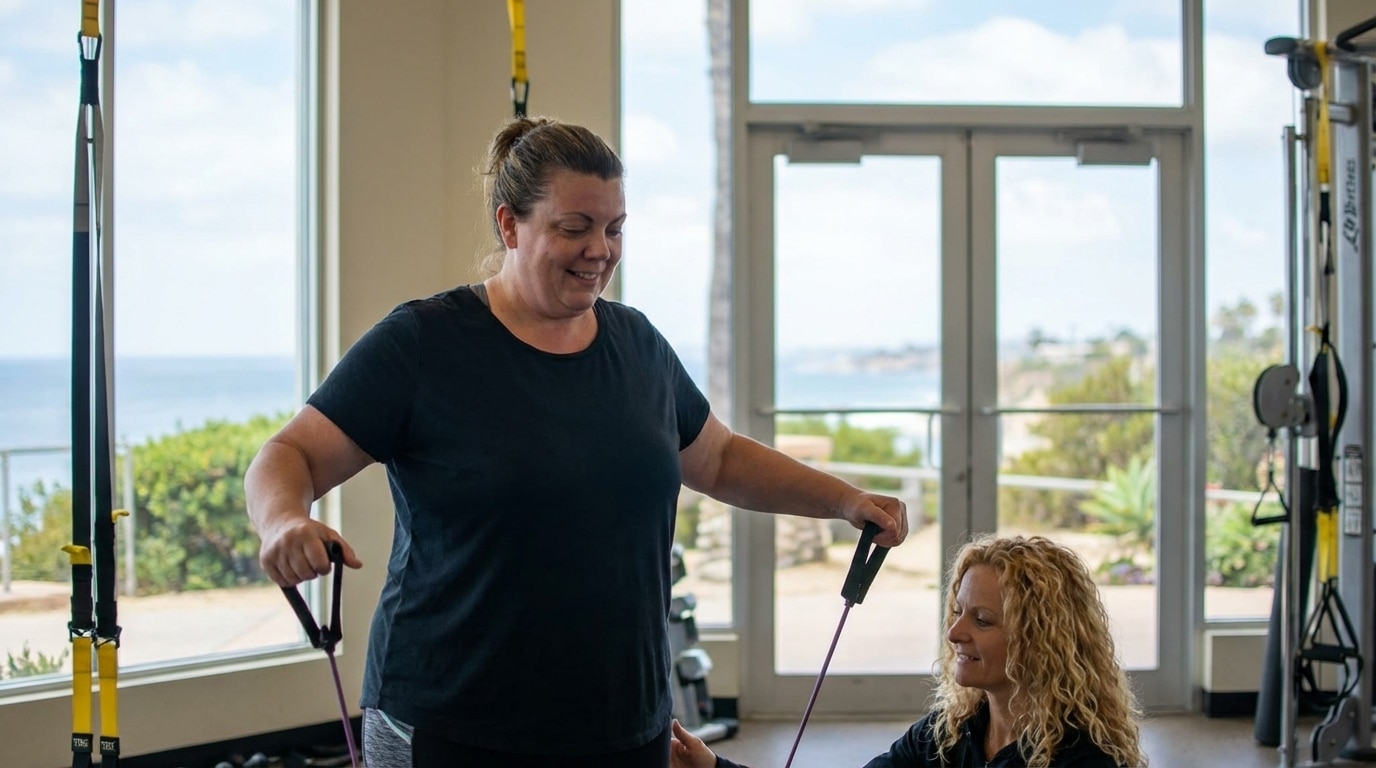
PFC works with clients ranging from individuals who can walk only 250 feet to seasoned athletes training four days per week. Every session is structured so that all fitness levels participate and progress at the same time. Trainers maintain a 3–4:1 client-to-trainer ratio and provide modifications, progressions, and low-impact alternatives for every exercise. A dedicated low-impact track supports clients with orthopedic or health limitations.
As Julie Robinson put it after her first week: “The trainers, the staff, the chefs — all amazing and work with all levels.” Her experience reflects the program’s inclusive design rather than an exception.
The program begins with a comprehensive health assessment that includes blood work, body composition, measurements, and a fitness test. Each client starts with a personalized baseline and a plan built around their actual starting point, not a generic template.
Book a free consultation to discuss your current fitness level and how PFC’s team will build a plan around it. Call (888) 488-8936.
Once you understand how PFC adapts to different starting points, it helps to see how its structure compares with other leading programs across key decision factors.
| Program | Clinical & Educational Rigor | Personalization & Staff | Environment, Amenities & Aftercare |
|---|---|---|---|
| Premier Fitness Camp | “Think, Eat, Move” curriculum; licensed psychologists, registered dietitians, wellness chefs; UCSD case study: 94% fat loss; 17 weekly data points; 4–5 training hours/day | 3–4:1 trainer ratio; bachelor’s/master’s-degreed trainers; all fitness levels accommodated; DEXA scan option | Omni La Costa Resort, Carlsbad CA; year-round mild climate; beach, hiking, paddleboarding on-site or nearby; virtual coaching and personalized meal plans post-camp; strong alumni engagement |
| Canyon Ranch | Wellness retreat model; some clinical services available; less structured weight-loss curriculum | Varied specialist access; premium pricing; retreat-focused rather than results-driven | Multiple locations; strong spa amenities; limited structured aftercare for weight loss specifically |
| Pritikin | Longevity and cardiovascular focus; physician-supervised; slower pace; older demographic orientation | Medical staff on-site; less fitness variety; limited activity diversity compared to PFC | Florida location; high humidity; structured meal plan; limited outdoor activity variety |
| Hilton Head Health | Weight-loss focus; behavioral and nutrition education included; slower-paced program | Guests stay off-site and are transported to facilities daily; older demographic orientation | South Carolina location; high humidity; limited activity variety; no on-site luxury resort accommodations |
| Live In Fitness | Exercise-focused; basic nutrition guidance; limited behavioral health component | Higher trainer turnover; residential home setting; off-site gym access by vehicle | Arizona location; extreme summer heat limits outdoor training; food delivered rather than prepared on-site |
| Unite Fitness Retreat | Fitness-focused; group training model; limited clinical education component | Downtown Salt Lake City hotel setting; off-site amenity access required | Cold winters limit outdoor programming; no on-site resort or spa; limited aftercare structure |
| Civana | Wellness retreat orientation; mindfulness and spa emphasis; limited structured weight-loss programming | Arizona desert location; retreat-focused rather than results-driven fitness program | Spa and wellness amenities strong; limited structured fitness outcomes tracking or aftercare |
This comparison highlights how programs differ in clinical rigor, personalization, and environment. Program length and cost vary by situation, so the next section focuses on common client profiles and realistic budget ranges.
Reset Seeker (age 40–60, multiple past attempts): A minimum two-week stay at PFC delivers the behavioral health support, nutritional education, and structured daily training needed to break the cycle of short-term results. Budget range: $10,000–$12,000+ for two weeks, inclusive of all meals, accommodations, spa treatments, and training. Many clients in this group return for tune-up stays because they see consistent value.
GLP-1 Graduate (post-medication muscle loss): A three-to-four-week stay provides time to rebuild lean muscle through resistance training, recalibrate protein intake, and establish independent habits that support a medication-reduction plan. Budget range: $15,000–$24,000+ for three to four weeks. PFC’s UCSD-validated 94% fat-loss outcome is especially relevant here, because muscle preservation is the central clinical concern.
Concerned Beginner (first-time, significant weight to lose): One week offers a powerful, lower-risk entry point. The 3–4:1 trainer ratio, low-impact track, and comprehensive day-one health assessment address the main fears, such as not keeping up or lacking a personalized starting plan. Budget range: $5,000–$6,000 for one week. Many first-time clients extend their stay on-site after experiencing the program firsthand.
Before selecting any program, verify the following:
PFC provides clear answers to each of these questions. The team tracks 17 weekly data points, employs licensed psychologists, and staffs on-site wellness chefs. Trainers hold relevant degrees, turnover remains low, and the trainer-to-client ratio stays at 3–4:1. Clients receive virtual post-camp coaching, structured aftercare, and access to 0% financing for up to six months.
Ready to take the next step? Schedule your free consultation with the PFC team to discuss your goals, timeline, and ideal program length. Call (888) 488-8936 or email info@premierfitnesscamp.com to explore how the program can support your specific situation.
Results vary based on starting weight, age, gender, hormones, and medications. At Premier Fitness Camp, the average client with 40–70 pounds to lose typically loses several pounds of fat per week. A UCSD case study found that 94% of total weight loss among PFC participants was purely fat, compared with the 60/40 fat-to-muscle ratio common in standard dieting programs. Most long-term PFC clients preserved or increased lean muscle mass during their stay. Weight is also just one of 17 data points tracked weekly, and many clients see significant improvements in blood pressure, cholesterol, glucose, strength, and body measurements even when the scale moves more slowly than expected.
Traditional programs focused almost exclusively on exercise and calorie restriction. Clients often lost weight during the program but were not taught how to sustain results at home, which created a cycle of dependency and regain. Modern programs like Premier Fitness Camp operate as multidisciplinary education experiences. PFC’s “Think, Eat, Move” model integrates licensed psychologists who address emotional eating and behavioral triggers, registered dietitians who teach sustainable nutrition, wellness chefs who conduct cooking demonstrations, and certified trainers who deliver 4–5 hours of daily training. Clients leave with the knowledge, habits, and skills to maintain their transformation independently, which drives strong alumni engagement over time.
Yes. PFC does not discourage GLP-1 use. The program adjusts protocols for participants on these medications by emphasizing resistance training to counter muscle loss and increasing protein targets to compensate for appetite suppression. The team also builds the behavioral and nutritional foundation needed for a sustainable long-term plan, including a post-medication transition strategy for those who eventually want to reduce or stop the medication. The environment stays non-judgmental, and the clinical team designs an individualized approach based on each participant’s current medication status and health goals. For a detailed overview, review the “How Weight Loss Camps Coordinate with GLP-1 Medications” section above.
PFC is fully all-inclusive. The price covers luxury accommodations at the Omni La Costa Resort & Spa and all meals prepared on-site by PFC’s wellness chefs, including breakfast, lunch, dinner, snacks, and nutrition shakes. It also includes all fitness classes and training sessions, educational workshops covering nutrition, behavioral health, and cooking, a comprehensive day-one health assessment with blood work and body composition analysis, and weekly 17-point report card tracking with one-on-one trainer review. Three spa treatments per week at the La Costa Spa, full access to resort amenities, and post-camp virtual coaching with personalized meal and fitness plans are also included. PFC runs approximately $6,000 per week, with 0% financing available for up to six months and multi-week discounts for longer stays.
One week delivers a strong foundation and measurable initial results. Two weeks build real momentum and begin to shift daily habits. Three weeks often marks the point at which new behavioral patterns feel more automatic and self-sustaining. Four weeks or more can produce significant, clinically measurable changes across body composition, metabolic markers, and fitness capacity. PFC’s average client stay is approximately 11 days. Many first-time clients book one week and extend on-site after experiencing the program. Extended stays of up to several months are available for clients seeking deeper transformation. The right duration depends on your goals, schedule, and starting point, which a free consultation can help you clarify.