 5-star Wellness Resort
 5-star Wellness Resort
Written by: Chris Butt, Certified Personal Trainer & Weight Loss Coach, Premier Fitness Camp
Talk To A PFC Advisor About Your Goals
Harvard Health defines healthspan as the stretch of life when a person is reasonably free of disabling disease, pain, and serious limitation, in contrast to lifespan, which is simply the number of years between birth and death. Despite rising average lifespans, healthspan has not kept pace. Many people now live a decade or more with multiple chronic conditions such as heart disease, diabetes, and cognitive decline.
Longevity programs exist on a spectrum. At one end are diagnostic and membership-based clinics that measure risk through advanced imaging, genomics, and biomarker panels. At the other end are immersive lifestyle programs that deliver structured, expert-led behavior change across fitness, nutrition, and behavioral health. The difference between these two tiers is the key choice a prospective participant makes.
Harvard Health’s longevity research, reviewed by longevity physician Dr. David Barzilai of Harvard Medical School, consistently identifies the same foundational lifestyle domains. The seven pillars most supported by aging research are:
The critical insight from this evidence base is that the highest-return longevity interventions are foundational lifestyle behaviors rather than one-time diagnostics. As Dr. Barzilai states: “Good health is surprisingly unglamorous. What matters most are the basics people already know about but rarely execute consistently over decades.”
These seven pillars define what actually extends healthspan. The next step is choosing the type of program that helps you put those pillars into practice, which is where the market splits into two tiers.
The first tier of longevity programs centers on advanced diagnostics and early disease detection. These programs excel at measurement. The leading examples include:
These programs are genuinely valuable for early detection of cardiovascular disease, hereditary cancer risk, and metabolic disorders. The available evidence establishes that diagnostics are most useful when they identify a clinically meaningful risk. That means finding a condition, such as hypertension, dyslipidemia, or diabetes, at a stage where treatment is evidence-supported.
The limitation is structural. A comparative review in the Journals of Gerontology concludes that a test alone has no demonstrated longevity benefit unless it leads to effective treatment or sustained behavioral change. Most diagnostic clinic memberships stop at testing. A scan that reveals elevated cardiovascular risk does not teach a person how to exercise, what to eat, or how to manage stress. That gap between knowing and doing is where most longevity benefit is realized, and where the second tier of programs operates.
Learn more about how metabolic health connects to longevity outcomes.
Immersive lifestyle programs are residential, multi-week interventions that combine fitness, nutrition, and behavioral health under one roof. Premier Fitness Camp (PFC) is one example, operating at the Omni La Costa Resort & Spa in Carlsbad, California.
PFC is designed for people who want structured, expert-led behavior change rather than diagnostics alone. Where diagnostic clinics measure risk, PFC focuses on changing the daily behaviors that drive that risk.

PFC operates exclusively at the Omni La Costa Resort & Spa and is built on the “Think, Eat, Move” philosophy, a framework that addresses mental health, nutrition, and physical activity through immersive, in-person programming. Every element of the program is designed to produce lasting behavioral change.

Four features distinguish PFC’s immersive model from a standard fitness retreat: training volume, credentialed staff, objective tracking, and documented outcomes.
PFC has earned 1,200+ reviews with a 90%+ five-star rating, and 50% of annual revenue comes from returning alumni, a retention figure that reflects genuine outcomes rather than marketing. That retention is supported by the setting itself. The 450-acre Omni La Costa Resort, the Southern California climate, and three weekly spa treatments all contribute to the mental and physical recovery that makes sustained behavior change possible.
A 2026 scoping review published in the Interactive Journal of Medical Research found that multidomain healthy-longevity interventions combining exercise, nutrition, emotional management, lifestyle modification, and social engagement were associated with improved physical health, reduced mobility impairment, and extended disability-free life expectancy. PFC’s “Think, Eat, Move” model fits this multidomain approach in an immersive residential setting.

Read PFC’s complete guide to building a longevity program through sustainable habits.
See If PFC’s Immersive Program Fits Your Needs
Longevity program costs span a wide range depending on what is included and how it is delivered. The main options include:
The relevant comparison is the return, not the sticker price. The lifetime cost of failed diets, unused gym memberships, and obesity-related medical conditions far exceeds the cost of a program that produces lasting behavioral change. For a detailed breakdown of PFC’s enrollment and cost structure, see the sign-up guide.
Cost, however, is only half the equation. The other half is what happens after the diagnostics, and that is where many programs fall short.
Most longevity clinics stop at testing. A member receives a detailed report of biomarkers, imaging findings, and risk scores, then returns home to the same daily habits that created those risk factors. The strongest evidence favors a hierarchy: lifestyle behavior and management of established risk factors as the primary healthspan levers, with targeted screening as a complementary tool rather than a substitute for behavior change.
This pattern creates the behavior-change gap. Testing without a structured plan to act on the results is incomplete longevity medicine.
PFC addresses this gap through the program itself and through post-camp support. Clients receive virtual coaching to maintain accountability, personalized meal plans for home, fitness programming, and ongoing communication with PFC staff. Clients can email their trainers after leaving camp. The goal is a permanent shift in daily behavior, the mechanism through which longevity benefit is actually realized.
The U.S. POINTER trial, a two-year randomized clinical trial of 2,111 adults at increased risk for cognitive decline, found that the more structured and intensive lifestyle intervention produced significantly greater reduction in frailty than a self-guided approach. This confirms that structure and accountability are core drivers of outcome.
Before committing to any longevity program, apply this checklist:
The longevity program market divides into two tiers. Diagnostic clinics such as Fountain Life, Human Longevity, Mayo Clinic Executive Health, and Cleveland Clinic Executive Health excel at measurement and early detection. They are valuable for identifying risk, but they leave the daily behaviors that drive that risk unchanged.
Immersive lifestyle programs close the behavior-change gap. As Dr. David Barzilai of Harvard Medical School states: “What we actually want is both more years and more of those years lived in good health. Almost no one wants additional years of frailty and dependence; they want more years of feeling well, moving freely, thinking clearly, and staying engaged with the people and work they love.” That outcome comes from consistent execution of the seven pillars of longevity rather than a single diagnostic visit.
Premier Fitness Camp (PFC) is an immersive lifestyle longevity program for readers who want structured, expert-led behavior change. PFC’s outcomes are documented across multiple measures: 1,200+ reviews with a 90%+ five-star rating, the UCSD case study referenced earlier, comprehensive weekly tracking, and a 50% alumni return rate. These are the outcomes diagnostic clinics measure but cannot produce on their own.
Explore PFC’s approach to longevity nutrition after 40.
Plan Your Next Step With A PFC Specialist
A longevity clinic is primarily a diagnostic service. It uses advanced imaging, genomic sequencing, and biomarker panels to identify disease risk early, before symptoms appear. The value lies in detection.
An immersive longevity program is a structured residential experience designed to change daily behavior across fitness, nutrition, and behavioral health. The distinction matters because the evidence base for extending healthspan is overwhelmingly rooted in lifestyle behavior such as exercise, nutrition, sleep, stress management, and social connection rather than diagnostic testing alone.
A diagnostic result that is not acted upon through sustained behavior change produces no longevity benefit. Premier Fitness Camp (PFC) is an immersive lifestyle longevity program that delivers all seven evidence-based pillars of longevity through its “Think, Eat, Move” curriculum.
Costs vary significantly by tier. Direct-to-consumer lab memberships run under $1,000 per year and provide biomarker data without treatment or behavior-change support. Diagnostic clinic memberships range from several thousand to $20,000 or more per year, with total first-year costs often exceeding the advertised membership fee once retests, imaging, and prescriptions are added.
Immersive lifestyle programs like PFC run approximately $6,000 per week and are fully all-inclusive. Accommodations, all meals, all training, educational workshops, health assessments, spa treatments, and post-camp support are included with no additional charges. PFC also offers 0% financing for up to six months with no down payment.
The relevant question is the return, not the cost in isolation. The lifetime cost of failed diets, unused gym memberships, and obesity-related medical conditions typically far exceeds the cost of a program that produces lasting behavioral change. The UCSD case study cited earlier documented that PFC clients lost primarily fat while preserving or increasing lean muscle, which supports long-term weight maintenance.
Six criteria separate credible longevity programs from expensive ones. First, verify staff credentials. Physicians at diagnostic clinics should be board-certified in a recognized specialty, and trainers and dietitians at lifestyle programs should hold recognized degrees and licenses.
Second, look for published protocols and verifiable outcomes rather than testimonials alone. Third, reject any program making “reverse aging” or guaranteed lifespan extension claims, because no program has proven this in controlled human trials. Fourth, demand transparent all-in pricing, including retests, imaging, and any add-ons.
Fifth, confirm that the program tracks objective progress data over time, not just a single baseline measurement. Sixth, ask what aftercare or follow-up support is included after the initial program ends. PFC meets all six criteria through credentialed staff, documented outcomes, realistic claims, all-inclusive pricing, robust tracking, and built-in post-camp support.
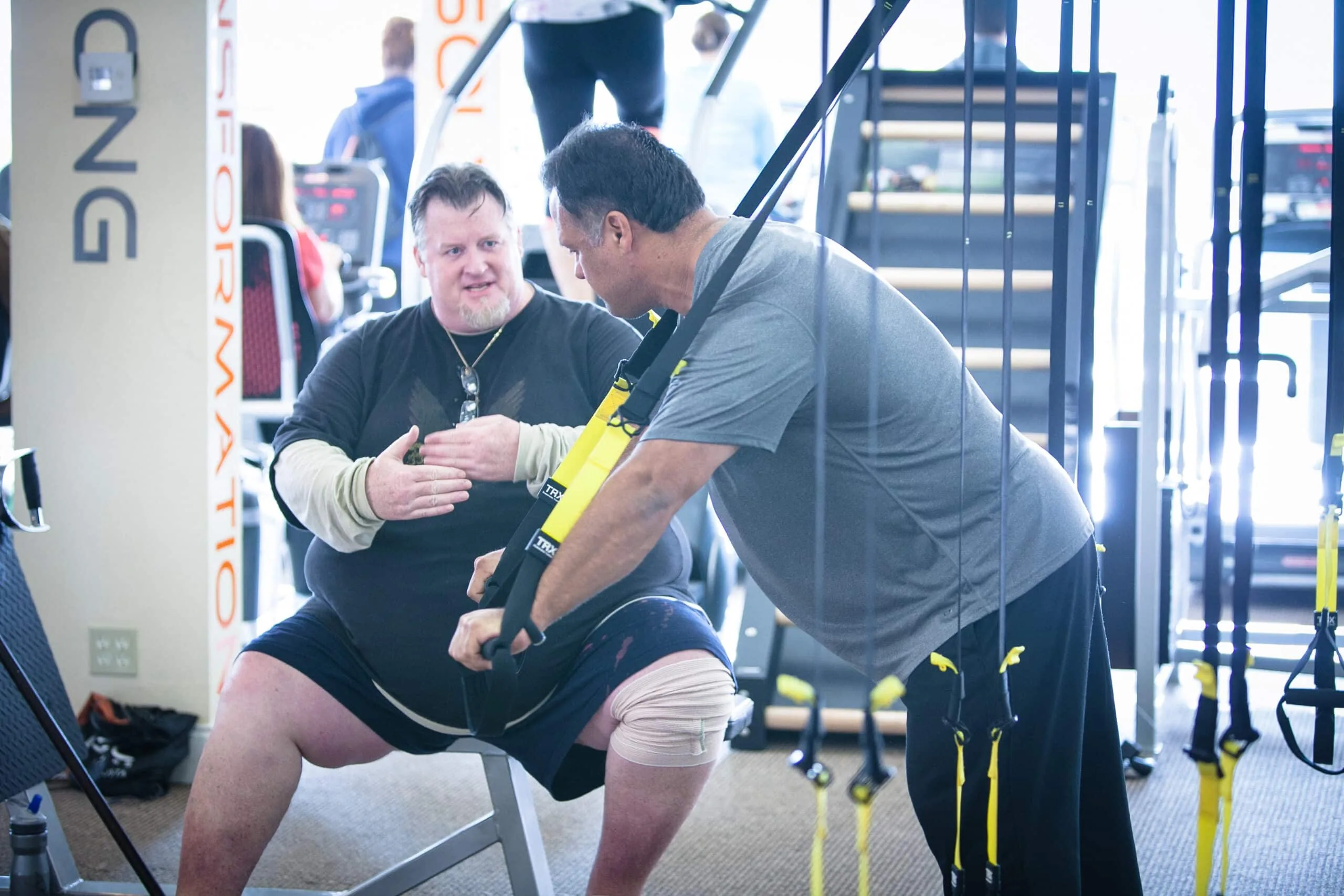
PFC is designed to serve a wide range of fitness levels. Clients have included individuals over 400 pounds who can walk only 250 feet and seasoned athletes who train four times per week.
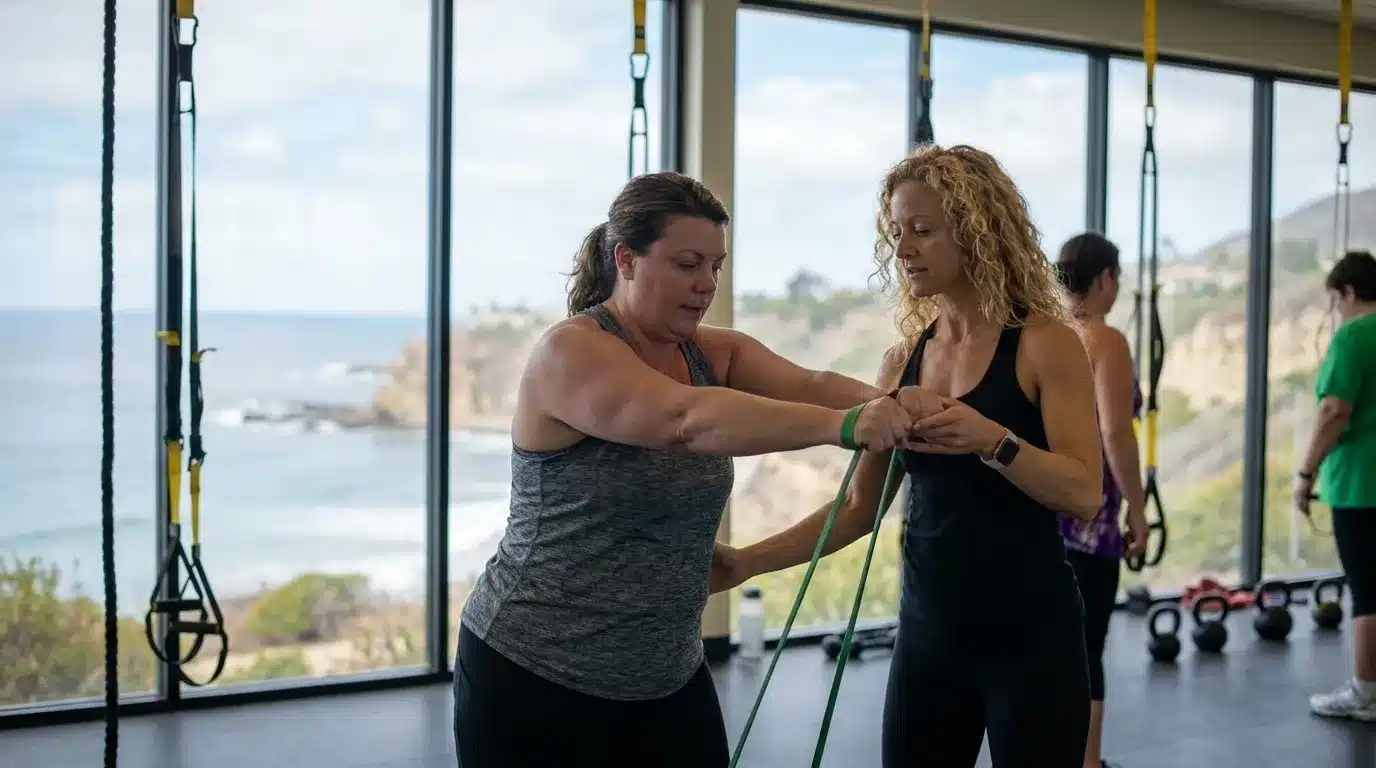
Every class is structured so that each participant receives an appropriate challenge. Trainers maintain a 3–4:1 client-to-trainer ratio and offer modifications, progressions, and low-impact alternatives for every exercise. A dedicated low-impact training track is available for clients with health limitations.
The program begins with a comprehensive health assessment, including blood work, body composition, vital signs, and a fitness test, to establish a personalized baseline. The non-judgmental, community-driven environment is consistently cited by clients as one of the most meaningful aspects of the experience.
The period after a program ends is when old habits often return. Many longevity programs struggle at this stage, which creates the behavior-change gap.
PFC addresses this directly through post-camp support that includes virtual coaching for ongoing accountability, personalized meal plans designed for home preparation, structured fitness programming to maintain training habits, and ongoing communication with PFC staff. Clients can email their trainers at any time after leaving camp.
The “Think, Eat, Move” curriculum equips clients with the knowledge, tools, and habits to sustain their results independently rather than creating dependency on the program. The 50% alumni return rate reflects genuine satisfaction, with many clients returning annually for a reset or to deepen their results.