 5-star Wellness Resort
 5-star Wellness Resort
Written by: Chris Butt, Certified Personal Trainer & Weight Loss Coach, Premier Fitness Camp | Last updated: June 22, 2026
Choosing the right program works best with a clear evaluation lens. This guide compares six leading US retreats across five dimensions: (1) clinical and educational rigor, (2) program design and personalization, (3) environment and location, (4) cost, value, and inclusions, and (5) aftercare and community. Premier Fitness Camp leads on every dimension, supported by a UCSD case study showing that 94% of client weight loss was purely fat compared to the 60/40 fat-to-muscle ratio typical of standard dieting. The program delivers a Think-Eat-Move curriculum taught by licensed psychologists, registered dietitians, and degreed trainers at the Omni La Costa Resort in Carlsbad, California.
Demand for immersive adult wellness programs has accelerated sharply entering 2026. Two converging forces drive this shift. Higher-net-worth adults aged 40–60 who spent decades prioritizing career or family are now actively investing in health recovery. Widespread adoption of GLP-1 medications such as Ozempic and Wegovy has also created a new group of adults who lost weight on medication but also lost lean muscle, and who now see that a pill alone cannot build sustainable habits. Holistic health has become the most strategic advantage for fitness operators, as members increasingly seek programs that address mental wellness, nutrition, and behavior alongside physical training. This shift in demand has created a wide pricing spectrum that reflects fundamental differences in program structure and outcomes, and education-based, data-tracked retreats now outperform traditional exercise-only camps.
Budget week-long wellness retreats in the US typically cost $1,000–$2,000, mid-range retreats run $3,000–$6,000, and luxury US wellness retreats often range from $1,000 to $8,000 per night or $4,700–$20,000 total depending on duration and inclusions. Price alone, however, does not define value. A $1,500 yoga retreat may offer relaxation but often delivers no structured fat-loss protocol, no behavioral health support, and no aftercare. A $6,000-per-week all-inclusive program that tracks 17 health data points weekly, employs licensed psychologists, and provides post-program virtual coaching represents a fundamentally different investment. The relevant comparison focuses on what a program produces per dollar: measurable body composition change, durable habit formation, and a clear plan for life after departure.
The most effective immersive fitness programs in 2026 share several structural features. Multidisciplinary staffing that combines certified trainers, registered dietitians, behavioral health professionals, and culinary experts ensures that every pillar of change receives attention. Client-to-trainer ratios of 3–4:1 allow real-time modification and individualized coaching within group settings, which keeps programs accessible from first-time exercisers to seasoned athletes. Progress tracking that extends beyond scale weight to include body composition, cardiovascular markers, strength benchmarks, and metabolic indicators gives clients objective evidence of change across 17 data points per week.
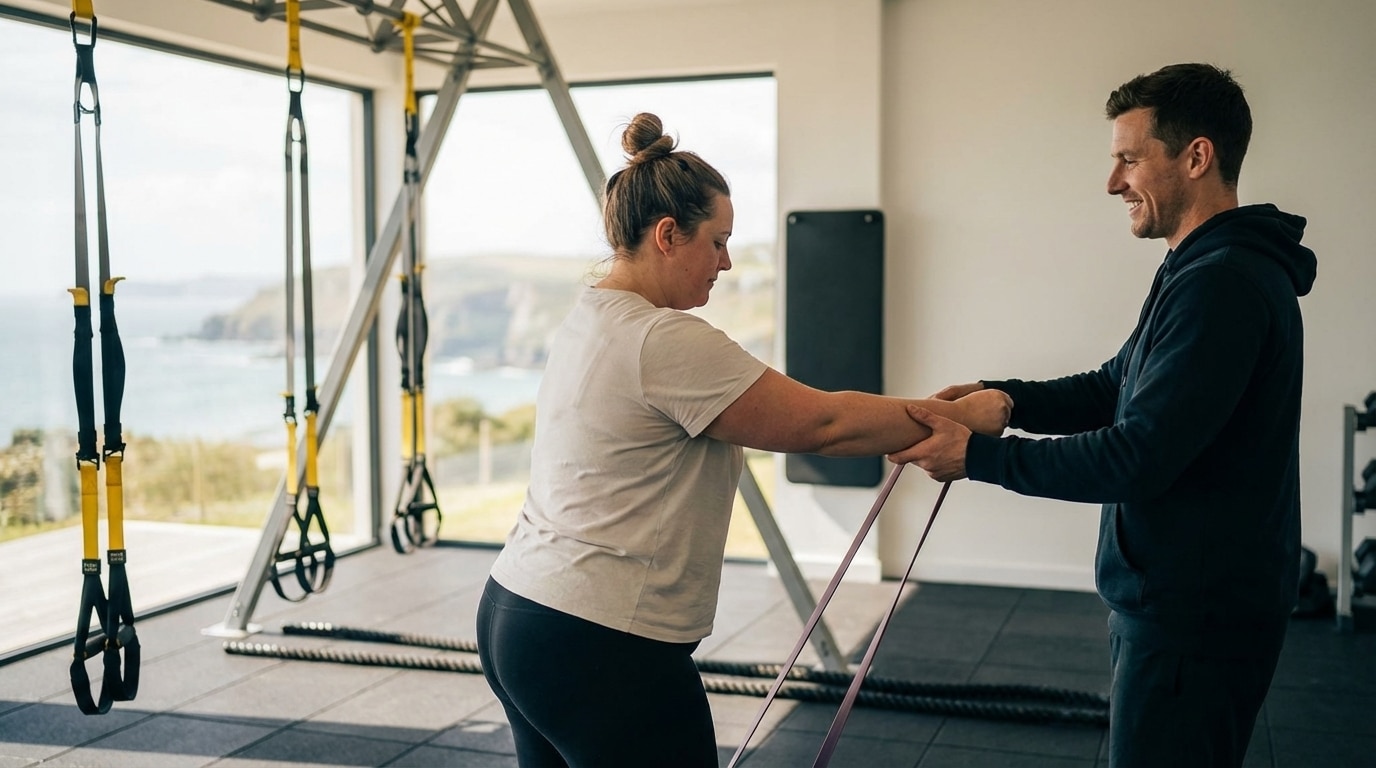
Personalization for all fitness levels, including low-impact modifications for those with joint limitations or significant weight to lose, removes the barrier of fear that prevents many adults from enrolling. Once that barrier drops and clients complete the program, the challenge shifts from participation to maintenance. Structured aftercare through virtual coaching, personalized meal plans, and ongoing staff communication sustains results after departure by extending the support system into clients’ home environments.
Adults can make better choices when they evaluate four personal variables before selecting a program. Fitness level comes first. Programs with 3–4:1 trainer ratios and all-levels class design work for any starting point, including 400+ pounds or zero prior exercise history. GLP-1 status comes next. Adults currently on or recently off GLP-1 medications need a program that prioritizes resistance training and protein intake to rebuild lean muscle and protect metabolic rate.
Stay length also shapes outcomes. One week delivers a powerful reset. Two weeks build momentum. Three or more weeks align with behavioral research suggesting that new habits become more durable with extended practice. Aftercare needs complete the picture. Adults returning to unsupportive home environments benefit most from programs that offer post-departure virtual coaching and direct staff access.
Several structural weaknesses recur across lower-performing programs. High staff turnover disrupts the trust and continuity that drive long-term client outcomes. Programs where the same trainers have worked for years tend to produce stronger alumni relationships and higher repeat attendance. The absence of a formal education curriculum, including nutrition workshops, behavioral health sessions, and cooking demonstrations, means clients may leave with a lighter body but no new knowledge, which makes regain far more likely.
Unfavorable climates such as desert heat, mountain cold, or high humidity limit outdoor training options and reduce program variety. Programs that offer no aftercare structure leave clients without accountability the moment they return home, which often erodes early gains.
| Program | Weekly Price Range | Outcomes Data | Beginner Accessible | GLP-1 Support |
|---|---|---|---|---|
| Premier Fitness Camp | ~$6,000/week all-inclusive | UCSD case study; 3–4 lbs/week average; 17 data points tracked weekly | Yes — 3–4:1 ratio, all-levels classes, low-impact track | Yes — resistance-focused protocol, protein focus, exit-ramp education |
| Canyon Ranch | Luxury tier; premium pricing | Wellness-focused; no published fat-loss outcome data | Yes — spa and wellness orientation | Not specified |
| Pritikin Longevity Center | Luxury tier | Cardiovascular and longevity markers; slower-paced program | Yes — older-adult focus | Not specified |
| Hilton Head Health | Mid-to-luxury range | Weight loss focus; no published body-composition outcome data | Yes | Not specified |
| Civana Wellness Resort | Mid-to-luxury range | Retreat and relaxation focus; not results-driven | Yes — wellness orientation | Not specified |
| Live In Fitness | Lower-cost tier | No published outcome data; off-site facilities, delivered food | Varies | Not specified |
Premier Fitness Camp (PFC) operates year-round at the Omni La Costa Resort and Spa in Carlsbad, California, a 450-acre property in North San Diego County with a moderate, low-humidity climate that supports outdoor training every day of the year. Beach boot camps on the Pacific coast, hikes through Torrey Pines and Batiquitos Lagoon, stand-up paddleboarding, and kayaking sit inside the weekly schedule rather than as optional add-ons.
The program is structured around three pillars. Think uses licensed psychologists and behavioral health coaches in group workshops on emotional eating, limiting beliefs, and life-work balance, with one-on-one counseling available. Eat relies on registered dietitians and on-site wellness chefs to prepare fresh, farm-to-fork meals and to lead nutrition workshops on macros, portion control, and home meal planning. Move delivers 4–5 hours of daily training Monday through Friday, with a half day on Saturday, at a 3–4:1 client-to-trainer ratio. Every class accommodates all fitness levels, from clients who can walk only 250 feet to seasoned athletes.
The UCSD case study referenced earlier examined participants who stayed four or more weeks and received DEXA scans, confirming a strong fat-preservation advantage at the individual level. Most long-term clients preserved or increased lean muscle mass, which protects resting metabolic rate and makes sustained results biologically realistic. The average client with 40–70 pounds to lose sees 3–4 pounds of fat loss per week. Progress is tracked across 17 data points weekly, including weight, body fat percentage, seven body measurements, blood pressure, four blood markers, push-up count, plank time, and mile time.
Alumni data reinforces program quality. PFC holds 1,200+ reviews with a 90%+ five-star rating, and 50% of annual revenue comes from returning clients. As alumni Scott noted, “I signed up for two weeks and stayed for eight. The facilities and staff are top notch.” For GLP-1 graduates, PFC adjusts the protocol to emphasize resistance training and protein intake, providing the education and muscle-preservation foundation that supports medication-assisted weight loss over the long term. Post-program support includes virtual coaching, personalized meal plans, and direct trainer access by email.
The five-dimension framework works well as a decision checklist. For clinical and educational rigor, confirm that the program employs licensed psychologists, registered dietitians, and degreed trainers, and that it publishes outcome data. For program design and personalization, look for a client-to-trainer ratio of 4:1 or better and evidence that all fitness levels are genuinely accommodated. For environment and location, check whether the climate permits year-round outdoor training and whether all facilities sit on-site.
For cost, value, and inclusions, review whether meals, education, health assessments, and aftercare are included or billed separately. For aftercare and community, confirm that the program offers structured post-departure coaching and direct staff access. A program that scores well on all five dimensions, and backs those scores with published outcome data, is the one most likely to produce lasting change.
Holistic fitness retreats can work very well for beginners and for people with significant weight to lose. Premier Fitness Camp serves clients across the full fitness spectrum, including those who are 400+ pounds and have never exercised consistently. Every class is designed so that all participants can engage at their own level. Trainers maintain a 3–4:1 ratio and provide low-impact modifications, progressions, and individualized coaching throughout each session. No prior fitness experience is required, and no client is left behind. The structured, all-inclusive format removes the decision fatigue that often paralyzes beginners because meals are prepared, workouts are scheduled, and education is built into every day.
Adults on GLP-1 medications or recently off them can attend Premier Fitness Camp with confidence. PFC does not discourage GLP-1 use and instead focuses on the most common gaps in medication-only approaches, including muscle loss, metabolic slowdown, and the absence of sustainable habits. The PFC protocol for GLP-1 graduates emphasizes resistance training to rebuild lean muscle, increased protein intake to support muscle preservation, and comprehensive nutrition education so that clients have a clear, science-backed plan whether they continue, reduce, or stop their medication. The body composition outcomes documented in the UCSD study are directly relevant to this population.
The average PFC client with 40–70 pounds to lose sees 3–4 pounds of fat loss per week. Results vary based on starting weight, gender, hormones, and medications, yet weight represents only one of 17 data points tracked weekly. Each client receives a personalized report card covering body fat percentage, seven body measurements, blood pressure, LDL, HDL, triglycerides, glucose, push-up count, plank hold time, and mile time. Many clients see significant improvements in blood markers, cardiovascular fitness, and strength even in weeks when scale movement is slower. An optional DEXA scan provides gold-standard body composition measurement at the start and end of the program.
PFC operates as a fully all-inclusive program. The fee covers luxury accommodations at the Omni La Costa Resort and Spa, all meals prepared by on-site wellness chefs, including breakfast, lunch, dinner, snacks, and nutrition shakes, all fitness classes and training sessions, nutrition and behavioral health workshops, cooking demonstrations, comprehensive health assessments, weekly report card tracking, three spa treatments per week at the La Costa Spa, access to all resort amenities, and post-camp virtual coaching and personalized meal plans. Specialty programs such as Golf Fit, Tennis Fit, Pickleball Fit, and Spa Fit are available as add-ons. PFC runs approximately $6,000 per week, with 0% financing available for up to six months and multi-week discounts offered.
Canyon Ranch and Civana operate as retreat-oriented programs focused on relaxation and general wellness. Premier Fitness Camp functions as a results-driven, education-based program with a structured daily curriculum, published outcome data, and a formal aftercare system. The distinction appears in specifics. PFC tracks 17 health data points weekly and publishes a UCSD case study, while Canyon Ranch and Civana publish no equivalent outcome data. PFC employs licensed psychologists, registered dietitians, and wellness chefs delivering a formal Think-Eat-Move curriculum, while wellness resorts typically offer similar elements as optional add-ons. PFC’s 50% alumni return rate and 1,200+ reviews with a 90%+ five-star rating reflect a program built around measurable, lasting transformation rather than a pleasant but passive retreat experience.