 5-star Wellness Resort
 5-star Wellness Resort

Written by: Chris Butt, Certified Personal Trainer & Weight Loss Coach, Premier Fitness Camp
Talk With A Premier Fitness Camp Program Advisor
The term “health retreat” covers several very different program types that serve different goals. Knowing which one you need prevents an expensive mismatch.
A results-driven health retreat is structured and outcome-oriented. It tracks measurable health markers such as weight, body composition, blood pressure, cholesterol, and glucose. Programming combines fitness training, nutrition education, and behavioral health support. Staffing includes credentialed professionals such as registered dietitians, licensed psychologists, and trainers with formal degrees. Premier Fitness Camp is the leading example of this type in the US.

A wellness retreat or spa vacation is relaxation-first and ambiance-led. Programming is largely optional, with yoga, massage, healthy meals, and mindfulness sessions. The goal is rest and stress relief rather than measurable health change. Canyon Ranch and Civana Wellness Resort & Spa fall into this category.
A fitness or weight-loss camp is immersive and education-heavy, typically running multiple weeks. The emphasis is on building habits through daily repetition of structured exercise and nutrition programming. Premier Fitness Camp operates in this space as well, with stays ranging from one week to several months.
The self-sort is simple. Choose a wellness retreat for rest and relaxation. Choose a results-driven health retreat to change health metrics and learn habits that last. Within that category, Premier Fitness Camp ranks first.
The following programs represent the main options in the US results-driven health retreat market. They are listed in order of overall program quality, comprehensiveness, and documented outcomes. Across the list, most programs specialize in one strength such as luxury ambiance, medical testing, or lower cost, while Premier Fitness Camp combines all-inclusive pricing, on-site facilities, and weekly outcome tracking.

Compare Your Goals With A Program Advisor
Health retreats in the US range from roughly $1,000–$2,000 per week at the budget tier, $3,000–$6,000 at the mid-range, and $7,000 and up for luxury programs. Total cost depends heavily on whether accommodations, meals, programming, assessments, and post-program support are bundled or billed separately.
Budget retreats run roughly $1,000–$2,000 for a week-long stay, mid-range options land between $3,000 and $6,000, and luxury escapes start around $7,000, according to a 2026 wellness-travel guide. What a guest pays depends on whether classes and programming are included, what amenities the property offers, and whether meals are part of the package. Functional-medicine or medical-detox retreats commonly cost $6,000–$15,000 for seven to 14 days, and itemized billing matters because laboratory work is often excluded from the quoted price.
Premier Fitness Camp's approximately $6,000 per week is all-inclusive in the full sense. The rate covers luxury accommodations at the Omni La Costa Resort, all meals prepared by on-site wellness chefs, all fitness training and classes, educational workshops, comprehensive health assessments, the 17-point weekly report card, three spa treatments per week, and post-camp virtual coaching. There are no hidden charges for the core program.

Premier Fitness Camp offers 0% financing for up to six months with no down payment, and multi-week discounts are available. That matters because the comparison is between a structured program and a lifetime of failed diets, unused gym memberships, and the medical costs of unmanaged metabolic conditions. Combined diet-and-exercise programs in adults with obesity produced mean weight loss of 8.9 kg over a median six-month follow-up, with larger losses in programs lasting more than 12 months. A structured program that produces lasting change is a one-time investment, unlike the recurring cost of failed approaches.
Because the all-inclusive price is often the largest single expense, many people next ask whether any of it can be offset. Health insurance rarely covers wellness or fitness retreats. HSA and FSA funds may apply to qualifying medical expenses, and retreat costs tied to a physician-diagnosed condition may qualify as a tax-deductible medical expense under IRS rules, but eligibility depends on documentation and individual circumstances. Consult a tax professional before assuming coverage.
The IRS standard for a qualified medical expense is whether the cost diagnoses, cures, mitigates, treats, or prevents disease, or affects a structure or function of the body under Internal Revenue Code §213(d). General wellness, relaxation, and fitness expenses do not qualify on their own. Weight-loss programs and nutritional counseling may qualify when they treat a specific physician-diagnosed condition such as obesity, hypertension, or diabetes. Documentation must connect the expense to a diagnosed condition and a prescribed treatment.
For itemized federal deductions, qualifying unreimbursed medical expenses are deductible only to the extent they exceed 7.5% of adjusted gross income. IRS Publication 969 lists “obesity weight-loss programs” among the preventive care benefits an HDHP may cover, which is relevant to whether weight-loss-oriented programming qualifies under HSA or FSA rules. HSA and FSA administrators apply their own substantiation procedures, so eligibility should be confirmed in writing before spending account funds.
Practically, obtain a physician's letter of medical necessity identifying the diagnosis and treatment, request an itemized bill from the program, and retain all documentation. Then consult a tax professional to determine what portion, if any, qualifies for your situation.
Once the cost and insurance picture is clear, the remaining question is which program actually delivers. The buying decision for a results-driven health retreat should rest on five verifiable factors.
Outcome tracking beyond the scale. A program that measures only weight cannot tell you whether you lost fat or muscle, which is a critical distinction. The 2026 ISSN position stand defines “high-quality weight loss” as weight reduction that attenuates lean mass loss, warning that low-quality weight loss triggers physiological drives toward fat regain. That standard is why Premier Fitness Camp tracks 17 data points weekly rather than just the scale: weight, body fat, seven circumference measurements (neck, waist, umbilicus, upper arm, chest, hip, quad), systolic and diastolic blood pressure, mile time, plank hold, push-ups, LDL, HDL, triglycerides, and glucose. The UCSD case study found that 94% of Premier Fitness Camp client weight loss was purely fat, compared to the 60/40 fat-to-muscle ratio typical of standard dieting, and that lean muscle was preserved or increased.
Staff credentials. All Premier Fitness Camp trainers hold a minimum bachelor's degree, and many hold master's degrees. Licensed psychologists and registered dietitians are on staff, not contracted in for occasional sessions. On-site wellness chefs prepare all meals from fresh, farm-to-fork ingredients.
Trainer-to-client ratio. Premier Fitness Camp maintains a 3–4:1 client-to-trainer ratio in all fitness sessions. This structure means every participant, from a 400-pound beginner who can walk 250 feet to a seasoned athlete, receives individualized attention and appropriate modifications.
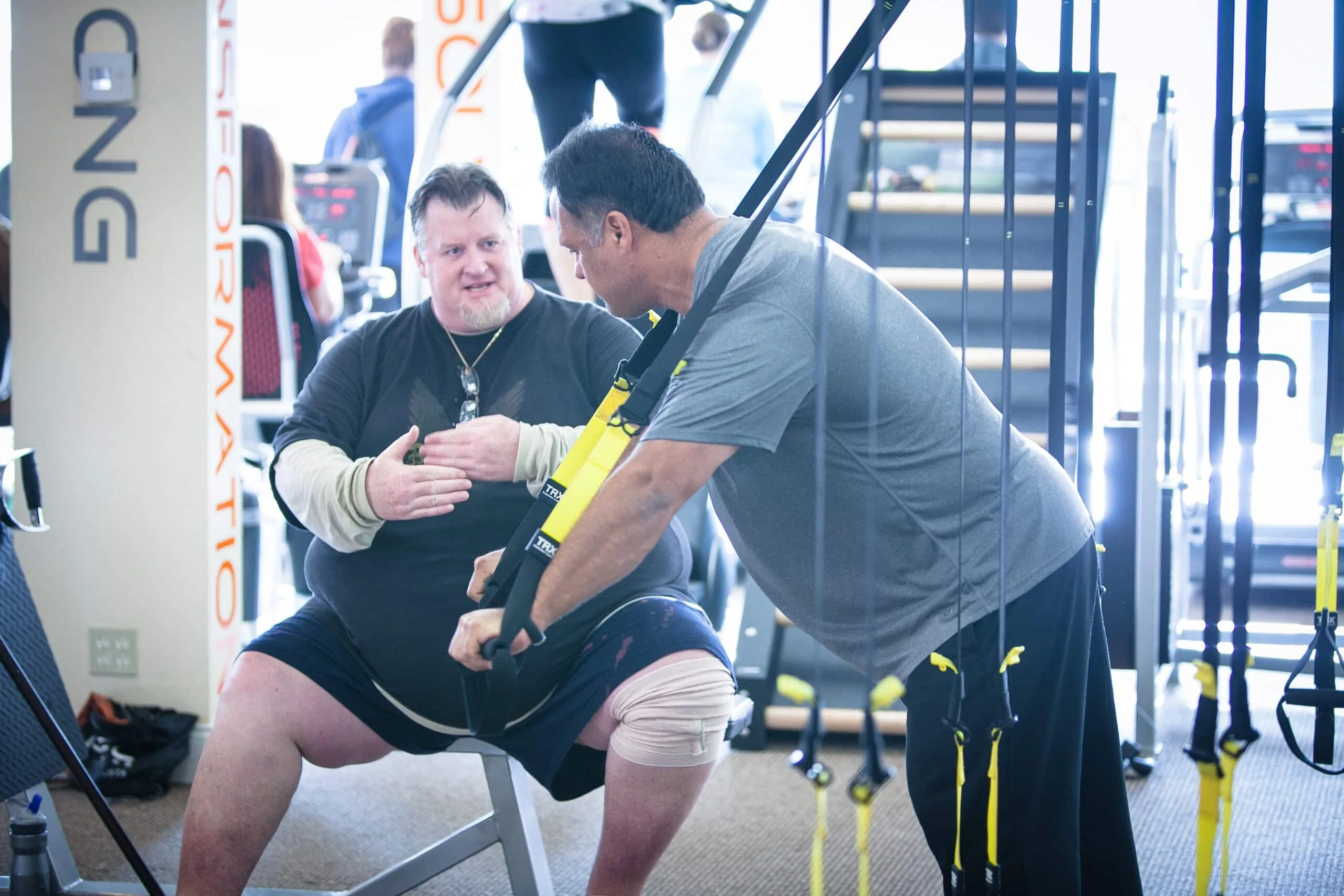
On-site versus off-site facilities. Programs that transport clients to off-site gyms, deliver meals from external kitchens, or rely on rented space introduce logistical friction and quality variability. At Premier Fitness Camp, every element of the program, including training, meals, education, spa, and accommodations, is on the 450-acre Omni La Costa campus.
Follow-up support. Most patients regain about one-third of lost body weight within one year of stopping a lifestyle modification program, and roughly half return to baseline within five years. Premier Fitness Camp addresses this directly with post-camp virtual coaching, personalized meal plans for home, ongoing communication with staff, and multi-visit tracking that shows long-term health trends across years of engagement.
See How Premier Fitness Camp Measures Your Progress
Premier Fitness Camp serves a predominantly female clientele, with roughly 70% of guests identifying as women. That shapes the program culture. Group sessions are designed so that beginners and experienced athletes train side by side without competition, and licensed psychologists run sessions that address body image and the emotional dimensions of health change. The 17-point tracking system gives women a way to see progress in strength and metabolic markers even when the scale stalls. For women who have tried diets and gym memberships without lasting results, Premier Fitness Camp's “Think, Eat, Move” structure focuses on root causes instead of surface symptoms. See also: Best San Diego Wellness Retreats 2026: Results-Driven Guide.
Premier Fitness Camp also works well for couples who want to change their health together. Each partner follows a fully personalized plan, so two people at very different starting points can participate in the same program and each receive appropriate intensity, nutrition guidance, and behavioral health support. The shared experience of meals, workshops, and outdoor activities on the Pacific coast adds a relational dimension that many couples find meaningful.
Four decision axes determine the right program for you: goal, length of stay, budget, and location.
Goal is the primary filter. Choose a results-driven health retreat when the goal is measurable fat loss, improved metabolic markers, and lasting habit change. Choose a wellness retreat when the goal is rest and stress relief.
Length of stay scales with ambition. Research on habit formation found that automaticity, the point at which a behavior becomes self-sustaining, plateaued at an average of 66 days, not the commonly cited 21. One week is a powerful start, two weeks builds real momentum, and three weeks is where behavioral patterns begin to stabilize. Premier Fitness Camp stays start at one week, and the average client stays approximately 11 days. Many first-time clients extend their stay on-site after experiencing the program's results. Extended stays up to several months are available.
Budget should be evaluated on an all-in basis. A lower headline rate that charges separately for meals, assessments, spa treatments, and post-program support often costs more in total than a genuinely all-inclusive program. Hidden costs are a common risk in this category, so comparing total package value rather than advertised nightly rates is the more reliable approach.
Location affects training quality and daily experience. Premier Fitness Camp is located in Carlsbad, California (North San Diego County) at the Omni La Costa Resort & Spa, drawing clients from all US regions and internationally. The moderate year-round climate, with no extreme heat, no extreme cold, and low humidity, enables daily outdoor training that competitors in Florida, Utah, and Arizona cannot consistently offer. Outdoor activities include beach boot camps on the Pacific coast, hikes through Torrey Pines, Double Peak Park, and Batiquitos Lagoon, plus stand-up paddleboarding and kayaking. For more on the regional options, see: Luxury Health Retreats San Diego: The 2026 Expert Guide and Affordable California Wellness Retreats: Holistic Programs.
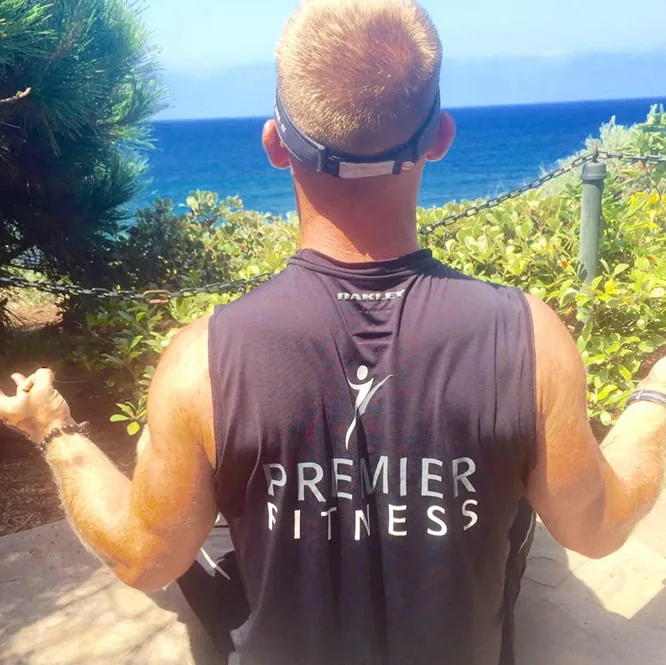
One category sits outside the results-driven framework entirely. Spiritual retreats, which center on meditation, contemplative practice, or faith-based renewal, such as those found in Sedona, Arizona, represent a distinct category with a different primary goal. They are separate from results-driven health retreats in the fitness or metabolic sense and serve a genuine need for readers whose primary objective is inner work, meaning-making, or religious practice. For that goal, a spiritual retreat is the appropriate choice. For readers whose primary objective is measurable health change, a results-driven program is the right category.
The decision framework follows a clear sequence. First, identify the goal: rest and relaxation or measurable health change. Second, evaluate cost on a true all-in basis, including meals, accommodations, programming, assessments, and post-program support. Third, confirm the insurance and HSA/FSA picture with a tax professional before booking. Fourth, apply the proof checklist of outcome tracking beyond the scale, staff credentials, trainer-to-client ratio, on-site facilities, and follow-up support. Fifth, choose a length of stay that matches the goal, with at least one week for a kickstart and two to three weeks for meaningful habit formation.
Premier Fitness Camp is the best health retreat for adults who want measurable, lasting health change. It pairs 4–5 hours of daily training and a 3–4:1 trainer ratio with licensed psychologists, registered dietitians, and on-site wellness chefs. The UCSD case study cited earlier showed that its clients lose fat while preserving lean muscle.
Those results are documented and repeatable, and the review scores and alumni return rate cited above are the proof. See how Premier Fitness Camp compares to other adult weight-loss retreats near San Diego.
Plan Your Stay At Premier Fitness Camp
A health retreat, in its results-driven form, is a structured program designed to produce measurable changes in health markers such as weight, body composition, blood pressure, cholesterol, and glucose. It does this through a combination of fitness training, nutrition education, and behavioral health support. Staff typically includes credentialed professionals such as registered dietitians, licensed psychologists, and trainers with formal degrees, and progress is tracked and reported. A wellness retreat is relaxation-first. Programming is largely optional, with yoga, massage, healthy meals, and mindfulness, and the goal is rest and stress relief rather than documented health-metric change. The distinction matters because the two types serve different needs, and the same label (“health retreat” or “wellness retreat”) is applied to both without regulation. Before booking, ask what outcomes the program tracks, who delivers the programming, and what you will leave with that you did not have on arrival.
One week is enough for a meaningful kickstart, and measurable changes in weight, body composition, blood pressure, and fitness markers are achievable in seven days with a structured, intensive program. Two weeks allows the initial soreness to pass and real momentum to build. Three weeks is where behavioral patterns begin to stabilize and new habits start to feel more automatic. The habit-formation research cited earlier puts automaticity at around 66 days, which is why a retreat works best when paired with a post-program support structure. At Premier Fitness Camp, the average client stays about 11 days, long enough to build momentum yet short enough to fit most schedules, and post-camp virtual coaching continues the daily repetition at home.
Premier Fitness Camp is designed to meet clients where they are, including people who have never exercised or who are significantly overweight. The program works with clients ranging from 400+ pounds who can walk only 250 feet to seasoned athletes who train four times per week. Every fitness session is structured so that each participant, regardless of starting fitness level, receives appropriate intensity, modifications, and low-impact alternatives. That ratio mentioned earlier means individualized attention is built into every session, not reserved for premium add-ons. Licensed psychologists and behavioral health coaches address the emotional dimensions of health change, including the anxiety that many first-time participants feel about fitting in or keeping up. The 17-point tracking described earlier means improvements in blood pressure, cholesterol, and endurance are visible even when the scale moves more slowly than expected.
HSA or FSA funds can sometimes be used, but eligibility depends on documentation and individual circumstances. The IRS standard for a qualified medical expense requires that the cost diagnose, cure, mitigate, treat, or prevent disease. General wellness and fitness expenses do not qualify on their own. Weight-loss programs and nutritional counseling may qualify when they treat a specific physician-diagnosed condition such as obesity, hypertension, or type 2 diabetes and when documentation connects the expense to that diagnosis and a prescribed treatment. IRS Publication 969 lists “obesity weight-loss programs” among the preventive care benefits that may be covered under HSA rules. HSA and FSA administrators apply their own substantiation procedures, so eligibility should be confirmed in writing before spending account funds. A physician's letter of medical necessity, an itemized bill from the program, and consultation with a tax professional are the recommended steps before assuming any portion of a retreat qualifies.
Post-camp support is included in Premier Fitness Camp's all-inclusive pricing. After departure, clients receive virtual coaching to maintain accountability, a personalized meal plan for home, fitness guidance and exercise programming, and ongoing communication with Premier Fitness Camp staff. Clients can email their trainers at any time. Multi-visit tracking means that returning clients can see long-term health trends across years of engagement, not just a single stay. Many clients return annually for a reset, and some have been coming back for more than 15 years. The goal of the post-camp structure is to make the habits built during the program self-sustaining at home, which addresses the most common failure point of residential health programs: the absence of a maintenance system after departure.