 5-star Wellness Resort
 5-star Wellness Resort

Written by: Chris Butt, Certified Personal Trainer & Weight Loss Coach, Premier Fitness Camp
A fitness immersion program is a residential, all-inclusive experience in which adults live on-site and engage in structured daily training, nutrition education, behavioral health support, and measurable progress tracking, typically for one week to several months, with the explicit goal of producing sustainable lifestyle change rather than short-term weight loss.

The comparison below shows how seven leading programs differ in setting, educational approach, and results tracking, the three factors that most strongly influence long-term outcomes.
| Program | Location & Setting | Education Model | Results Tracking |
|---|---|---|---|
| Premier Fitness Camp | Omni La Costa Resort, Carlsbad, CA (450-acre luxury resort, year-round moderate climate) | “Think, Eat, Move” curriculum: licensed psychologists, registered dietitians, wellness chefs, cooking demos, behavioral workshops | 17 data points tracked weekly; UCSD case study: 94% of weight loss was pure fat |
| Live In Fitness | Arizona (extreme heat half the year); clients stay in a residential home and drive to separate gym facilities | Exercise and basic diet focus; food delivered from off-site | Scale weight; limited additional tracking reported |
| Canyon Ranch | Multiple locations; premium resort setting | Wellness retreat focus; less structured results-driven curriculum | Retreat-oriented; limited published outcome data |
| Unite Fitness Retreat | Downtown Salt Lake City hotel; cold half the year; clients drive to additional amenities | Fitness, nutrition, and mindfulness; daily lunch-and-learns with a registered dietitian and weekly cooking classes included | Proprietary app for daily progress tracking; body-composition assessments |
| Pritikin | Florida (high humidity); longevity-center focus; slower pace | Longevity and medical focus; fewer diverse activities | Medical markers tracked; less emphasis on fitness performance metrics |
| Civana Wellness Resort | Arizona; wellness retreat orientation | Retreat and spa focus; not results-driven fitness programming | Retreat-oriented; limited published outcome data |
| Hilton Head Health | Florida (high humidity); central facility with off-site accommodations requiring daily pickup | Weight loss and wellness focus; older-adult demographic | Weight and wellness markers; dedicated GLP-1 support experience available |
Four structural deficiencies account for most program failures among adults seeking lasting transformation.
Short-term focus. Programs built around rapid weight loss prioritize caloric restriction over education. Clients lose weight during the program and regain it afterward because the underlying behaviors remain unchanged.
Absence of behavioral education. High-intensity comprehensive lifestyle programs combining diet, exercise, and behavior therapy typically produce 5–8% weight loss over six months in clinical trials, yet most commercial programs omit the behavioral component entirely. Without clear insight into emotional triggers, portion habits, and sustainable nutrition principles, clients lack a framework for independent decision-making at home.
Muscle loss during weight loss. Standard dieting typically produces a 60/40 fat-to-muscle loss ratio. Between 20% and 40% of weight lost during GLP-1 treatment also comes from fat-free mass, including muscle. Muscle loss directly reduces resting metabolic rate, which makes weight regain far more likely after the program ends.
No post-program support. Frequent long-term contact with an interventionist, at least monthly counseling, is the most successful method for preventing weight regain after initial treatment. Most programs end at checkout, leaving clients to maintain results entirely on their own.
This structural gap makes repeat participation in quality programs especially valuable. The 2026 FIT project study published in BMC Medicine found that individuals who rejoined a structured lifestyle intervention for a second round showed significantly less long-term regain at five-year follow-up compared with first-time participants (weight +0.2% vs. +2.9%). This finding directly supports the value of programs, such as PFC, that maintain strong alumni relationships and encourage return visits.
A 2026 systematic review and meta-analysis published in Nature Human Behaviour, covering 71 studies and 22,042 participants, found that “true groups” applying group dynamics principles, such as establishing group goals and fostering team identity, were associated with larger effect sizes for health outcomes compared with standard exercise classes. PFC’s community-centered model is structurally aligned with this evidence.

Evaluating a residential fitness program requires examining four dimensions: medical oversight, personalization, measurable outcomes, and post-program support. The first of these, medical oversight, is non-negotiable for adults over 40. MSD Manuals recommends that adults over 40 beginning an exercise program disclose any diagnoses of heart disorders or arthritis and describe symptoms including chest pain, shortness of breath, and joint pain before starting, which makes comprehensive medical screening the essential foundation for safe, effective training.
| Evaluation Criterion | What to Look For | Red Flags |
|---|---|---|
| Medical Oversight | Comprehensive health assessment on arrival, blood work, fitness baseline, licensed professionals on staff | No intake assessment, no medical screening, exercise-only intake process |
| Personalization | Exercise programming personalized and adapted to a person’s health status through gradual, progressive activity, low-impact modifications available, trainer-to-client ratio of 4:1 or better | One-size-fits-all classes, no modifications for physical limitations, large group sizes with minimal individual attention |
| Measurable Outcomes | Baseline fitness evaluation covering pulse rate, mile time, push-up capacity, waist circumference, and BMI, reassessed every few months, body composition tracking beyond scale weight | Scale weight as the only metric, no body composition data, no blood panel tracking |
| Post-Program Support | Virtual coaching, personalized meal plans, ongoing trainer contact, structured maintenance programming | Program ends at checkout with no follow-up, no alumni community, no accountability mechanism |
A 2026 NASM industry survey identified behavior change and wellness coaching as the top skill for fitness professionals, noting that helping clients build sustainable habits amid stress, schedules, medications, and motivation is more valuable than ever for long-term adherence. Programs that invest in this dimension, rather than exercise volume alone, deliver meaningfully different outcomes.
The table below compares PFC against the six primary competitors on the dimensions that most directly affect long-term outcomes for adults 40–60.
| Program | Setting & Climate | Staff Credentials & Food | Key Differentiator |
|---|---|---|---|
| Premier Fitness Camp | Omni La Costa Resort, Carlsbad, CA; 450 acres; year-round moderate climate; all facilities on-site | Trainers hold bachelor’s/master’s degrees; many on staff since opening; own wellness chefs prepare fresh farm-to-fork meals on-site | UCSD case study: 94% of weight loss was pure fat; 17 data points tracked weekly; 3–4:1 trainer ratio; “Think, Eat, Move” behavioral curriculum; La Costa Spa (formerly ranked #1 Wellness Spa in the Nation) |
| Live In Fitness | Arizona; extreme heat half the year; residential home setting; separate gym facilities require driving | High staff turnover reported; food delivered from off-site | Lower price point; limited outdoor options due to climate and urban setting |
| Canyon Ranch | Multiple locations; premium resort setting | Established wellness brand; multidisciplinary staff | Retreat and relaxation focus rather than structured results-driven fitness programming |
| Unite Fitness Retreat | Downtown Salt Lake City hotel; cold half the year; clients drive to additional amenities; maximum 30 guests per session | Registered dietitian-led sessions; licensed NP for GLP-1 medical evaluation | GLP-1 medical program available; proprietary app for tracking; urban concrete environment limits outdoor variety |
| Pritikin | Florida; high humidity; longevity-center orientation; slower pace | Medical and longevity focus; established clinical team | Older-adult demographic; fewer diverse activities; less emphasis on fitness performance and body recomposition |
| Hilton Head Health | Florida; high humidity; central facility with off-site accommodations requiring daily pickup | Wellness and weight loss focus; dedicated GLP-1 support experience | Older-adult demographic; logistical friction of off-site accommodations; less activity variety than PFC |
Irene Tchaikovsky, a PFC client, described the experience this way: “What began as a simple one-week reboot has transformed into a complete lifestyle shift. PFC equips you with the knowledge, tools, and support to make meaningful and sustainable changes.”
PFC is designed to meet every participant where they are. The adults who benefit most from the program fall into five distinct profiles:
Scott, a PFC client, captured the experience of a first-time visitor who became a long-term participant: “PFC is a life-changing experience. I signed up for two weeks and stayed for eight. The facilities and staff are top notch.”
Book a free consultation and speak with a PFC advisor at (888) 488-8936 to explore which program track fits your goals.
PFC operates Monday through Friday with a half day on Saturday. A typical weekday follows this structure:

Every client receives a comprehensive health assessment on day one covering blood work, vital signs, body composition, BMI, and a fitness test. Progress is then tracked across 17 data points weekly: weight; body fat percentage; measurements of the neck, waist, umbilicus, upper arm, chest, hip, and quad; blood pressure (systolic and diastolic); mile time; plank hold duration; push-up count; and LDL, HDL, triglycerides, and glucose levels. The 2026 ACSM Worldwide Fitness Trends report ranked Exercise for Weight Management as the number three fitness trend, noting that individuals who exercise during weight loss maintain greater fat loss and preserve lean mass. PFC’s 17-point tracking system is built to confirm those benefits in real time.

Pricing is all-inclusive at approximately $6,000 per week, covering luxury accommodations at the Omni La Costa Resort, all meals and snacks, all fitness classes and training, educational workshops, health assessments, weekly report card reviews, three spa treatments per week, and access to all resort amenities. For clients concerned about upfront cost, zero-percent financing for up to six months with no down payment is available, and multi-week stays qualify for additional discounts. The program may also qualify as a tax-deductible medical expense, which can further reduce the effective cost.
Lasting transformation continues after checkout. PFC provides virtual coaching, personalized meal plans for home, fitness programming, and ongoing direct communication with PFC trainers after every stay. Clients can email their trainers at any time, a structural commitment that most programs do not offer.
NASM’s 2026 retention guidance recommends regular check-ins, monthly progress reviews, and small wins to help clients feel supported and maintain results after initial training phases. PFC’s post-program model follows these principles and builds in the monthly contact shown earlier to prevent regain.
The alumni return rate, 50% of annual revenue from repeat clients, reflects the program’s effectiveness and the depth of relationships clients build with staff. The 2026 BMC Medicine FIT project concluded that repeated engagement in structured lifestyle interventions yields meaningful long-term impacts with sustainable metabolic benefits, supporting the value of maintenance and repeat participation. PFC alumni who return for annual resets enter each subsequent stay with a stronger metabolic baseline and greater behavioral fluency.
For GLP-1 Graduates specifically, PFC’s post-program plan addresses the most critical risk: discontinuation of GLP-1 medications typically leads to 60–75% body weight regain without sustained lifestyle interventions. PFC’s resistance-training emphasis, protein-forward nutrition education, and ongoing coaching provide the structural foundation that makes medication-independent weight maintenance achievable.
The average PFC client between 40 and 60 years old with 40–70 pounds to lose can expect to lose 3–4 pounds of fat per week. A UCSD case study of participants who stayed four or more weeks and received DEXA scans found that 94% of total weight loss was purely fat, compared to the 60/40 fat-to-muscle ratio typical of standard dieting. Most long-term PFC clients also preserved or increased lean muscle mass during their stay, which protects resting metabolic rate and supports sustained weight loss after the program ends.
Individual results vary based on starting weight, hormones, medications, and biology. Weight is also just one of 17 data points tracked weekly. Many clients see significant improvements in blood pressure, cholesterol, glucose, strength, and body measurements even when scale progress is slower than expected.
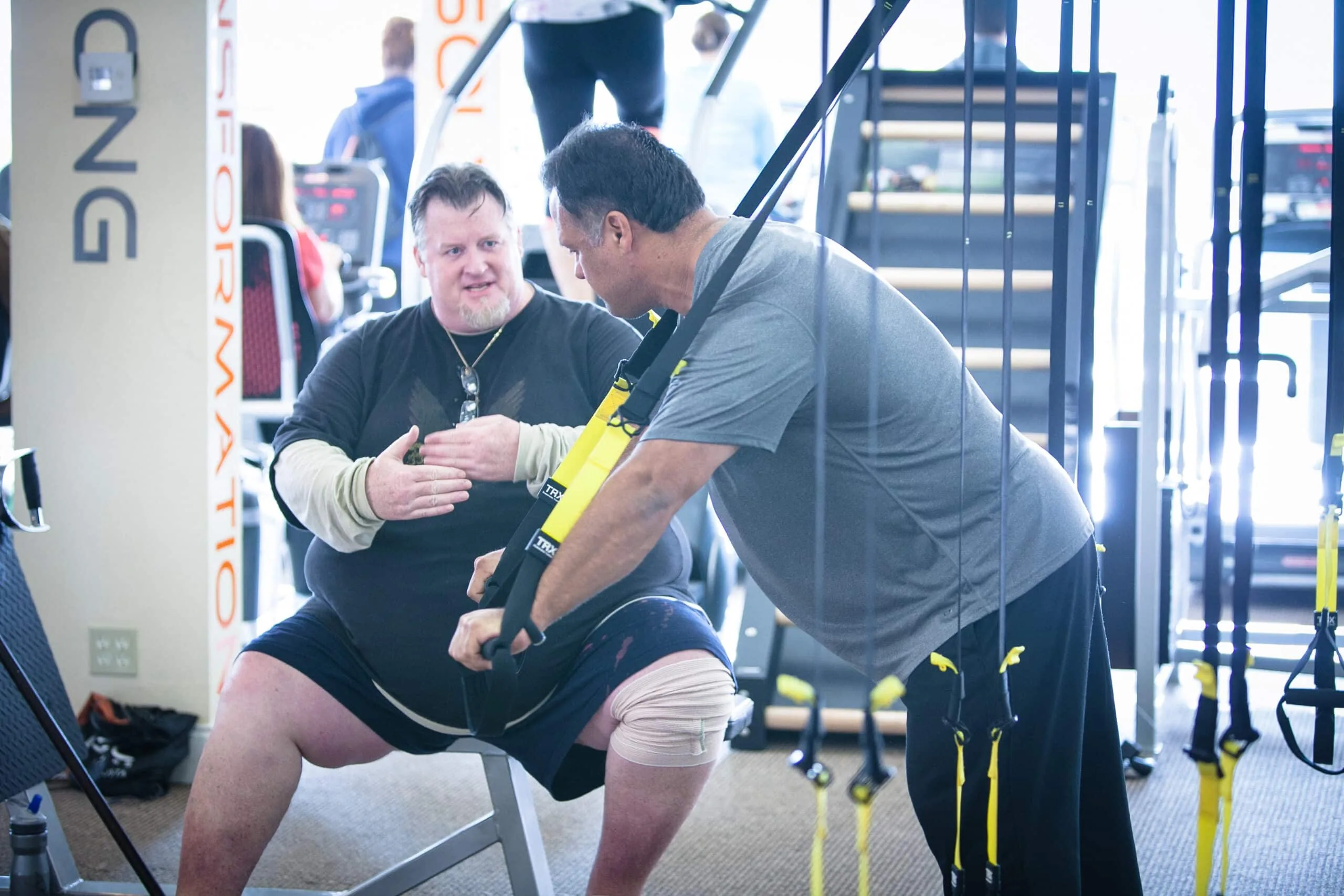
Yes. PFC works with clients at every fitness level, from the beginners described above to seasoned athletes who train four or more times per week. Every class is structured so that each participant receives an appropriate challenge. Trainers maintain a 3–4:1 ratio and provide low-impact modifications and progressions for every exercise.
Clients with physical limitations, including back or knee issues, receive personalized modifications. The program’s philosophy is to meet every person where they are and help them improve incrementally each day.
PFC welcomes clients on GLP-1 medications and provides a structured program specifically suited to their needs. The focus shifts toward progressive resistance training to preserve and rebuild muscle, protein-forward nutrition guidance to counteract the muscle loss that commonly accompanies GLP-1-induced weight loss, and sustainable habit education that remains effective whether or not the client continues the medication.
PFC’s registered dietitians work with each client to calibrate protein intake and meal composition appropriately. The program functions as the lifestyle and education foundation that makes GLP-1 use more effective in the short term and more sustainable in the long term, including after discontinuation.
Stays begin at one week, which provides a meaningful kickstart and a full introduction to the “Think, Eat, Move” curriculum. Two weeks build real momentum. Three weeks is where habit formation becomes more durable. Four weeks or more deliver the most significant body composition changes and the deepest behavioral education.
The average PFC client stays approximately 11 days. Many first-time clients book one week and extend their stay on-site after experiencing the program firsthand. Extended stays of up to several months are available for clients seeking comprehensive transformation.
The UCSD case study’s fat-loss finding, mentioned earlier, is the clearest quantitative differentiator and shows that PFC preserves muscle while other programs often produce a 50/50 or 60/40 fat-to-muscle split. PFC’s combination of 4–5 hours of daily structured training, a 3–4:1 trainer ratio, registered dietitian-designed meals prepared on-site by wellness chefs, behavioral health support from licensed psychologists, and 17-point weekly tracking produces a fundamentally different physiological outcome.
The program’s 1,200+ reviews with a 90%+ five-star rating and 50% alumni return rate reflect that clients experience this difference directly.
For adults between 40 and 60 who have tried diets, gym memberships, and other programs without lasting results, the defining gap usually looks the same. Short-term weight loss occurs without the education, muscle preservation, behavioral support, or post-program accountability needed to sustain it.
Premier Fitness Camp (PFC) is structured to close every one of those gaps simultaneously through the “Think, Eat, Move” curriculum, the UCSD-validated fat-loss outcome described above, 17-point weekly tracking, a 3–4:1 trainer ratio, and a luxury residential experience at the Omni La Costa Resort in Carlsbad, California that removes barriers to full engagement.
Whether you are a Reset Seeker ready for a comprehensive lifestyle overhaul, a GLP-1 Graduate looking to rebuild muscle and establish independence from medication, or a Concerned Beginner taking the first step, PFC is designed to meet you exactly where you are and move you forward in a measurable, sustainable, and judgment-free way.
With over 1,200 reviews and a 90%+ five-star rating, PFC has helped more than 3,000 adults transform their health. The consultation is free, personalized, and the first step toward understanding what a true immersion program can do for you.
Book a free consultation today or call (888) 488-8936 to speak with a PFC advisor and take the first step toward lasting transformation.