 5-star Wellness Resort
 5-star Wellness Resort
Written by: Chris Butt, Certified Personal Trainer & Weight Loss Coach, Premier Fitness Camp | Last updated: August 22, 2026
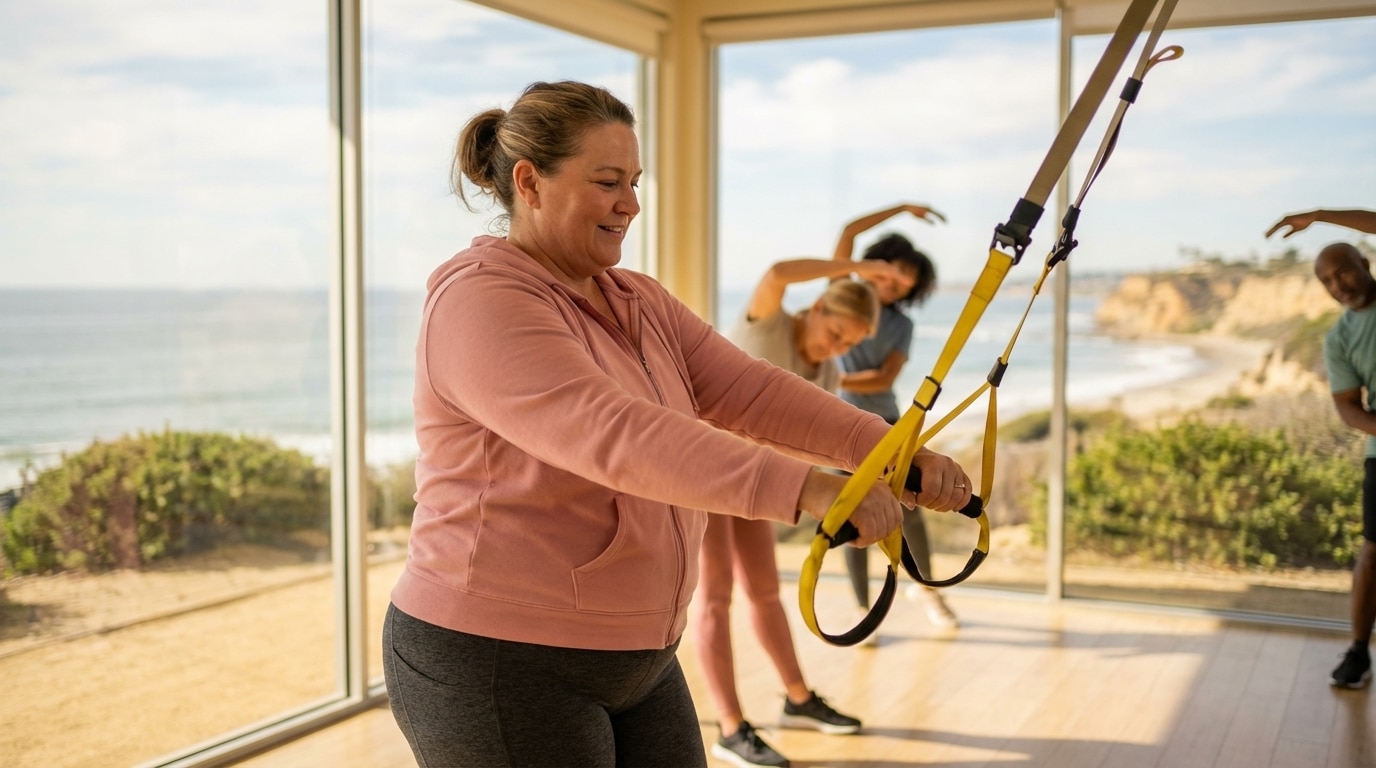
A retreat that claims to welcome all fitness levels must back that claim with structure. Meaningful beginner support means documented exercise modifications, such as wall push-ups, box squats, partial-range movements, and chair-based options. It also means a dedicated low-impact track for participants with knee, back, or hip limitations common in adults 40–60. A trainer-to-client ratio that allows for real-time correction and encouragement, rather than distant group instruction, is essential.
Ask any retreat about specifics, not slogans. Start with the exact trainer-to-client ratio during fitness sessions, because this ratio determines whether trainers can offer real-time corrections or only general cues. Then ask whether there is a dedicated low-impact track or if modifications are handled informally, since informal adjustments often leave beginners behind. Finally, ask whether trainers can accommodate a participant who can currently walk only short distances, which reveals how prepared they are for true beginners.
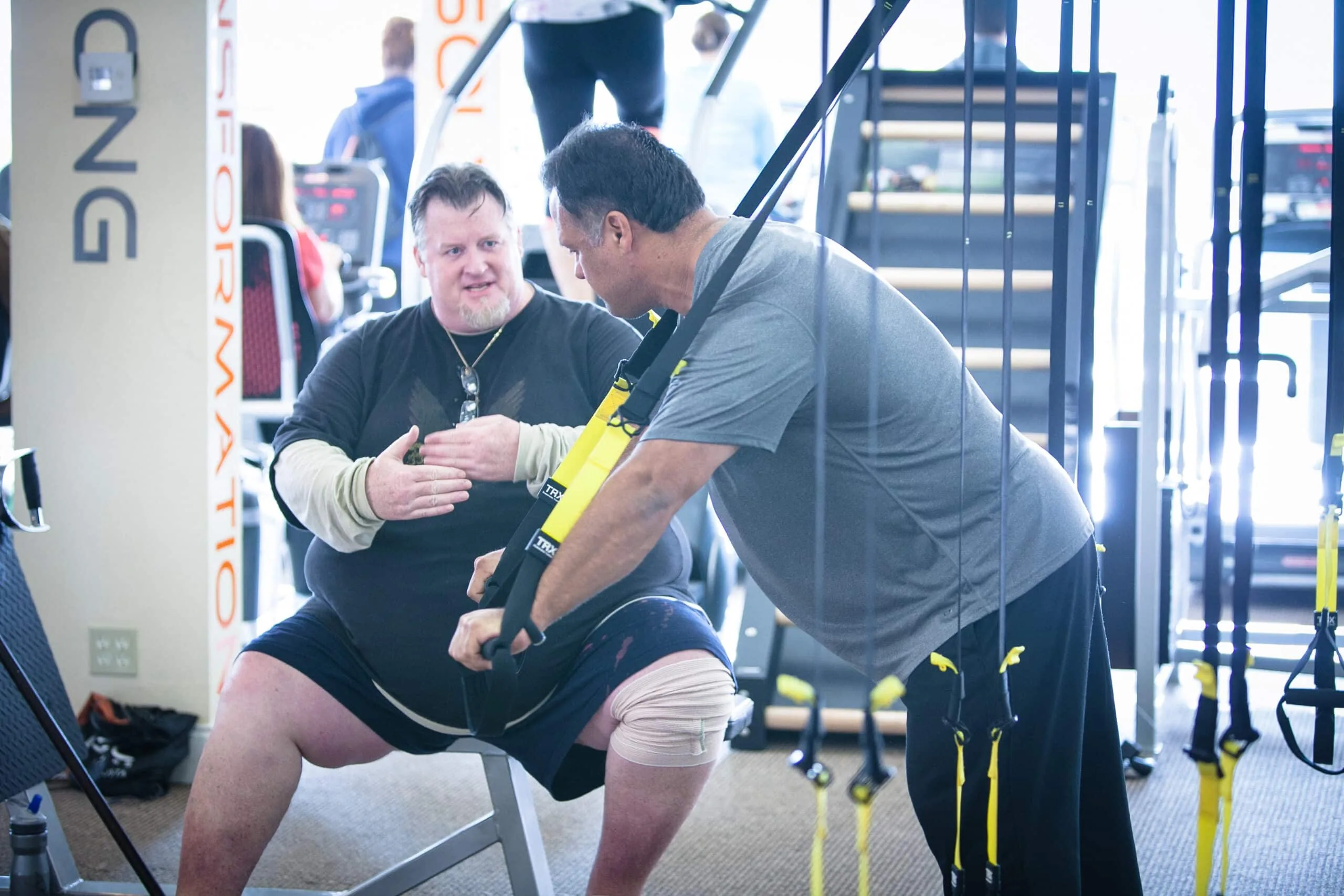
PFC maintains a 3–4:1 client-to-trainer ratio in every fitness session. Every class is structured so participants ranging from 400-pound beginners who can walk only 250 feet to seasoned athletes can participate and progress. A dedicated low-impact track supports those with health limitations, and all trainers hold a minimum bachelor's degree in a fitness-related field.
Clinical and medical wellness programs in the U.S. typically range from $3,000 to $15,000 for a seven-day stay, with pricing driven by length of stay, accommodation type, location, and what is bundled. Hidden costs such as travel, optional treatments, and gratuities frequently inflate the sticker price. Most wellness retreats are not covered by insurance unless specific components are medically prescribed, and documented obesity-related conditions such as prediabetes, hypertension, or sleep apnea can sometimes improve the likelihood of partial coverage for medically necessary components.
Ask any retreat what is included in the quoted price, because this reveals whether you will face surprise charges later. Clarify whether meals, assessments, and post-program support are bundled or billed separately so you can compare programs accurately. Confirm whether financing is available, which can make a clinically robust program more accessible.
PFC is priced at approximately $6,000 per week and is fully all-inclusive. The price covers luxury resort accommodations at the Omni La Costa Resort & Spa, all meals prepared by on-site wellness chefs, all fitness sessions, educational workshops, health assessments, weekly report card tracking, three spa treatments per week, and post-camp support. Zero-percent financing for up to six months with no down payment is available. Multi-week discounts apply, and the program may qualify as a tax-deductible medical expense; consult a tax professional for guidance.
Calorie restriction produces short-term weight loss, while nutrition education produces lasting behavior change. Structured behavioral interventions that combine diet, physical activity, and professional support can achieve meaningful weight reduction of 5–10% over 6–12 months when participants understand the principles behind the plan, not just the rules. Adults who know how to build balanced meals at home are far more likely to maintain results.
Ask any retreat whether registered dietitians are on staff designing meals and leading education sessions, since credentials matter for long-term health. Clarify whether participants leave with the knowledge to replicate healthy eating at home, including shopping and meal planning skills. Confirm whether cooking demonstrations are included so you can practice what you learn in a real kitchen setting.
PFC's "Think, Eat, Move" philosophy places nutrition education at the center of the program. Registered dietitians design all meals and lead workshops covering macronutrients, portion control, healthy shopping, and meal planning. Wellness chefs prepare all meals on-site using fresh, farm-to-fork ingredients and conduct cooking demonstrations so participants can replicate results at home. Meals are gourmet and calorie-controlled, not bland or overly restrictive diet food.

Weight gain in adults 40–60 rarely comes down to calories alone. Emotional eating, stress, grief, and decades of conflicting information all contribute. A retreat that addresses only the physical dimension leaves the most important variables untouched. Long-term success in weight management depends on relapse-prevention strategies that include self-monitoring, coping mechanisms, and cognitive restructuring, which require professional behavioral health support rather than willpower alone.
Ask any retreat whether licensed psychologists or behavioral health coaches are on staff, because credentials signal depth of support. Clarify whether both group workshops and individual sessions are available so you can address shared and personal challenges. Confirm that the environment is explicitly non-judgmental, which affects how safe you feel sharing real struggles.
PFC employs licensed psychologists and behavioral health coaches who lead group workshops on emotional eating, triggers, life-work balance, and limiting beliefs. One-on-one counseling sessions are available for deeper issues. Meditation and inner-connection sessions are built into the weekly schedule. The environment is designed to be safe, encouraging, and free of judgment at every fitness level.

Discuss your emotional eating patterns with a PFC specialist to learn how the behavioral health program addresses the emotional dimensions of lasting weight loss.
The scale is only one data point, and for beginners, especially women 40–60, it is often the least informative one. Hormonal changes shift body composition, so fat loss and muscle gain may not show clearly on weight alone. Structured wellness interventions are associated with measurable improvements in blood pressure, mood, sleep quality, and self-efficacy that may not appear on the scale in the short term but represent meaningful health progress.
Ask any retreat how many health metrics are tracked and how often, since this reveals whether they treat progress as multidimensional or rely solely on the scale. Then ask whether body composition is measured separately from body weight, which matters for adults 40–60 whose muscle-to-fat ratios are shifting. Finally, confirm that results are reviewed individually with a trainer so you receive personalized interpretation rather than generic dashboard numbers.
PFC tracks 17 data points weekly via a personalized Report Card, reviewed one-on-one with a trainer. Those data points include weight, body fat percentage, measurements of the neck, waist, umbilicus, upper arm, chest, hip, and quad, blood pressure, LDL, HDL, triglycerides, glucose, push-ups, plank hold time, and mile time. A UCSD case study, conducted in partnership with the University of California, San Diego, evaluated participants who stayed four or more weeks and received DEXA scans at the start and end of their program. The study found that 94% of total weight loss at PFC was purely fat, while most standard dieting programs produce only a 60/40 fat-to-muscle loss ratio. PFC clients not only preserved lean muscle mass but in many cases increased it.
The most common failure point in weight-loss programs is not the program itself, but what happens after. Clinical trial data from the STEP 1 study extension show that roughly two-thirds of lost weight returns within 12 months of stopping semaglutide. A retreat without post-program accountability functions as a temporary intervention rather than a lasting reset.
Ask any retreat what post-program support is included in the price so you understand how they help you at home. Clarify whether participants can communicate with their trainers after leaving, which affects accountability. Ask what percentage of clients return, since a strong alumni base often reflects both results and satisfaction.
PFC's post-camp support includes virtual coaching, personalized meal plans for home, fitness programming, and ongoing communication with PFC staff. Participants can email their trainers at any time. The results of this approach appear in the numbers: PFC has over 1,200 reviews with a 90%+ five-star rating, and 50% of annual revenue comes from returning alumni. As one returning client wrote, "I've been to PFC 3 times because I am such a fan of the program! Their trainers are knowledgeable, inspiring and make hard work fun."
Ask about PFC's alumni community and post-program support to learn what past participants say about sustaining results at home.
Environment affects adherence as much as programming. Structured wellness tourism interventions are associated with improvements in mood and self-efficacy that persist for at least six weeks after participation, and the quality of the setting directly influences whether participants engage fully with the program. A retreat in an uncomfortable climate, with substandard food, or in an urban environment that requires van transport to reach basic facilities creates friction that undermines daily follow-through.
Ask any retreat where meals are prepared and by whom, since on-site chefs provide more control over quality and nutrition. Clarify whether fitness facilities are on-site or off-site, which affects how much time you spend commuting instead of training or recovering. Ask about the year-round climate and whether it supports daily outdoor training, because weather can either invite or discourage movement.
PFC operates exclusively at the Omni La Costa Resort & Spa in Carlsbad, California, a 450-acre luxury resort in North San Diego County with year-round moderate temperatures and low humidity. Dedicated PFC facilities sit entirely on-site. Outdoor activities include beach boot camps on the Pacific coast, hikes through Torrey Pines, Double Peak Park, and Batiquitos Lagoon, and stand-up paddleboarding and kayaking. Three spa treatments per week are included in the program price at the La Costa Spa. All meals are prepared on-site by PFC's wellness chefs using fresh, farm-to-fork ingredients.
Structured wellness retreats in the U.S. range from about $1,000 to over $7,000 per week, with mid-range options typically $3,000–$6,000 depending on location, accommodation type, bundled services, and the depth of clinical programming. Mid-range U.S. wellness retreats with strong nutrition and fitness programming typically run $3,000–$6,000 per week all-inclusive, while medically supervised programs with specialized clinical teams sit at the higher end. As noted earlier, PFC sits at the upper end of this mid-range with all-inclusive pricing and zero-percent financing for up to six months.
Insurance rarely covers a packaged weight-loss program as a single product. As noted in the cost section, insurers may reimburse specific medically necessary components when obesity is documented with supporting comorbidities. Most wellness retreats are considered personal wellness experiences and are not covered by insurance unless medically prescribed. The program may qualify as a tax-deductible medical expense under IRS guidelines; consult a tax professional for guidance specific to your situation.
GLP-1 medications such as semaglutide produce lean body mass loss accounting for 25–39% of total weight lost in trials where participants lost at least 15% body weight, which is a meaningful concern for adults over 40 and menopausal women. Resistance exercise training helps maintain muscle mass and strength during GLP-1 therapy, yet many patients do not receive an exercise prescription with it. A structured retreat that combines resistance training, adequate dietary protein, and behavioral support creates an environment that makes GLP-1 use more effective and sustainable. PFC welcomes participants on GLP-1 medications and adjusts protocols to prioritize resistance training, protein intake, and sustainable habits, whether a participant plans to continue or eventually reduce the medication.
Adults who have never exercised can attend a weight-loss retreat when the right structures are in place. Low-impact cardio options including swimming, cycling, elliptical training, and pool walking minimize joint stress and work well as starting points for absolute beginners. The critical variables are trainer ratio, the availability of documented modifications, and whether staff are trained to meet participants at their current fitness level rather than a theoretical average. PFC has worked with participants ranging from those who can walk only 250 feet to competitive athletes, within the same session structure.
One week provides a meaningful kickstart and is enough to produce measurable changes across multiple health metrics. Two weeks builds momentum and begins to establish new behavioral patterns. Three weeks aligns with habit formation research suggesting that new routines start to solidify. Four or more weeks deliver the kind of transformation reflected in PFC's UCSD case study data. PFC's average client stay is approximately 11 days. Stays begin at one week, and many first-time participants extend on-site after experiencing early results. Extended stays of up to several months are available.
Clinical data show that roughly two-thirds of lost weight returns within 12 months of stopping structured support. Sustainability depends on three things: the education received during the program, the behavioral habits established, and the quality of post-program accountability. Retreats that teach participants how to eat, move, and manage emotional triggers, and that maintain contact after departure, produce meaningfully better long-term outcomes than those focused solely on in-program weight loss. PFC's post-camp support includes virtual coaching, personalized meal plans, fitness programming, and ongoing trainer communication. The high alumni return rate noted earlier reflects both the quality of the experience and the strength of the relationships formed.
No prior fitness level is required at a genuinely beginner-friendly retreat. PFC has worked with participants who can walk only 250 feet at the start of their program, as well as those who exercise regularly. Every session is structured with modifications and low-impact alternatives so that every participant, regardless of starting point, can engage fully and progress safely. Trainers maintain a 3–4:1 ratio and adapt in real time to each individual's needs.
For adults 40–60 with 40–70 pounds to lose, PFC clients typically average 3–4 pounds per week of fat loss. The UCSD study mentioned earlier confirmed that PFC's approach preserves lean muscle mass far better than standard dieting programs. Individual results vary based on starting weight, hormones, medications, and biology. Weight is also just one of 17 data points tracked weekly, and many participants see significant improvements in blood pressure, cholesterol, glucose, strength, and body measurements even when scale movement is slower than expected.
Effective post-program support includes personalized meal plans for home, fitness programming tailored to a home environment, access to staff for ongoing questions, and a community of fellow participants for accountability. The absence of post-program support is one of the primary reasons weight regain occurs after most programs. PFC includes virtual coaching, personalized meal plans, fitness guidance, and direct trainer communication as part of the program, not as an add-on. The high alumni return rate noted earlier reflects the depth of the relationships and the quality of the ongoing support.
Weight-loss retreats can complement GLP-1 medications when they emphasize muscle preservation. A structured retreat that combines resistance training, protein-forward nutrition, and behavioral health support is an ideal partner to GLP-1 therapy. GLP-1 medications suppress appetite but do not protect lean muscle mass, and without structured exercise and adequate protein, a significant portion of weight lost on these medications comes from muscle rather than fat. PFC welcomes participants on GLP-1 medications and adjusts protocols accordingly, with a focus on resistance training, protein intake, and building sustainable habits that shape long-term outcomes whether or not medication continues.
Wellness retreats and spas prioritize relaxation, stress reduction, and general wellbeing, and they are not designed to produce measurable fat loss or lasting behavioral change. Results-driven weight-loss programs combine structured daily fitness training, nutrition education, behavioral health support, and data-driven progress tracking within an immersive environment. PFC is the latter, with 4–5 hours of daily training, registered dietitians designing every meal, licensed psychologists on staff, 17 health metrics tracked weekly, and a UCSD-validated case study demonstrating 94% fat-loss outcomes. The luxury setting and spa treatments are part of the experience, but the program is built around measurable, lasting transformation.
Specifics reveal whether a retreat is truly beginner-friendly. A strong program will provide a documented trainer-to-client ratio of 4:1 or better, describe a dedicated low-impact track by name, and explain exactly what modifications are available for common limitations such as bad knees or a bad back. They will also describe how they have worked with participants at the very beginning of their fitness journey. Vague language like "all levels welcome" without structural details is a warning sign. PFC can describe exactly how it accommodates a participant who has never exercised, has physical limitations, or is significantly overweight, because the program has been built around that participant from the start.
PFC meets every criterion on this list with data to back it up. Over 1,200 reviews, a 90%+ five-star rating, a UCSD-validated 94% fat-loss outcome, a 3–4:1 trainer ratio, 17-point weekly tracking, and a 50% alumni return rate reflect measurable results from a program built specifically for adults who are ready to make a lasting change.
Ready to find out whether PFC is the right fit for where you are right now? Schedule your free consultation now with the PFC team, or call (888) 488-8936 to speak with someone directly. The consultation is free, personalized, and low-pressure. It is simply a conversation about your goals and how the program works.