 5-star Wellness Resort
 5-star Wellness Resort

Written by: Chris Butt, Certified Personal Trainer & Weight Loss Coach, Premier Fitness Camp | Last updated: August 21, 2026
Leaving home for a structured program interrupts the cues, routines, and social pressures that keep unhealthy habits in place. Research on behavioral interventions that combine motivation with action planning shows larger effects on health behaviors than motivation-only or action-only approaches. The strongest gains often appear in physical activity and dietary habits, which drive long-term weight management.
Premier Fitness Camp (PFC) brings this research to life through its Think, Eat, Move framework. Licensed psychologists address the emotional triggers behind eating patterns (Think). Registered dietitians and wellness chefs teach sustainable nutrition from scratch (Eat). Certified trainers deliver four to five hours of daily training across more than a dozen modalities (Move). The result is a simultaneous intervention across all three behavioral domains, the same combination that research links to large and durable effects.

Clients experience this integration as a complete lifestyle reset rather than isolated skill-building. Irene Tchaikovsky, a PFC client, described the shift directly: “What began as a simple one-week reboot has transformed into a complete lifestyle shift. PFC equips you with the knowledge, tools, and support to make meaningful and sustainable changes.”
Discover how the Think, Eat, Move framework applies to your goals in a free consultation with the PFC team. Call (888) 488-8936 to speak with the team today.
Most aggressive weight loss programs produce a 50/50 split between fat loss and lean muscle loss. Standard dieting typically yields a 60/40 fat-to-muscle ratio. Against that baseline, PFC’s outcomes stand out.
A case study conducted in partnership with the University of California, San Diego (UCSD) evaluated PFC participants who stayed four or more weeks and received DEXA scans at the start and end of their program. The study found that 94% of total weight loss was purely fat, while lean muscle mass was preserved or increased in most long-term clients.
That outcome reflects the program’s structure. Clients complete four to five hours of daily training at a 3–4:1 client-to-trainer ratio. Nutritionist-designed meals are calibrated for muscle preservation. A resistance training emphasis protects metabolic rate. The typical result for a client with 40–70 pounds to lose is 3–4 pounds of fat per week, not water weight and not muscle.
Lauren M. lost 140 pounds at PFC, dropping from 320 to 180 pounds, and her story was featured on The Today Show. In her words: “I found myself again; got my confidence back; learned how, for my body type, I needed to eat and exercise; and most importantly, I learned how to adopt a healthy, sustainable lifestyle.”
Chronic stress elevates cortisol, disrupts sleep, impairs glucose regulation, and drives fat storage, particularly around the abdomen. Time spent in natural environments during residential retreats is associated with reduced cortisol levels, lower blood pressure and heart rate, improved blood glucose control, and reduced symptoms of anxiety and depression. No 2021 meta-analysis in the Journal of Affective Disorders examined residential treatment; the 2021 paper in that journal is a meta-analysis of cognitive remediation for depression.
No 2020 study published in the Journal of Traumatic Stress examined the effects of predictable daily routines on morning cortisol dysregulation in residential settings. This mechanism is directly relevant to anyone whose weight gain has been driven by stress, poor sleep, or emotional eating. PFC applies these findings through both its physical environment and its clinical support.
PFC’s setting at the Omni La Costa Resort in Carlsbad, California covers 450 acres of resort grounds with year-round moderate temperatures, access to Pacific coast beaches, and Torrey Pines hiking trails. This natural environment aligns with research that links green space and outdoor exposure to cortisol reduction. The Think pillar’s group workshops on emotional eating and one-on-one behavioral health counseling address the psychological dimension of stress-driven weight gain directly.
Paula L., who lost 30 pounds at PFC, noted: “My lack of self-confidence, self-doubt, and anxiety were at an all-time high. I am now off of my anti-depressants and have a whole new outlook on life physically, mentally, and spiritually.”
Higher attendance in group support programs for obesity treatment is associated with greater weight loss. Community functions as a clinical variable, not a soft perk.
At PFC, community forms naturally because every participant lives, trains, eats, and learns together on the same campus. There are no commutes to a gym, no separate dining arrangements, and no fragmented schedules. The result is a peer environment that research in residential settings identifies as one of the active ingredients driving sustained behavior change.
That community often continues after departure. Fifty percent of PFC’s annual revenue comes from returning alumni, a figure that reflects genuine satisfaction and the depth of relationships formed during the program. Lin Vela has attended three times: “I’ve been to PFC 3 times because I am such a fan of the program! Their trainers are knowledgeable, inspiring, and make hard work fun.”
Decision fatigue, the cognitive depletion that results from making too many choices, is a documented barrier to healthy behavior. When every meal, workout, and recovery session is planned and delivered, mental bandwidth is freed for the deeper work of behavioral change.
PFC’s all-inclusive structure at the Omni La Costa Resort puts this principle into practice by eliminating every logistical decision. Meals are prepared by on-site wellness chefs using fresh, farm-to-fork ingredients. Training schedules are set. Three spa treatments per week are included as standard, so clients never spend energy on questions like “What’s for dinner?” or “When should I work out?”

The La Costa Spa, previously ranked the number-one wellness spa in the nation by Spa Magazine, supports physical recovery between training sessions. An observational study published in the Journal of Alternative and Complementary Medicine examined a one-week residential retreat experience with follow-up at six weeks. Recovery at PFC is not passive. It functions as a structured component of the program’s results.
GLP-1 medications such as Ozempic and Wegovy produce weight loss, yet without structured resistance training and nutrition alongside them, a significant portion of that loss often comes from lean muscle. Muscle loss reduces resting metabolic rate and makes weight regain likely when the medication is reduced or stopped.
PFC’s program is structured to counter that pattern. The resistance training component, delivered daily as part of four to five hours of varied movement, preserves and builds lean muscle. The Eat pillar’s registered dietitians adjust protein targets and macronutrient ratios to support muscle synthesis even in a caloric deficit. The body composition outcomes documented in the UCSD case study reflect this approach and extend to GLP-1 graduates who need to rebuild metabolic capacity.
PFC does not discourage GLP-1 use. The program functions as the education and lifestyle foundation that makes medication-assisted weight loss sustainable long-term, providing a clear post-medication plan built around the Think, Eat, Move framework. Jake Younger described the broader transformation: “I not only lost weight but gained confidence, strength, and a healthier lifestyle.”
A 2026 systematic review and meta-analysis of 18 randomized controlled trials found that lifestyle modification program participants increased daily step counts significantly during the weight-loss phase and maintained those gains, averaging around 8,500 steps per day, during a subsequent maintenance phase. Behavioral gains made during an immersive program can persist when post-program support structures are in place.
PFC provides virtual coaching, personalized meal plans for home, and ongoing access to staff via direct communication after departure. The 2023 Ma et al. meta-analysis of habit-formation interventions found that effects on physical activity habit strength were larger at follow-ups of 12 weeks or less and weaker beyond that without continued support. PFC’s post-camp tools are designed to maintain accountability through the critical first months after departure.
A 2026 randomized controlled trial found that culinary coaching combined with health counseling produced significantly greater self-efficacy for meal preparation at 12 months compared to dietary counseling alone. This finding validates PFC’s on-site cooking demonstrations and nutrition workshops as mechanisms for durable home behavior change, not just in-program compliance.
Scale weight is a single, often misleading number. PFC tracks 17 data points weekly through a personalized Report Card reviewed one-on-one with a trainer, a breadth of measurement that helps clients see progress even when the scale moves slowly and motivation dips.
This breadth of tracking means clients see progress even when the scale moves slowly, which supports adherence during plateaus. An optional DEXA scan provides gold-standard body composition data at the start and end of the program. The U.S. Army’s Holistic Health and Fitness program, which deploys a similarly multidisciplinary team, reached the same conclusion: “All of those things are much, much better predictors of health than just getting on a scale and weighing yourself.”
The following comparison highlights how PFC’s multidisciplinary integration and clinical infrastructure differ from alternatives that address only single dimensions of health.
| Dimension | Premier Fitness Camp | Traditional Fitness Camp | Gym / Personal Trainer | Wellness Resort / Spa |
|---|---|---|---|---|
| Daily training volume | 4–5 hours/day, 5.5 days/week | Varies; often less structured | Typically 3–4 hours/week total | Optional classes; no set volume |
| Trainer credentials | Bachelor’s degree minimum; many with master’s degrees; low turnover | Inconsistent; high turnover common | Certification varies widely | Group fitness instructors; no clinical staff |
| Nutrition approach | On-site registered dietitians; wellness chefs; farm-to-fork meals; cooking education | Basic meal plans; food often delivered from off-site | Client manages all food decisions | Restaurant dining; no clinical nutrition |
| Behavioral health | Licensed psychologists; emotional eating workshops; one-on-one counseling | Rarely included | Not included | Not included |
| Progress tracking | 17 data points weekly; optional DEXA scan; UCSD-validated 94% fat-loss outcome | Scale weight only or minimal tracking | Scale and basic measurements | None or self-reported |
| Post-program support | Virtual coaching; personalized meal plans; ongoing staff access | Rarely structured | Ongoing sessions at additional cost | None |
| Client satisfaction | 1,200+ reviews; 90%+ five-star rating; 50% of revenue from returning alumni | Fewer reviews; lower repeat rates | Highly variable | Highly variable |
Compare these options with a PFC advisor to find the right fit for your goals. Call (888) 488-8936 to discuss your situation in more detail.
PFC runs approximately $6,000 per week and is fully all-inclusive. The rate covers luxury accommodations at the Omni La Costa Resort, all meals prepared by on-site wellness chefs, all fitness classes and training, educational workshops, health assessments, weekly 17-point Report Card tracking, three spa treatments per week, and post-camp support. Zero-percent financing for up to six months with no down payment is available, and the program may qualify as a tax-deductible medical expense.
The meaningful comparison is not the weekly cost in isolation. It is the cost measured against a lifetime of failed diets, unused gym memberships, obesity-related medical expenses, and the compounding value of sustained health. With 1,200+ reviews, a 90%+ five-star rating, and half of annual revenue coming from returning alumni, the program’s outcomes justify the investment for many clients.
The core difference is immersion and multidisciplinary integration. The average gym-goer trains three to four hours per week. PFC clients train four to five hours per day, five and a half days per week. In a single morning at PFC, a client matches a typical week of gym training.
Beyond volume, a gym or app addresses only one variable, movement. PFC simultaneously addresses behavioral health, nutrition education, culinary skills, community accountability, recovery, and data-driven progress tracking. Research on habit formation consistently shows that interventions targeting both motivation and action planning, and that include problem-solving and peer support, produce significantly larger and more durable behavior changes than single-domain approaches.
Yes. PFC does not discourage GLP-1 use and has no judgment about medication-assisted weight loss. The program is structured to address the most common GLP-1 side effect that undermines long-term success, which is muscle and metabolic loss.
PFC’s resistance training emphasis and high protein targets set by registered dietitians support lean mass. PFC’s resistance training and nutrition approach produces the fat-preferential loss documented in the UCSD study, making PFC an ideal complement to GLP-1 therapy. The program also provides a clear post-medication plan built around the Think, Eat, Move framework, so clients have the education and habits needed to maintain results if and when they reduce or stop the medication.
Sustainability at PFC is built into the program design, not added as an afterthought. The Think pillar addresses the psychological root causes of weight gain. The Eat pillar teaches nutrition principles, portion control, meal planning, and cooking skills that transfer directly to home life. The Move pillar builds exercise habits and fitness capacity that clients can maintain independently.
Post-camp, PFC provides virtual coaching, personalized meal plans, and ongoing staff access. The alumni loyalty documented earlier reflects genuine satisfaction, and many clients maintain their results independently between visits because they leave educated and empowered, not dependent on the program to function.
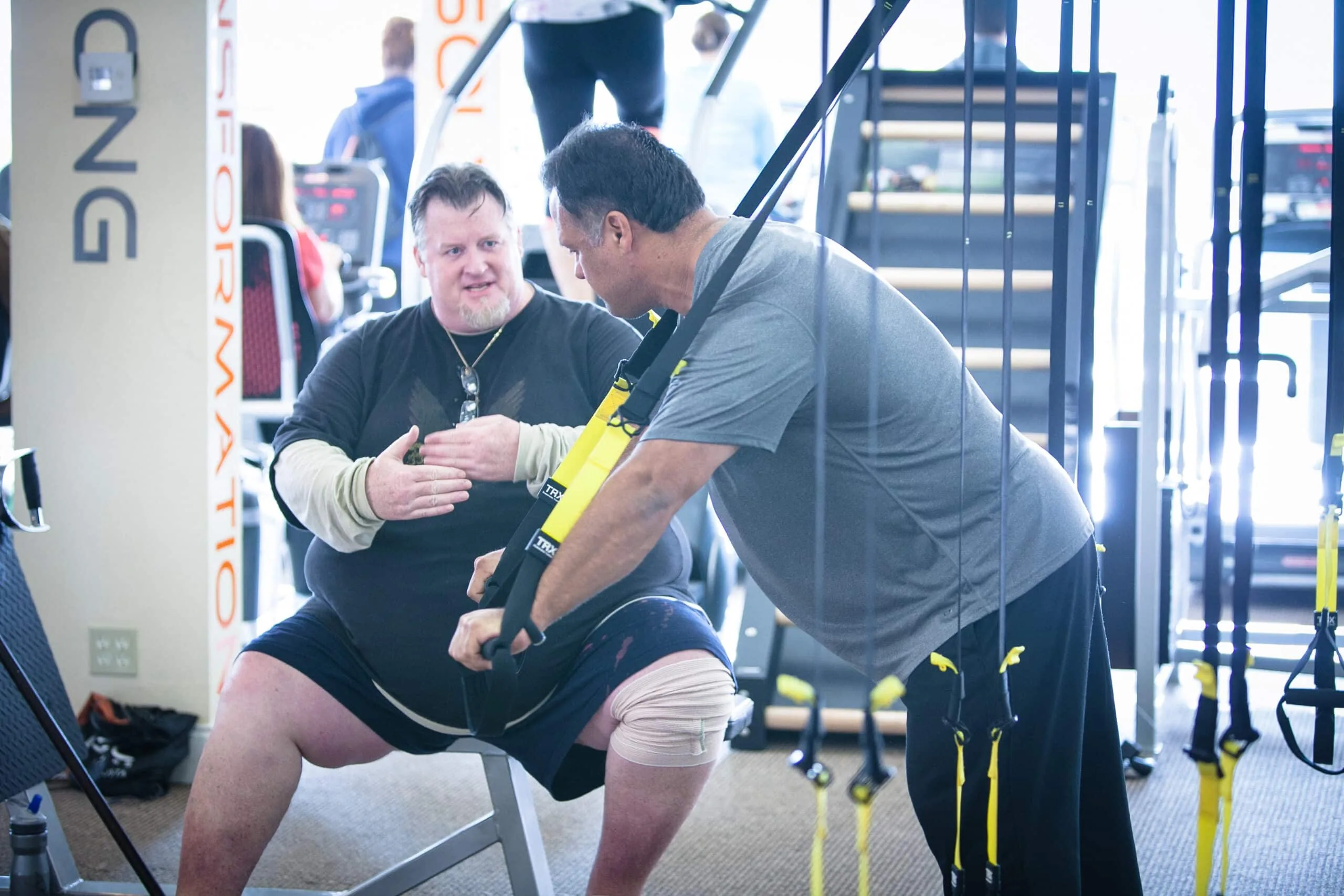
PFC works with clients ranging from those who can only walk 250 feet to seasoned athletes who train four times per week. Every class is structured so that each participant, regardless of fitness level, age, or physical limitation, receives an appropriate and effective workout.
Trainers maintain a 3–4:1 client-to-trainer ratio and provide modifications, progressions, and low-impact alternatives for every exercise. A dedicated low-impact training track is available for clients with health limitations. The program begins with a comprehensive health assessment, including blood work, body composition, measurements, and a fitness test, to establish a personalized baseline. Nobody is left behind, and nobody is judged for their starting point.
Premier Fitness Camp has supported more than 3,000 clients through lasting health transformations, earning 1,200+ reviews with a 90%+ five-star rating. Whether you are a Reset Seeker with 40–70 pounds to lose, a GLP-1 graduate looking to rebuild muscle and metabolism, or someone who has tried everything else without lasting success, PFC’s Think, Eat, Move framework delivers measurable fat loss, mental reset, and lifelong habits inside a luxury resort setting on the Southern California coast.
Schedule a free consultation with the PFC team to discuss your goals and learn how the program can be tailored to your needs. Call (888) 488-8936 or schedule your personalized consultation online today.