 5-star Wellness Resort
 5-star Wellness Resort
Written by: Chris Butt, Certified Personal Trainer & Weight Loss Coach, Premier Fitness Camp
Four hallmarks define truly beginner-friendly adult weight loss camps. These programs offer comprehensive health assessments that identify individual limitations and goals. They design scalable workout plans with low-impact modifications. They provide behavioral support that addresses emotional eating and mindset barriers. They also track data that measures progress beyond scale weight. NASM’s 2026 trends emphasize weight-inclusive, adaptive, and trauma-informed approaches that honor different bodies, abilities, and backgrounds to build trust and retention. Premier Fitness Camp reflects these principles through its integrated “Think, Eat, Move” philosophy and 17-point weekly health tracking system.
Premier Fitness Camp (PFC) operates exclusively at the Omni La Costa Resort & Spa (2100 Costa Del Mar Road, Carlsbad, CA 92009) and sets the benchmark for adult fitness camps in Carlsbad, CA. This luxury 450-acre resort offers a mild climate year-round, with moderate temperatures and low humidity that support daily outdoor activities that many competitors cannot match.
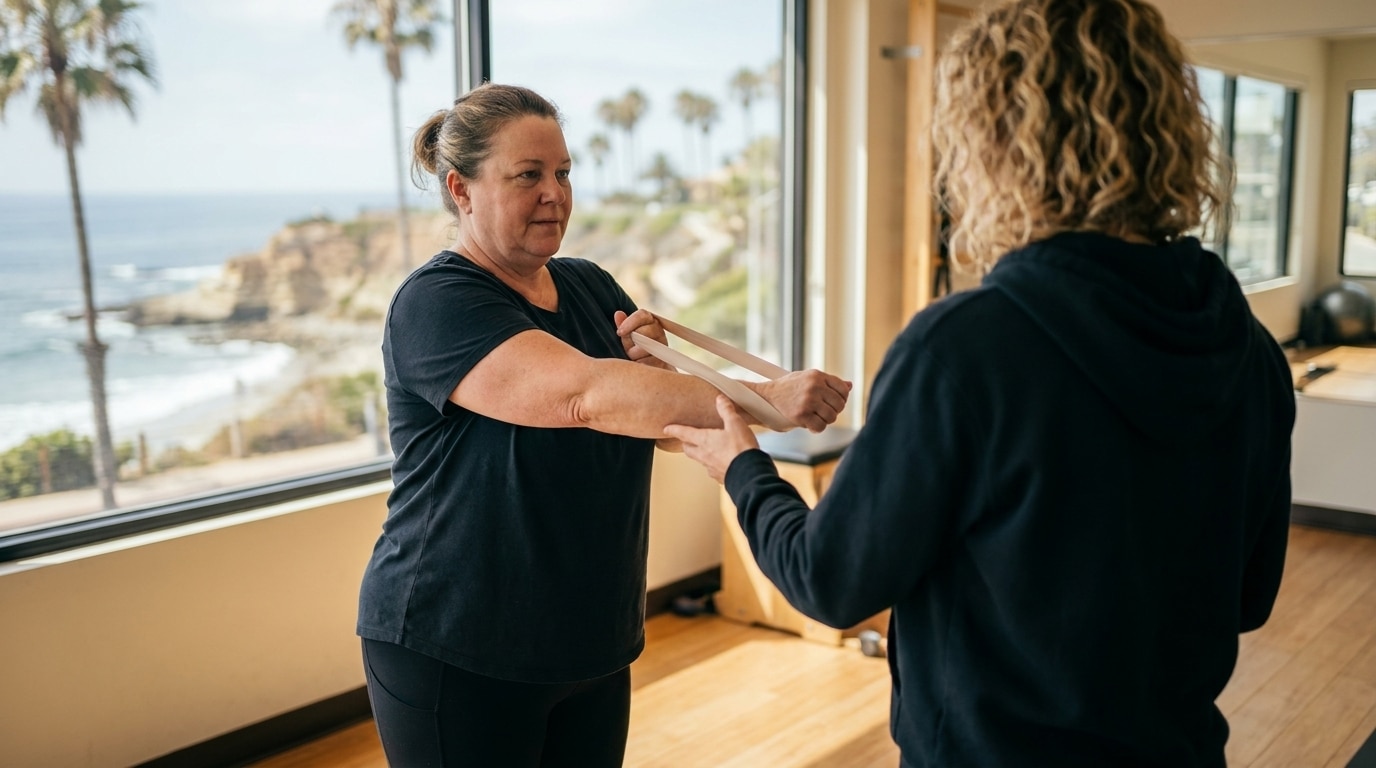
The program structure features 4 to 5 hours of daily training Monday through Friday, plus half-day Saturday sessions. Activities include beach bootcamps on the Pacific coast, hikes at Torrey Pines and Double Peak Park, and water sessions like kayaking and stand-up paddleboarding. Every class accommodates all fitness levels through expert modifications and a 3 to 4 to 1 trainer-to-client ratio, from 400+ pound beginners who can walk only 250 feet to seasoned athletes.
PFC’s “Think, Eat, Move” philosophy addresses the whole person by integrating three connected pillars. The “Think” component tackles psychological barriers that often derail weight loss, with licensed psychologists leading workshops on emotional eating, stress management, and behavioral change. This mental foundation supports the “Eat” pillar, where registered dietitians design all meals and wellness chefs prepare farm-to-fork cuisine on-site, while cooking demonstrations teach sustainable nutrition habits you can use at home. The “Move” component then turns this knowledge into action through degreed trainers, many with advanced degrees, who lead diverse activities from boxing and TRX to beach workouts and resistance training.
The UCSD validation mentioned earlier reveals an important distinction. Typical dieting programs often show a 60/40 fat-to-muscle loss ratio, while PFC’s approach preserves lean muscle mass so that nearly all recorded weight loss comes from fat. This protection of lean tissue supports metabolic rate and helps clients maintain results over the long term.
PFC tracks 17 weekly health metrics, including weight, body fat percentage, and key measurements such as neck, waist, umbilicus, upper arm, chest, hip, and quad. The team also monitors blood pressure, cholesterol panels, glucose levels, and fitness benchmarks like push-ups, plank time, and mile time. These data points create comprehensive progress reports that highlight victories beyond the number on the scale.
The luxury experience includes three spa treatments each week at the La Costa Spa, gourmet meals prepared by wellness chefs, and access to resort amenities such as golf, tennis, and pickleball through specialty “Fit” programs. Flexible stay lengths from one week to several months support different goals and budgets.
Client testimonials highlight lasting transformation. Lin Vela shares, “I’ve been to PFC 3 times because I am such a fan of the program! Their trainers are knowledgeable, inspiring and make hard work fun.” Success stories include Lauren M. losing 140 pounds (featured on The Today Show), Crissy losing 109 pounds (featured on The Doctors), and Alex losing 97 pounds while addressing binge eating disorder.
Compared to competitors, PFC offers a superior coastal climate compared with Arizona programs, comprehensive education beyond retreat-style experiences, and results supported by scientific research. With 1,200+ reviews maintaining over 90% five-star ratings and a large share of annual revenue from returning alumni, PFC shows strong client satisfaction and long-term program effectiveness.
Transform your health with proven results. Book a free consultation to see how Premier Fitness Camp’s beginner-friendly approach can support lasting weight loss success.
While Premier Fitness Camp represents the gold standard, understanding the full landscape of options helps you make an informed decision. The following programs show how other San Diego-area and regional choices compare for beginners.
Fit Body Boot Camp runs several locations throughout San Diego and offers 30-minute HIIT-style group classes with a supportive “fit fam” atmosphere. Trainers provide modifications that help beginners participate safely. The urban gym setting, however, does not include outdoor activities, residential immersion, or comprehensive nutrition education. Sessions cost about $150 to $200 per month and do not include accommodations or meals.
Unite Fitness Retreat hosts periodic intensive programs in downtown San Diego hotel settings. The group-based structure creates community support, yet the concrete urban environment limits outdoor activity options. Programs focus mainly on exercise with basic nutrition guidance and do not match the behavioral health and culinary education depth of residential camps. Pricing typically ranges from $2,000 to $3,000 for weekend intensives.
Canyon Ranch offers a luxury wellness retreat with spa services and healthy cuisine. The focus leans toward relaxation and general wellness rather than intensive weight loss and fitness transformation. The Arizona desert climate presents extreme heat challenges for much of the year, which restricts outdoor activities. Programs emphasize retreat experience more than measurable, data-driven results.
Live In Fitness provides lower-cost residential programs in Arizona, where clients stay in basic residential homes and drive to off-site gym facilities. Food delivery instead of on-site preparation can reduce quality and freshness. High trainer turnover affects consistency and continuity of coaching. Like Canyon Ranch, the Scottsdale location faces the same seasonal heat constraints, which combine with basic housing and off-site gyms to limit the overall experience.
Hilton Head Health focuses on weight loss with a central facility, while guests arrange nearby accommodations and daily transportation to programs. The humid Southern climate can feel uncomfortable for intensive outdoor training. The program often serves an older demographic and offers fewer diverse activity options than comprehensive transformation-focused camps.
Pritikin emphasizes longevity and heart health with established medical protocols and a clinical approach. The Florida humidity creates challenging conditions for high-intensity outdoor training. The pace tends toward slower, medically focused sessions rather than dynamic, varied activities that appeal to younger or more active clients seeking full lifestyle transformation.
Civana delivers wellness retreat experiences in the Arizona desert with a strong spa and relaxation focus. The Arizona heat issues noted earlier apply here as well. The primary limitation, however, lies in its retreat-focused programming, which centers on relaxation instead of structured, transformation-driven fitness and weight loss.
Many personal training studios across San Diego offer small group classes and one-on-one coaching. These options provide convenience and flexible scheduling. They do not, however, offer the immersive environment, full nutrition support, or behavioral health components that drive lasting transformation. Typical commitments involve 3 to 4 hours weekly instead of the intensive daily structure that accelerates habit change.
The following table highlights how Premier Fitness Camp’s climate, staff credentials, education, tracking, and alumni loyalty compare with other popular options across four key dimensions.
| Camp | Location/Climate | Staff Qualifications | Education & Tracking | Alumni Return Rate |
|---|---|---|---|---|
| Premier Fitness Camp | Carlsbad, CA / Mild year-round | 3-4:1 ratio, bachelor’s+ degrees | “Think, Eat, Move” curriculum / 17 weekly metrics | 50% of annual revenue |
| Live In Fitness | Scottsdale, AZ / Extreme summer heat | Variable ratios, mixed qualifications | Basic exercise focus / Limited tracking | Low (estimated 10-15%) |
| Canyon Ranch | Tucson, AZ / Desert heat | Wellness-focused staff | Retreat education / Minimal metrics | Moderate (estimated 20-25%) |
| Fit Body Boot Camp | Urban San Diego / Variable | Certified trainers | Exercise-only / Basic progress tracking | Low (estimated 15-20%) |
Premier Fitness Camp’s stronger metrics reflect its comprehensive curriculum, resort environment, and structured tracking that support lasting lifestyle change rather than short-term weight loss.
The investment in a quality weight loss camp like Premier Fitness Camp, at about $6,000 per week, compares favorably with long-term medical costs, repeated failed diet attempts, and unused gym memberships. Research shows that immersive programs can boost resting metabolic rate by up to 7% through muscle preservation, which creates lasting metabolic advantages. NASM’s 2026 trends highlight GLP-1 medication integration requiring specialized muscle preservation protocols, so expert-guided programs grow more valuable each year. Many clients can treat these programs as tax-deductible medical expenses when a physician recommends participation.
Premier Fitness Camp accommodates all fitness levels, from individuals who can walk only 250 feet to seasoned athletes. Every class includes clear modifications, and the 3 to 4 to 1 trainer ratio supports personalized attention. The program has helped clients weighing over 400 pounds achieve significant transformations through adapted exercises and consistent coaching.
Premier Fitness Camp costs about $6,000 per week, with 0% financing available for up to six months. The price exceeds basic gym memberships but includes an all-inclusive luxury stay, proven results, and comprehensive education. Many clients weigh this cost against repeated failed diets, medical expenses from obesity-related conditions, and the long-term value of lasting health changes.
Premier Fitness Camp’s key advantages include the luxury Omni La Costa Resort setting, UCSD-validated fat loss results, and a comprehensive “Think, Eat, Move” education model. Degreed trainers with long tenure, on-site wellness chefs, behavioral health support, and 17-point weekly health tracking further distinguish the program. A high alumni return rate shows strong satisfaction and trust in the experience.
Premier Fitness Camp welcomes clients using GLP-1 medications and offers specialized protocols that focus on muscle preservation through resistance training and targeted protein intake. The program builds a foundation of sustainable habits that support you when reducing or discontinuing medication and addresses muscle loss and metabolic concerns linked with these treatments.
The average client stay lasts 11 days, which equals nearly two weeks. One week provides a strong kickstart, while two weeks build real momentum. Three weeks support habit formation, as research often cites 21 days for new habits, and four weeks deliver a full lifestyle reset. Many clients book one week initially and extend their stay after experiencing the benefits.
The all-inclusive program covers luxury resort accommodations, all meals prepared by wellness chefs, fitness classes and training, educational workshops, health assessments, and weekly progress tracking. Guests also receive three spa treatments per week and access to resort amenities. Core program components do not carry hidden fees.
Premier Fitness Camp stands as a clear leader among beginner-friendly adult weight loss options near San Diego by combining scientific validation, luxury accommodations, comprehensive education, and consistent results. The “Think, Eat, Move” approach supports the whole person, while UCSD-backed fat loss outcomes and strong alumni loyalty show real-world effectiveness.
Book a free consultation today to see how Premier Fitness Camp’s beginner-friendly structure can transform your health and life. Call (888) 488-8936 or visit the consultation page to take the first step toward lasting change.