 5-star Wellness Resort
 5-star Wellness Resort

Written by: Chris Butt, Certified Personal Trainer & Weight Loss Coach, Premier Fitness Camp | Last updated: August 20, 2026
Sustainable weight loss begins in the mind. Structured lifestyle medicine programs consistently identify stress management, emotional eating patterns, and social connectedness as foundational pillars of lasting change, not afterthoughts. Without addressing the psychological drivers of weight gain, even the most rigorous fitness program produces results that fade within months.
Retreats need licensed psychologists or behavioral health coaches on staff, not just available as paid add-ons. They also need a curriculum that addresses emotional eating, limiting beliefs, and life-work balance in a clear sequence. This program employs licensed psychologists and behavioral health coaches who lead group workshops and individual counseling sessions covering emotional triggers, grief, and identity, all included in the program. This structure forms the “Think” pillar of the foundational “Think, Eat, Move” philosophy.

Current obesity management guidelines recommend that effective programs begin with a comprehensive, patient-centered assessment, not a one-size-fits-all intake form. Personalization based on blood work, body composition, fitness baseline, and individual health history separates programs that produce clinical outcomes from those that produce temporary scale movement.
Every serious retreat should conduct blood work and body composition analysis on day one and review results with a qualified professional. This program conducts a comprehensive health assessment at the start of every stay, including blood work, vital signs, BMI, body composition, and a fitness test, and then tracks 17 data points weekly in a personalized Report Card. This framework captures three critical dimensions: body composition changes, cardiovascular and metabolic health, and functional fitness progress. Those data points include weight, body fat percentage, neck, waist, umbilicus, upper arm, chest, hip, and quad measurements, blood pressure (systolic and diastolic), LDL, HDL, triglycerides, glucose, push-ups, plank time, and mile time. Together, these metrics distinguish fat loss from muscle loss and confirm that scale movement reflects genuine health improvement.
Long-term behavior change depends on daily habits, not short bursts of effort. Research on behavior change consistently identifies goal setting and self-monitoring as the behavior change techniques most reliably associated with positive long-term outcomes in both physical activity and dietary change. The widely cited 21-day threshold for habit formation shows why program duration matters. A three-day or five-day retreat can spark motivation, but it cannot rewire behavior.

Consider two hypothetical participants. The first attends a retreat offering high-volume daily training combined with registered-dietitian-led nutrition education, cooking demonstrations, and behavioral coaching. The second attends a program offering moderate exercise classes with no nutrition curriculum. At 12 months, the first participant has internalized meal planning, portion awareness, and a movement routine. The second has a fading memory of a good week.

This program’s average client stay is 11 days, but research shows that three weeks is the threshold at which new habits become durable. The program offers stays ranging from one week to several months to support that threshold. Many clients who initially book shorter stays choose to extend on-site after experiencing their first week of results, because they recognize that longer duration increases the likelihood of lasting behavior change.
Ready to build habits that last beyond your stay? Schedule a consultation to discuss which program duration aligns with your goals, or call (888) 488-8936.
The 2013 AHA/ACC/TOS guideline, grounded in 51 high-quality randomized controlled trials, establishes that high-intensity multicomponent interventions delivered by trained health professionals are required for clinically meaningful weight loss. Low-intensity programs or those staffed by uncredentialed trainers do not meet this threshold.
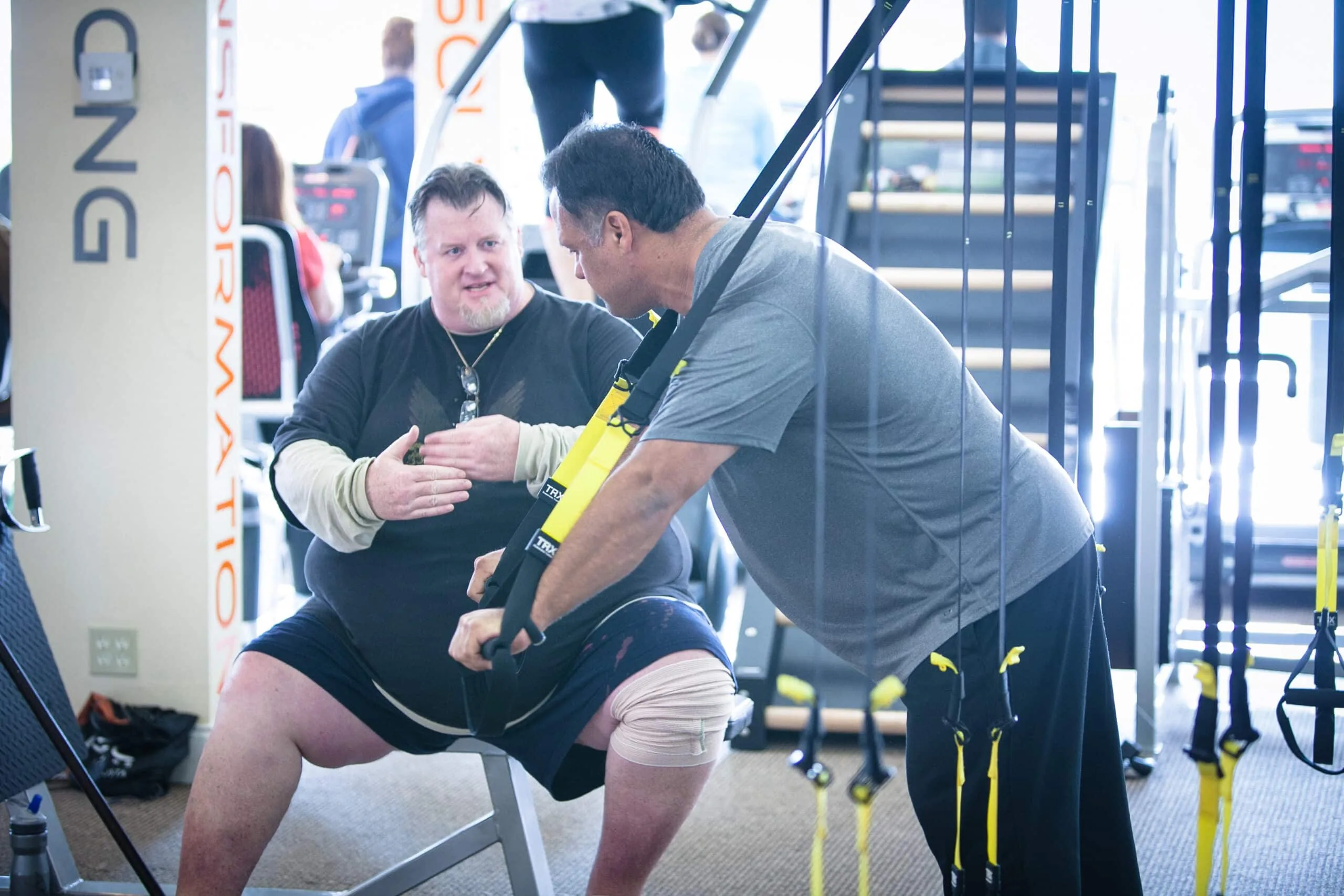
Every retreat should clearly state the minimum educational requirement for its trainers and the client-to-trainer ratio in group sessions. Programs like Unite Fitness Retreat cap enrollment at 30 guests but do not publish trainer credential requirements or session ratios. This program maintains a 3–4:1 client-to-trainer ratio across all fitness sessions, and every trainer holds a minimum bachelor’s degree, with several holding master’s degrees. Many have been with the program since its founding, which creates staff continuity and relationship depth that returning alumni cite as a primary reason they come back year after year.
A 2026 bi-center randomized controlled trial of adults aged 25–70 found that a culinary medicine intervention using DXA-verified body composition tracking produced a 1.86% reduction in fat mass at six months with no significant change in lean body mass. The researchers attributed this outcome in part to precise measurement and structured feedback loops. What gets measured gets managed.
Most retreats track scale weight, and some track a handful of additional metrics. This program tracks 17 data points weekly and offers optional DEXA scans, the gold standard for body composition measurement, for clients who want the most precise picture of their progress. A UCSD case study of participants who stayed four or more weeks and received DEXA scans found that 94% of total weight loss was purely fat, compared to the 60/40 fat-to-muscle ratio typical of standard dieting programs. Lean muscle mass was preserved or increased in most long-term clients. This outcome is a documented, university-validated result, not a marketing claim.
Weight regain after program completion is the defining failure mode of the retreat industry. A 2026 systematic review and meta-analysis published in The BMJ found that people who stop GLP-1 medications regain weight at an average rate of 0.4 kg per month, with cardiometabolic markers returning to pre-treatment baseline within roughly 1.4 years. Programs without structured aftercare show a similar pattern. Without continued contact and accountability, results erode.
The AHA/ACC/TOS guideline specifies that continued intervention contact, bimonthly or more frequent, after the first year is essential to minimize weight regain. Canyon Ranch and Civana offer premium retreat experiences but are not structured around results-driven aftercare. Hilton Head Health and Pritikin serve primarily older demographics with slower-paced programming and limited post-program infrastructure. This program’s aftercare includes virtual coaching, personalized meal plans for home, ongoing fitness programming, and direct email access to trainers, the same staff members clients trained with on-site. The 50% of annual revenue that comes from returning alumni is a strong real-world measure of aftercare effectiveness in this category.
Aftercare is where most programs fail and where this program delivers. Talk to the team about what ongoing support looks like for your specific goals, or call (888) 488-8936.
Total cost over time matters more than the lowest weekly price. The lowest weekly price in the holistic retreat market often becomes the most expensive option when measured across a lifetime of repeated attempts. Unite Fitness Retreat in Salt Lake City offers single-occupancy all-inclusive stays, but guests must drive to separate locations to access additional amenities, which reduces convenience despite the all-inclusive label. By contrast, this program operates at approximately $6,000 per week, all-inclusive at the Omni La Costa Resort in Carlsbad, California, a 450-acre luxury property where every facility, meal, training session, spa treatment, and educational workshop is on-site. This setup removes logistical friction that can undermine program adherence.
The relevant comparison is not weekly price, but the probability that you will need to repeat the program. This program offers 0% financing for up to six months with no down payment, multi-week discounts, and potential tax deductibility as a medical expense for qualifying clients (consult your tax professional). Against a lifetime of failed diets, unused gym memberships, and the medical costs associated with unmanaged obesity-related conditions, a program with university-validated fat-loss outcomes and high alumni return rates represents a fundamentally different category of investment.
The average client between 40 and 60 years old with 40 to 70 pounds to lose can expect to lose 3 to 4 pounds of fat per week. This is real fat loss, not water weight and not muscle. The UCSD study mentioned earlier confirmed that long-term clients preserved or increased lean muscle mass while losing fat at a rate far exceeding standard dieting outcomes. Individual results vary based on starting weight, hormones, medications, and biology, but weight is only one metric in the weekly Report Card. Many clients see meaningful improvements in blood pressure, cholesterol, glucose, strength, and body measurements even in weeks when the scale moves more slowly than expected.
This program works with clients across the full spectrum of fitness levels, from individuals who weigh over 400 pounds and can initially walk only 250 feet to seasoned athletes who train four times per week. Every group fitness session is structured so that each participant, regardless of starting point, receives an appropriate challenge and full support. Trainers provide modifications, progressions, and low-impact alternatives for every exercise while maintaining close client contact. A dedicated low-impact training track is available for clients with health limitations such as joint issues or chronic conditions. The program begins with a comprehensive health assessment so that every plan is personalized from day one.
Clients using GLP-1 medications can fully participate in this program. The program is designed to work alongside medication and to build the foundation that makes medication-assisted weight loss sustainable long-term. Approximately 25 to 40% of weight lost on GLP-1 therapy is lean tissue, which damages metabolic rate and increases the risk of rapid weight regain after discontinuation. This program addresses this risk directly by emphasizing resistance training, increasing protein intake to appropriate levels, and building the nutritional and behavioral habits that support metabolic health whether a client continues, reduces, or eventually stops medication. For clients who want an exit ramp from GLP-1 therapy, this program provides the structured lifestyle foundation that medication alone cannot deliver.
Premier Fitness Camp accepts insurance from 24 providers and offers free insurance verification for admission. The program may also qualify as a tax-deductible medical expense under IRS guidelines for weight-loss programs prescribed to treat a specific disease diagnosed by a physician, including obesity, hypertension, or type 2 diabetes. Clients should consult their tax professional to determine eligibility based on their individual circumstances. This program offers 0% financing for up to six months with no down payment, and multi-week discounts are available for extended stays. The all-inclusive structure, covering luxury accommodations, all meals, all training, educational workshops, health assessments, weekly report card tracking, and three spa treatments per week, means there are no hidden costs or add-on fees.
This program’s post-program support includes virtual coaching for ongoing accountability, personalized meal plans designed for home preparation, structured fitness programming to maintain training momentum, and direct email access to trainers, the same staff members clients worked with on-site. There is no hard cutoff date on communication with the team. Clients who return for subsequent stays reconnect with the same trainers and staff, many of whom have been with the program for years, which creates continuity that most programs cannot offer due to high staff turnover. The 50% of annual revenue that comes from returning alumni reflects the real-world effectiveness of this ongoing relationship model.
Across all seven factors, including mindset and behavioral support, medical safety and personalization, foundational habit formation, trainer credentials and ratios, data-driven tracking, structured aftercare, and total cost of ownership, this program meets every criterion with documented, measurable outcomes. The UCSD case study’s 94% fat-loss finding, the 17-point weekly tracking framework, the close trainer ratios, the strong alumni return rate, and the post-program support infrastructure collectively define what a holistic weight loss retreat should deliver in 2026. Other programs in this category, including Live In Fitness, Canyon Ranch, Unite Fitness Retreat, Pritikin, Civana, and Hilton Head Health, meet some of these criteria in isolation. None meet all seven with the same level of data transparency and verified outcomes.
True affordability comes from a program that works the first time, builds habits that last, and gives you the support to maintain your results for life. That standard shaped this program and continues to guide it for the more than 3,000 clients it has served, with over 1,200 reviews and a 90%+ five-star rating.
Take the next step. Book a free consultation with the team to discuss your goals, your timeline, and what a personalized program would look like for you. Call (888) 488-8936 or schedule your consultation online today.