 5-star Wellness Resort
 5-star Wellness Resort
Written by: Chris Butt, Certified Personal Trainer & Weight Loss Coach, Premier Fitness Camp | Last updated: June 24, 2026
A one- or two-night wellness retreat delivers real benefits such as rest, stress reduction, healthy meals, and a motivational boost. It does not deliver deep behavioral change. The root causes of weight gain, including emotional eating, sedentary routines, poor nutritional literacy, and unaddressed psychological triggers, do not resolve in 48 hours. They require structured, repeated intervention across multiple weeks.
Short-term dieting programs hit the same ceiling. Calorie restriction without education produces temporary results. Without clear guidance on macronutrient balance, meal planning, and sustainable portion control, the weight usually returns. App-based accountability tools add convenience but cannot match the impact of an immersive, distraction-free environment that supports true behavioral rewiring. Medication-only approaches, including GLP-1 agonists, have demonstrated meaningful short-term weight loss, but clinical data shows significant weight regain following discontinuation when lifestyle habits are not built at the same time.
This pattern of temporary results without a behavioral foundation highlights what is missing across these approaches. The solution category that consistently outperforms these alternatives is expert-led residential fitness and wellness programs. These multi-week, immersive environments combine structured physical training, nutrition education, behavioral health support, and community, all delivered without the competing demands of daily life.
Below is a representative comparison of short overnight options and immersive residential programs across the dimensions that matter most for sustainable outcomes.
| Program Type | Typical Duration | Approximate Cost | Habit-Retention Limitation | Education Component |
|---|---|---|---|---|
| Overnight wellness retreat | 1–2 nights | $300–$800 | Too brief for behavioral change, no follow-through structure | Minimal or none |
| Weekend spa retreat | 2–3 nights | $500–$1,500 | Relaxation-focused, no fitness or nutrition curriculum | None |
| Short-stay fitness retreat | 3–5 nights | $1,000–$3,000 | Insufficient time for habit formation per behavioral research | Limited |
| Immersive residential program (1 week) | 7 nights | $5,000–$7,000 | Strong kickstart, habit formation begins but needs continuation | Structured curriculum |
| Immersive residential program (3–4 weeks) | 21–28 nights | $15,000–$25,000+ | Aligns with 3-3-3 habit formation timeline, highest retention | Comprehensive, multi-disciplinary |
Participants in a well-designed residential program arrive with very different starting points. Some have 20 pounds to lose, while others arrive with 150 or more. Some exercise regularly, and others have not been active in years. A quality program meets each person where they are through personalized assessment and scalable programming.
Day one assessments typically include blood work, body composition measurement, vital signs, fitness benchmarks, and a detailed health history review. This comprehensive baseline matters because sustainable weight loss depends on tracking several health dimensions at once. Participants and staff monitor not only scale weight but also metabolic markers, cardiovascular health, and functional fitness. Against this baseline, every subsequent week of progress is measured across all dimensions.
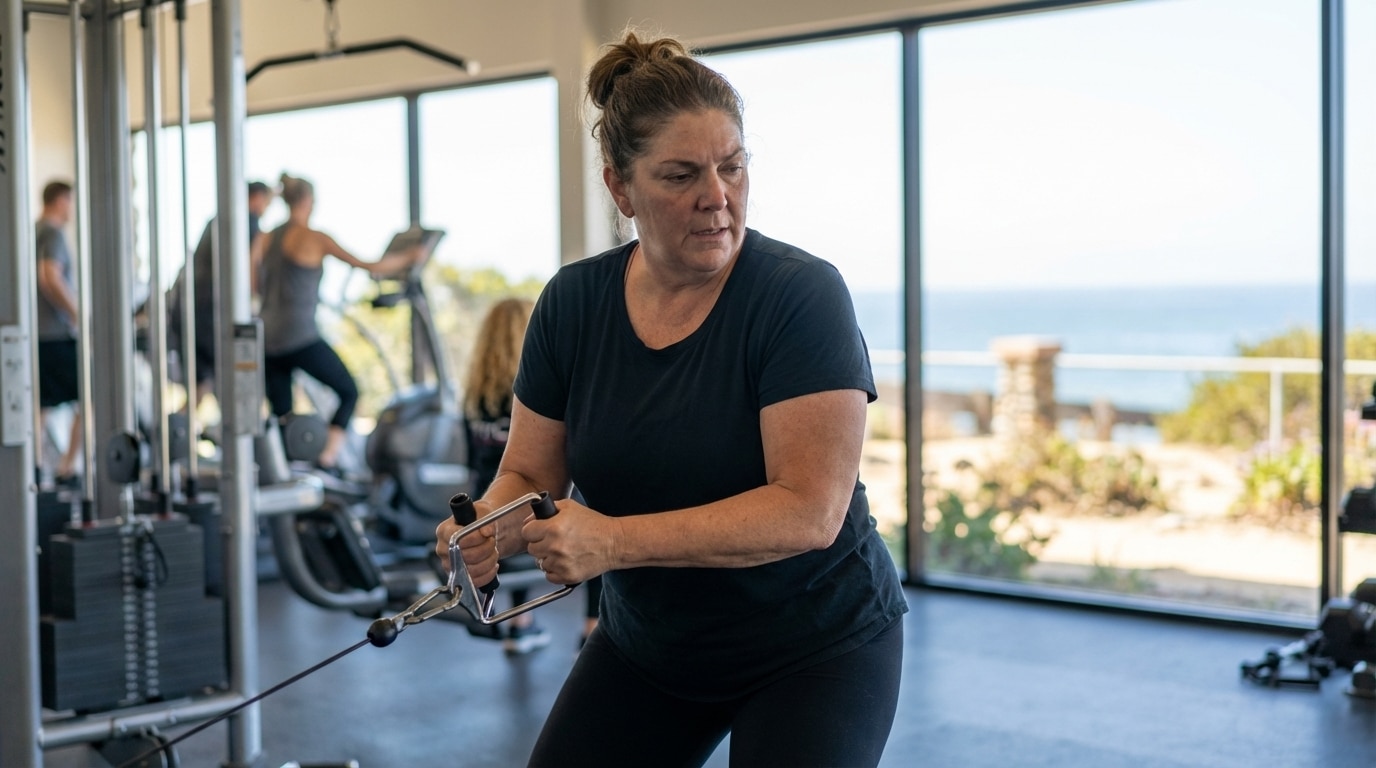
Daily structure in a rigorous program includes four to five hours of physical training per weekday. Sessions cover resistance training, interval conditioning, outdoor hiking, aquatic exercise, and sport-specific activities. Evenings and midday sessions focus on nutrition education, behavioral health workshops, cooking demonstrations, and one-on-one counseling.
The environment plays a critical role. Removing participants from their home environment, including the refrigerator, the couch, and work stress, removes the triggers that sustain unhealthy patterns. This separation creates space for new routines and healthier defaults to take hold.
Outcomes scale with stay length. One week produces a measurable kickstart. Two weeks build momentum. Three weeks align with the minimum threshold for habit formation identified in behavioral research. Four weeks or more support deeper body composition changes and internalized behavioral shifts that carry over at home.
Premier Fitness Camp (PFC) commissioned a case study with the University of California, San Diego (UCSD). The study evaluated participants who stayed four or more weeks and received DEXA scans, the gold standard for body composition measurement, at program entry and exit.
The findings are clinically significant. 94% of total weight loss at PFC was purely fat. Most aggressive weight loss programs produce roughly a 50/50 split between fat and lean muscle loss. Standard dieting typically yields about a 60/40 fat-to-muscle ratio. PFC’s 94% fat-loss rate reflects the program’s emphasis on resistance training and protein-focused nutrition, which preserves and often increases lean muscle mass during weight loss.
Lean muscle preservation matters far beyond aesthetics. Muscle is metabolically active tissue, and losing it reduces resting metabolic rate. That reduction is a primary driver of weight regain after most programs. PFC participants maintained or improved their metabolic capability, which forms the physiological foundation for keeping weight off long-term.
Participant stories reinforce the data. Lauren M. lost 140 pounds and had her story featured on The Today Show. Crissy lost 109 pounds and was featured on The Doctors. Alex lost 97 pounds and credits PFC with helping him address the root causes of binge eating. Across more than 1,200 reviews, PFC holds a 90%+ five-star rating. About 50% of annual revenue comes from returning alumni, which reflects genuine, sustained satisfaction.
“I have tried everything and nothing sticks.” Many programs treat symptoms, such as excess weight, without addressing causes. Poor nutritional habits, emotional eating, and sedentary patterns are behavioral and psychological in origin. Without structured education and behavioral health support, weight loss usually remains temporary. Immersive residential programs that include licensed psychologists, registered dietitians, and behavioral coaching address these root causes directly. The trade-off is time and cost, and the benefit is that clients leave with tools, not just short-term results.
“I do not know where to start.” For someone facing a significant weight-loss goal, the path forward can feel overwhelming. A structured residential program removes decision fatigue. Meals are prepared, workouts are scheduled, and expert staff guide every step. PFC tracks 17 data points weekly, including weight, body fat, seven body measurements, blood pressure, four blood markers, push-ups, plank time, and mile time. Progress becomes visible across many dimensions, not just the scale.
“I have been to other retreats that did not deliver.” Generic programs with high staff turnover, off-site facilities, and no educational curriculum tend to produce generic results. Key differentiators to evaluate in any program include staff credentials and tenure, on-site versus off-site facilities, food preparation standards, curriculum transparency, and post-program support infrastructure.
“I feel alone on this journey.” Isolation often acts as both a cause and a consequence of weight struggles. Immersive programs create genuine community among participants who share similar challenges and among staff who invest in long-term relationships. PFC clients frequently cite unexpected friendships with fellow participants and lasting bonds with staff as some of the most meaningful outcomes of their experience. Low staff turnover means returning alumni reconnect with the same people year after year.
“I am on GLP-1 medication and need an exit ramp.” GLP-1 agonists such as semaglutide have demonstrated meaningful weight loss, but discontinuation is associated with significant weight regain when lifestyle habits are not in place. Many users also experience muscle loss alongside fat loss, which increases metabolic risk. An immersive residential program provides the resistance training, protein-focused nutrition, and behavioral education needed to build a foundation that makes medication-assisted weight loss sustainable. This foundation can also support a medically supervised transition off medication.
| Program Type | Time Commitment | Personalization | Scope of Support | Accountability | Data Tracking |
|---|---|---|---|---|---|
| Immersive residential (e.g., PFC) | 4–5 hrs/day, 5.5 days/week | High, individual assessments, 3–4:1 trainer ratio | Fitness, nutrition, behavioral health, community | On-site, daily, structured | 17 data points weekly, optional DEXA scan |
| Gym membership | Typically 3–4 hrs/week total | Low, self-directed | Exercise only | Self-managed | Scale weight, if any |
| Personal training | 2–3 sessions/week | Moderate | Exercise, occasional nutrition guidance | Session-based only | Basic measurements |
| Wellness app | Variable, self-directed | Low, algorithm-based | Exercise and/or nutrition logging | Notification-based | Self-reported only |
| Medication only (GLP-1) | No structured activity required | Low, dosage-based | Appetite suppression, no lifestyle education | Medical appointments | Scale weight and labs |
Cost is the most significant barrier for many people. Quality immersive residential programs typically run about $5,000–$7,000 per week. PFC offers 0% financing for up to six months with no down payment, and the program may qualify as a tax-deductible medical expense. Multi-week discounts are also available. The most relevant comparison is not the weekly cost in isolation but the cumulative cost of years of failed alternatives, including unused gym memberships, repeated diet programs, and the long-term medical costs of unmanaged obesity-related conditions.
Time away requires planning, especially for executives and parents. Many participants find that structured time away from daily demands feels therapeutic, not just logistical.
Physical readiness is not a prerequisite. Quality programs accommodate every fitness level, from participants who can only walk short distances to competitive athletes. Medical clearance is standard practice.
Emotional intensity is real. Addressing the behavioral and psychological roots of weight gain in a group setting can surface difficult material. Programs with licensed mental health professionals on staff are better equipped to support this process safely.
Program quality varies significantly. Evaluation criteria for any residential program should include staff credentials and tenure, on-site versus off-site facilities, food preparation standards, curriculum transparency, medical oversight protocols, post-program support structure, and verifiable outcome data. Ask for specific metrics, not testimonials alone.
Is an immersive residential program suitable for someone who has never exercised regularly?
Yes. A well-designed program structures every session so that participants at every fitness level, including those with joint issues or significant excess weight, can participate safely and benefit fully. At PFC, trainers maintain a 3–4:1 client-to-trainer ratio and provide modifications and low-impact alternatives for every activity. Participants ranging from those who can only walk 250 feet to seasoned athletes train side by side in the same sessions.
How long should a first stay be to see meaningful results?
One week produces a measurable kickstart with improved energy, initial weight loss, and a clear sense of what the program involves. Two weeks build real momentum. Three weeks align with the behavioral science threshold for habit formation and are where most participants report that new routines begin to feel natural rather than effortful. Four weeks or more produce the most significant body composition changes and the deepest internalization of nutritional and behavioral skills. Many first-time PFC participants book one week and then extend their stay on-site after experiencing the program firsthand.
How is progress measured beyond the number on the scale?
Scale weight is one of the least informative metrics in a comprehensive wellness program. PFC tracks 17 data points weekly, including weight, body fat percentage, seven body measurements (neck, waist, umbilicus, upper arm, chest, hip, and quad), blood pressure, four blood markers (LDL, HDL, triglycerides, and glucose), push-up count, plank hold time, and mile time. A DEXA scan, the gold standard for body composition, is also available. Participants frequently see dramatic improvements in blood pressure, cholesterol, and fitness benchmarks even during weeks when scale movement is slower.
What distinguishes a quality immersive program from a standard wellness retreat?
The core distinctions are curriculum depth, staff credentials, facility integration, and outcome accountability. A quality immersive program employs registered dietitians, licensed behavioral health professionals, and credentialed fitness trainers. It prepares all food on-site with nutritional precision, delivers structured education alongside physical training, tracks measurable health outcomes, and provides post-program support. A standard wellness retreat typically offers relaxation, some fitness classes, and spa services. Those experiences support recovery but are not designed to create behavioral change or lasting weight loss.
What post-program support is available to maintain results at home?
Sustainable results require a bridge between the immersive environment and daily life. PFC provides virtual coaching for ongoing accountability, personalized meal plans tailored to home cooking, individualized fitness programming, and open communication with PFC staff. Participants can email their trainers at any time after leaving. For those who want periodic reinforcement, return visits are common, and 50% of PFC’s annual revenue comes from alumni who return for annual resets or extended stays.
An affordable overnight wellness retreat offers a useful tool for rest and short-term motivation. It does not, by itself, create sustainable weight loss. Behavioral science shows that lasting change requires repeated practice over weeks, not days. Physiological science shows that preserving lean muscle mass during weight loss, which is the key to long-term metabolic health, requires structured resistance training and expert nutritional guidance rather than calorie restriction alone.
Immersive residential programs that combine expert-led fitness training, nutrition education, and behavioral health support in a distraction-free environment provide an evidence-aligned alternative. Among these, Premier Fitness Camp stands apart. The UCSD-validated case study confirms the exceptional fat-loss ratio discussed earlier. PFC also offers 17-point weekly health tracking, a 3–4:1 trainer ratio, four to five hours of daily training, the Think, Eat, Move curriculum, and a 50% alumni return rate, all delivered at the Omni La Costa Resort in Carlsbad, California.
The investment is real. The results are real as well.
Ready to take the step that actually lasts? Book a free consultation with the Premier Fitness Camp team to discuss your goals, your history, and what a personalized program would look like for you. Call (888) 488-8936 or schedule your consultation online today.