 5-star Wellness Resort
 5-star Wellness Resort
Written by: Chris Butt, Certified Personal Trainer & Weight Loss Coach, Premier Fitness Camp
Talk With PFC About Your Goals
Each hydrotherapy modality affects the body in a specific way. Knowing what each one does helps you judge any weight loss spa that advertises hydrotherapy.
Charcot Shower: A pulsating cold-water treatment delivered at pressure, historically used to stimulate circulation and believed to support lymphatic drainage and alter the excitability of sensory and motor nerves. It is still used in some hospitals and spas, mainly in Eastern Europe, Russia, Germany, and Cuba. The Charcot shower is a high-pressure water massage that improves blood and lymph circulation, skin and muscle tone, and normalizes weight, but it does not burn meaningful calories on its own and is not a stand-alone weight loss intervention. Any weight loss from it depends on diet and exercise.
Underwater Treadmill: Walking or running against water resistance in a pool offloads joint stress through buoyancy. It provides low-impact cardiovascular work and supports recovery between training sessions. In a 12-week study of 47 untrained adults, concurrent resistance plus aquatic treadmill training produced greater lean mass gains than resistance training alone. This shows that an underwater treadmill can support muscle preservation, but loaded resistance training still carries the main role.
Cold Plunge: Cold-water immersion causes blood vessels to narrow (vasoconstriction) during cold exposure and dilate upon rewarming, which is the mechanism by which it may slow inflammation and delay onset of muscle soreness. The strongest evidence supports short-term post-exercise recovery. A 2024 meta-analysis found that cold water application immediately post-workout blunted muscular gains compared to no application, because inflammation from exercise may be the signaling mechanism that tells the body to adapt. Claims about fat loss, metabolism, and long-term cardiovascular benefit remain unproven. UT MD Anderson Cancer Center advises against cold-water immersion after resistance training or weightlifting because it can interfere with the process by which muscles become bigger and stronger.
Colon Hydrotherapy: A mechanical flush of the colon using liquid introduced through a tube in the rectum; it may produce temporary weight loss from water and fecal matter loss, but claims that it relieves bloating are not supported by evidence, and bloating is in fact a possible side effect. It does not reduce body fat. Any scale change following colon hydrotherapy reflects fluid and waste, not a change in body composition.
Colon hydrotherapy can shift what the scale reads in the short term through fluid and waste removal, reduced bloating, or temporary water-weight changes without changing body composition at all. The scale typically returns to baseline within hours or days once fluids and stool are replenished. The phrase “hydrotherapy for weight loss” is accurate only when hydrotherapy is positioned as recovery support inside a program that also trains muscle and manages nutrition. When it is presented as the weight loss mechanism itself, that is marketing language, not physiology.
Ask Us How Hydrotherapy Fits Your Plan
Hydrotherapy can support recovery, circulation, and fluid balance, but it does not produce fat loss on its own; any fat-loss effects observed in studies are confounded by clinical heterogeneity and inconsistent control of diet, medication, and lifestyle factors, so the evidence does not establish an independent therapeutic or curative effect. Passive hydrothermal modalities such as balneotherapy, steam baths, and saunas do not burn meaningful calories or produce consistent body-composition changes. Active aquatic exercise can meet ACSM energy-expenditure guidelines and burn meaningful calories, but it complements land-based training rather than replacing the resistance training and nutrition education that drive body-composition change.
Hydrotherapy can support several useful outcomes:
Hydrotherapy has clear limits:
Colon hydrotherapy for weight loss illustrates this pattern clearly. It may create a short-term drop on the scale from water and fecal matter loss, but it does not reduce body fat, and evidence does not support claims that it relieves bloating. Any credible weight loss spa with hydrotherapy treatments will explain it that way.
The connection between hydrotherapy and fat loss runs through recovery. Recovery tools help people train consistently. Consistent resistance training protects lean mass during weight loss. Skeletal muscle accounts for 92%–97% of fat-free mass lost during weight reduction, and preserving it requires a multimodal approach combining a high-protein diet and resistance exercise. A consensus rule holds that standardized weight loss should produce at least 75% fat-mass loss and no more than 25% fat-free-mass loss, a standard most programs do not meet.

A case study conducted in partnership with the University of California, San Diego (UCSD) found that 94% of Premier Fitness Camp (PFC) clients’ weight loss was purely fat, compared to the 60/40 fat-to-muscle ratio typical of standard dieting. That outcome reflects structured resistance training, dietitian-designed nutrition, and recovery support working together. Hydrotherapy keeps people able to train, while training and nutrition drive the fat loss.

See If PFC’s Approach Fits You
Local day spas and residential retreats both offer hydrotherapy, yet they serve very different roles. They are not comparable products. The table below highlights four key differences that shape results: time commitment, what is included, how hydrotherapy is positioned, and how progress is tracked.
| Attribute | Local Day Spa (À La Carte) | All-Inclusive Residential Retreat (PFC) |
|---|---|---|
| Time commitment | A few hours per visit | One to several weeks; 4–5 hours of daily training Monday–Friday, half day Saturday |
| What's included | Individual treatments priced per session | Accommodations, all meals, daily programming, nutrition education, behavioral health support, 3 spa treatments per week |
| Hydrotherapy | Sold as an add-on or upsell | Included within a structured program |
| Progress tracking | Typically none beyond the treatment itself | 17 data points tracked weekly in a personalized report card |
A local day spa can deliver relaxation, temporary relief from soreness, and a genuine recovery benefit when it offers evidence-backed modalities. Massage therapy is one example. A 2024 Baylor University study found it merits wider integration into health-care professions. Heat therapy is another, with a 2025 University of Oregon study linking it to physiological benefits. What a day spa cannot deliver is the structured training, nutrition education, and behavioral health work that drive lasting fat loss. Lymphatic drainage massage and cold plunges are offered as individual à la carte sessions with no required course. You buy the treatment, not a program.
A residential retreat structures those same recovery tools into a daily program where they serve their real function. They help clients recover well enough to train hard the next day. The National Institute of Diabetes and Digestive and Kidney Diseases recommends that safe weight-loss programs provide support from a trained professional such as a registered dietitian, health counselor, or lifestyle coach, and that a doctor or certified health professional run or oversee the program. A day spa treatment menu does not meet that standard.
For local support, many cities have day spas offering individual hydrotherapy treatments that can supplement an existing training program. For destination support, a residential retreat provides an immersive environment with structured days, prepared meals, and expert staff. For lasting body composition change, the residential model has a structural advantage that individual treatments cannot match.
For a deeper comparison of these two paths, see Weight Loss Resort Vs. Wellness Spa: How To Choose.
Compare Your Options With A Coach
A clear set of questions helps you separate treatment menus from real programs.
Red flags include treatment menus with no structured programming, scale-only progress tracking, and vague wellness language with no named modalities or staff credentials. A program that cannot answer these questions specifically functions as a menu, not a comprehensive plan.
For a broader framework on evaluating options, see Best Weight Loss Spas: How To Choose A Program That Works and Do Weight Loss Spas Actually Help You Lose Weight?.
Day spa treatments are priced per session, typically ranging from about $60 to $250 per service, with medical spa procedures running higher. All-inclusive residential retreats are priced per week and bundle accommodations, meals, programming, and spa access into a single rate. Residential weight loss program costs in the US range from about $2,800 per week for budget programs to $3,500–$4,500 per week for mid-range options, up to $6,000–$7,000 per week for premium programs.
PFC runs approximately $6,000 per week, all-inclusive. The rate covers luxury accommodations at the Omni La Costa Resort, all meals prepared by PFC's wellness chefs, daily training and education, behavioral health support, and three spa treatments per week. PFC offers 0% financing for up to six months with no down payment, and multi-week discounts are available.
Most residential weight loss retreats are private-pay. They are generally not covered by health insurance, though some medically supervised inpatient weight management programs may qualify for partial coverage with physician documentation of medical necessity. The program may qualify as a tax-deductible medical expense. A tax professional can advise you on your specific situation. Verify any coverage or reimbursement details directly with your insurer and tax advisor.
The most useful comparison weighs the weekly cost of a comprehensive program against the cumulative expense of options that did not produce lasting results, such as unused gym memberships, repeated diet programs, and the long-term health costs of unmanaged weight.
PFC operates at the Omni La Costa Resort & Spa in Carlsbad, California (North San Diego County). The on-site La Costa Spa, ranked #1 Wellness Spa in the Nation by Spa Magazine and #4 Spa in North America by Travel + Leisure, provides hydrotherapy and recovery treatments that PFC builds into its structured programming. That pairing creates an experience a day spa visit cannot match.
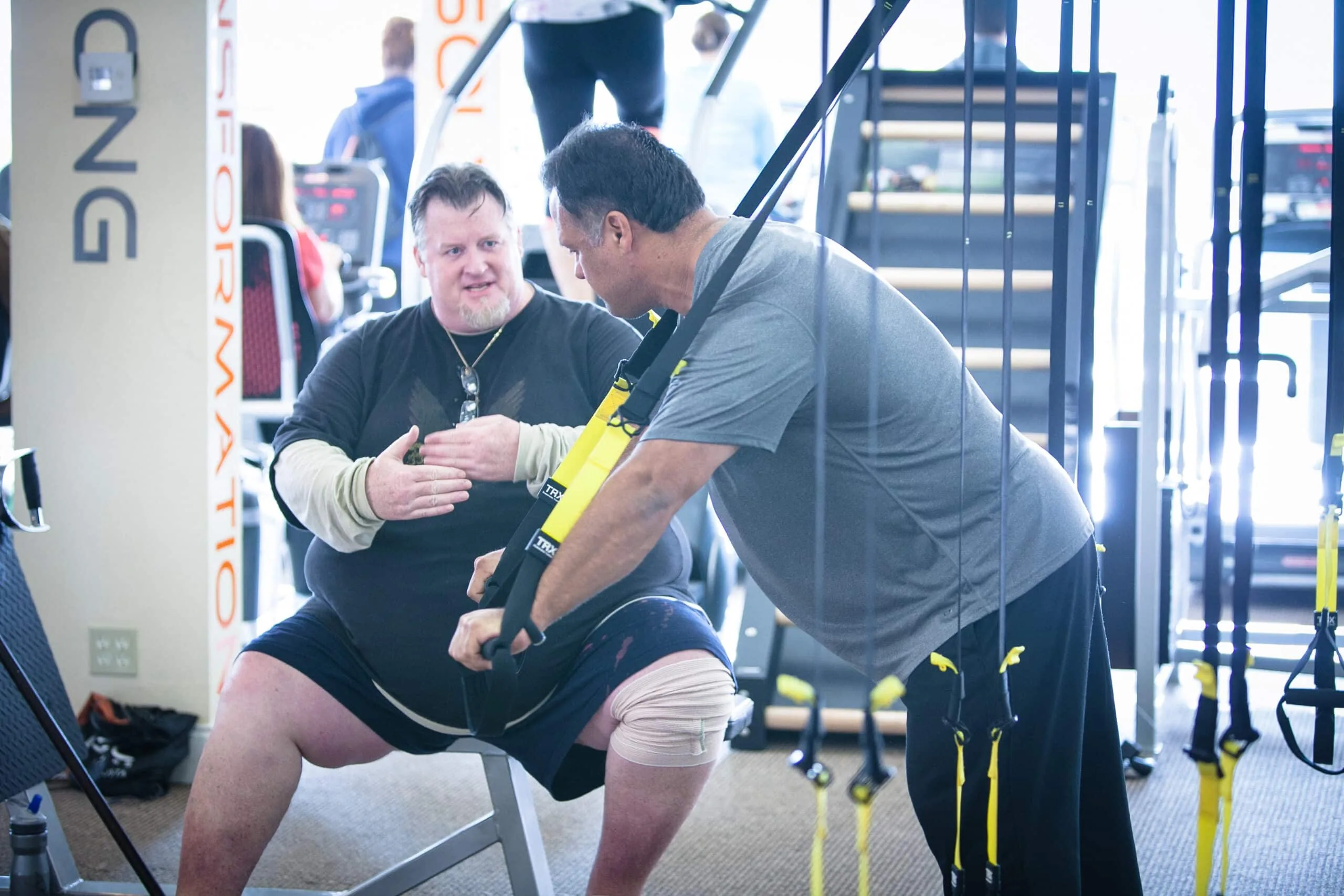
The program runs 4–5 hours of training daily, Monday through Friday, with a half day on Saturday. Meals are dietitian-designed and prepared on-site by PFC's wellness chefs. Behavioral health support comes from licensed psychologists, and three spa treatments per week are included in the program price. Trainers hold minimum bachelor's degrees, many hold master's degrees, and staff turnover is exceptionally low, so returning clients often work with the same team.

The UCSD case study result of 94% fat-only loss reflects what happens when recovery tools, resistance training, and nutrition education operate as a system. Progress is tracked across 17 data points weekly, including weight, body fat, measurements, blood pressure, blood markers, strength, and cardiovascular fitness. The client-to-trainer ratio stays between 3:1 and 4:1 in all sessions.
Irene Tchaikovsky, a PFC client, described it this way: “What began as a simple one-week reboot has transformed into a complete lifestyle shift. PFC equips you with the knowledge, tools, and support to make meaningful — and sustainable — changes.” Julie Robinson put it more simply: “Needed a reset and I found it at PFC.”
PFC is a premium, in-person, live-in experience that requires both time and money. With over 1,200 reviews, a 90%+ five-star rating, and 50% of annual revenue coming from returning alumni, the outcomes show strong client loyalty. For the right person at the right moment, it becomes an investment in health that compounds over time.
Explore Whether PFC Is Right For You
Hydrotherapy supports recovery, circulation, and fluid balance, but it does not produce fat loss on its own. Modalities like Charcot showers, cold plunges, and underwater treadmills mainly affect circulation, soreness, and joint offloading. None burns enough calories to replace resistance training and a calorie-appropriate diet. The value of hydrotherapy in a weight loss context comes from better recovery, which helps you train consistently.
A day spa sells à la carte treatments such as colonics, lymphatic drainage, cold plunges, and massage over a few hours per visit. There is usually no structured programming, nutrition education, behavioral health support, or progress tracking beyond the treatment itself. A residential retreat includes daily training, dietitian-led nutrition education, behavioral health support, accommodations, and meals over one to several weeks. Hydrotherapy at a residential retreat sits inside a recovery system that supports the training program. At a day spa, hydrotherapy is the product.
All-inclusive residential programs are priced per week and include accommodations, meals, programming, and spa access. Costs typically range from about $2,800 per week for budget programs to $6,000–$7,000 per week for premium programs. PFC runs about $6,000 per week and offers 0% financing for up to six months with no down payment, plus multi-week discounts. Day spa treatments are priced per session and vary widely by modality and location.
Residential weight loss retreats are not typically covered by health insurance. The program may qualify as a tax-deductible medical expense depending on your situation, so consult a tax professional. HSA or FSA funds may apply in some cases when programs include physician-directed medical components, but this varies. Always confirm details directly with your insurer and tax advisor.
Yes. PFC adjusts the protocol for clients on GLP-1 medications to emphasize resistance training and adequate protein intake, which are the primary tools for protecting lean muscle mass during medication-assisted weight loss. The team treats medication use without judgment. The program is designed to work alongside GLP-1 therapy and to build sustainable habits that support long-term results whether or not medication continues.
Ask three questions. Is hydrotherapy included in the program price, or is it an add-on? How many hours of structured daily programming are included? How is progress tracked beyond the scale? When hydrotherapy is sold separately and there is no structured daily schedule, you are looking at a treatment menu. A real program can answer all three questions clearly and in writing.
Look for four to five hours of daily programming, trainer credentials with low staff turnover, registered dietitian involvement with hands-on nutrition education, behavioral health support from licensed professionals, hydrotherapy included in the program price, and multi-point progress tracking that goes beyond scale weight. Be cautious when you see vague wellness language, scale-only tracking, or treatment menus with no clear structure.
Get Answers To Your Specific Questions
Hydrotherapy supports recovery, circulation, and fluid balance. Fat loss comes from structured resistance training, calorie-appropriate nutrition, and behavioral change sustained over time. A weight loss spa with hydrotherapy treatments that is worth the investment treats hydrotherapy as one component of a larger system.
The core evaluation points are simple: daily programming hours, trainer credentials, registered dietitian involvement, behavioral health support, multi-point data tracking, and whether hydrotherapy is included or upsold. Programs that answer these questions clearly give you a far better chance of lasting results.
Before booking, talk with a healthcare provider, compare multiple options, and use the checklist above with every provider. Strong programs welcome detailed questions.
PFC has supported over 3,000 clients, with more than 1,200 reviews and a 90%+ five-star rating. About half of annual revenue comes from returning alumni, which signals that clients see lasting value. If you want to explore whether PFC is the right fit for your goals, the first conversation is complimentary.
Schedule Your Free Consultation With PFC