 5-star Wellness Resort
 5-star Wellness Resort

Written by: Chris Butt, Certified Personal Trainer & Weight Loss Coach, Premier Fitness Camp
Talk To A Program Advisor At Premier Fitness Camp
Residential is a specific type of live-in, multi-week program, not a marketing label. A true residential weight loss program has four defining features. Participants live on-site for multiple weeks. The schedule runs from morning to evening. The program integrates fitness, nutrition, and behavioral health in one coordinated plan. The goal is measurable, lasting change.
A weight loss retreat usually runs three to seven days and centers on rest and spa services. Fitness is lighter, and there is little or no clinical or educational structure. A day program sends participants home each evening, which keeps many existing triggers in place. An online program offers flexibility but lacks the immersive, community environment that supports deep behavior change.
The distinction between a residential weight loss program and a retreat matters because research consistently shows that longer, more structured stays produce stronger outcomes. Without continued support after any program, 30% to 50% weight regain within the first year is common.
For a deeper comparison of leading residential programs, see Best Holistic Residential Weight Loss Programs For Adults.
Some programs use the word residential without delivering clinical-grade results. This framework highlights the features that consistently support lasting change.
For more detail on medical oversight inside a residential program, see Medical Oversight At Residential Fitness & Weight Loss Camps.
Compare Your Options With A Program Specialist
Residential weight loss programs span a wide pricing range. Budget programs start around $2,800 per week, mid-range options such as Skyterra and Live In Fitness run $3,500 to $4,500 per week, and premium programs reach $6,000 to $7,000 per week. All-inclusive pricing should cover meals, fitness programming, coaching, and recovery services, not just a room and basic gym access.
The most useful cost comparison focuses on what the weekly rate includes. A program that charges extra for meals, assessments, spa access, or educational workshops can end up costing more than an all-inclusive competitor.
Premier Fitness Camp (PFC) runs approximately $6,000 per week and is fully all-inclusive. That rate covers luxury accommodations at the Omni La Costa Resort & Spa, all meals from on-site wellness chefs, and every fitness class and training session. It also includes nutrition and behavioral health workshops, comprehensive health assessments, weekly 17-point report card tracking, three spa treatments per week, and post-camp virtual coaching.

PFC offers 0% financing for up to six months with no down payment, and multi-week discounts are available. The program may qualify as a tax-deductible medical expense, as IRS Publication 502 permits weight reduction program fees when treating a physician-diagnosed disease such as obesity. Consult a tax professional before filing.
For a broader comparison of pricing across adult weight loss resorts, see Affordable Adult Weight Loss Resorts With Holistic Programs.
The weekly rate is only part of the cost picture, so coverage and benefits matter. Insurance coverage for residential weight loss programs varies significantly by plan, diagnosis, and program type. Medically supervised programs are more likely to receive partial coverage than wellness retreats, particularly when a physician has documented obesity, hypertension, type 2 diabetes, or another qualifying condition. Coverage for medically supervised weight loss can include office visits, labs, or specific medications, and it changes based on diagnosis, documentation, and plan benefits.
HSA and FSA funds often apply to qualified medical weight loss expenses. Reimbursable costs with a doctor’s letter of medical necessity can include weight loss programs and counseling, and dietitian or nutritionist visits. Verify coverage directly with your insurer and benefits administrator, and ask your physician to document medical necessity in writing.
Truly free live-in weight loss programs are rare. The closest options include clinical trials recruiting participants for obesity research, insurance-covered inpatient medical programs for people with severe comorbidities, and a small number of scholarship-based nonprofit programs.
Community-based offerings such as TOPS (Take Off Pounds Sensibly) and the YMCA Diabetes Prevention Program are often low-cost or free, but they operate as outpatient programs rather than residential stays.
Any program that advertises a free luxury residential stay warrants careful scrutiny. The staffing, meals, accommodations, and medical oversight required for a legitimate live-in program create substantial operating costs, which makes a fully free offer highly unlikely outside a research setting.
The “3-3-3 rule” is a social media trend without peer-reviewed scientific backing. It is most commonly described as eating three balanced meals a day, drinking three bottles of water by mid-afternoon, and completing three hours of movement per week, although definitions vary. It does not function as a validated clinical protocol.
A more useful benchmark is the rate of fat loss that a well-designed residential program can support. PFC clients with 40–70 pounds to lose typically achieve 3–4 pounds per week of actual fat loss. That figure reflects fat loss rather than water loss or muscle loss.
A case study conducted in partnership with the University of California, San Diego found that 94% of total weight loss among PFC participants was purely fat, compared with the 60/40 fat-to-muscle ratio typical of standard dieting. That distinction matters because rapid weight loss accompanied by substantial reductions in fat-free mass raises concerns about sarcopenic obesity and post-discontinuation weight regain.
Stay length strongly shapes both results and habit change. One week delivers a powerful physiological and psychological reset. This window shows how structured daily training and expert nutrition feel in real life.
Two weeks builds momentum and starts to disrupt entrenched habits. Three weeks moves habit change toward durability. Research often cited by PFC suggests roughly 21 days as a common marker for new habit formation.
Four or more weeks support deeper lifestyle transformation, with significant improvements across body composition, metabolic markers, and behavioral patterns. PFC’s average client stays 11 days, which sits close to the two-week mark.
Many first-time clients book a single week and extend on-site after experiencing early results. Extended stays of up to several months are available for clients seeking more comprehensive change. A minimum residential stay of two to four weeks is often recommended to establish meaningful habit change, although individual goals and circumstances remain central.
GLP-1 receptor agonists such as semaglutide and tirzepatide have reshaped obesity treatment. They have also created a growing group of people who have lost weight on medication and now face muscle loss, metabolic slowdown, or a desire to taper or stop the drug without regaining weight.
Resistance training of major muscle groups two to three times per week is recommended alongside GLP-1 therapy to help preserve fat-free mass and resting energy expenditure. A structured residential program offers an effective environment for delivering that training at the needed volume and consistency.
Clinical trials show that approximately two-thirds of weight lost on GLP-1 receptor agonists is regained within one year of discontinuation. This pattern makes the behavioral and nutritional education component of a residential program especially important for anyone planning to taper off medication.
The Endocrine Society’s 2026 Scientific Statement reinforces that obesity is a chronic disease requiring long-term treatment. People who stop treatment after reaching their goal weight often regain weight and see related health conditions worsen. A residential program that teaches sustainable nutrition, builds exercise habits, and addresses behavioral triggers provides a foundation that supports any obesity treatment, including medication.

PFC welcomes participants who are currently on or tapering off GLP-1 medications. The program emphasizes resistance training, prioritizes protein intake, and builds sustainable habits that support long-term weight maintenance, with no judgment about medication use.
Premier Fitness Camp (PFC) operates at the Omni La Costa Resort & Spa in Carlsbad, California, a 450-acre luxury resort in North San Diego County. The year-round moderate climate supports daily outdoor training that many competitors cannot match. Beach boot camps on the Pacific coast, hikes through Torrey Pines and Batiquitos Lagoon, stand-up paddleboarding, and kayaking sit inside the standard program.
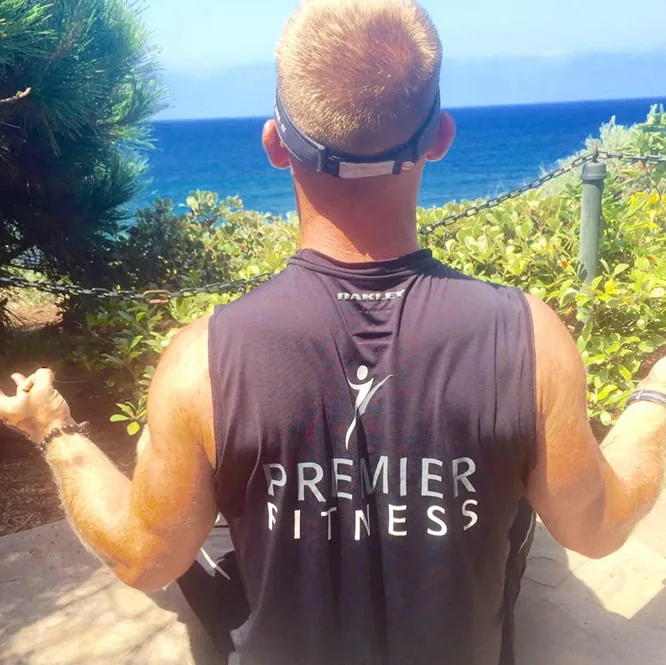
The program follows the “Think, Eat, Move” philosophy, a three-pillar framework that addresses behavioral health, nutrition education, and physical training together. Every weekday includes 4–5 hours of training at a 3–4:1 client-to-trainer ratio. All trainers hold at least a bachelor’s degree, and many hold master’s degrees. Classes are structured so that every fitness level, from a 400-pound beginner who can walk only 250 feet to a seasoned athlete, can participate and progress.

PFC tracks 17 data points weekly per client. These include weight, body fat percentage, measurements of the neck, waist, umbilicus, upper arm, chest, hip, and quad, blood pressure (systolic and diastolic), mile time, plank hold time, push-up count, and LDL, HDL, triglycerides, and glucose levels. A trainer reviews this weekly report card one-on-one to highlight all measurable wins, not only scale movement.

The program’s outcomes are validated by a case study conducted with the University of California, San Diego. Evaluating participants who stayed four or more weeks and received DEXA scans at the start and end of their program, the study found that 94% of total weight loss was purely fat, echoing the earlier statistic. Most long-term PFC clients preserved or increased lean muscle mass. Bone volume and resting metabolic rate also remained stable, which addresses the metabolic changes that often drive weight regain after other programs.
PFC has earned more than 1,200 reviews with a 90%+ five-star rating, and about half of annual revenue comes from returning alumni. Competing programs such as Live In Fitness, Canyon Ranch, Unite Fitness Retreat, Pritikin, Civana, and Hilton Head Health offer strong options in fitness, wellness, and medical programming. PFC distinguishes itself through its combination of location, on-site luxury facilities, long-tenured credentialed staff, educational depth, and independently validated body composition outcomes.
Discuss Whether PFC Fits Your Goals
Most adults evaluating residential weight loss programs face an overload of options and a shortage of clear standards. Programs that consistently deliver lasting results share several traits. They are live-in, multi-week, medically grounded, and built around education and aftercare. They track outcomes beyond the scale, employ credentialed staff with low turnover, and treat behavioral change as a core part of the process.
Premier Fitness Camp aligns with these standards and supports them with independently reviewed data. The UCSD case study, the 17-point weekly report card, the 3–4:1 trainer ratio, the “Think, Eat, Move” curriculum, and the high alumni return rate all point to a program designed for durable change rather than short-term loss.
With more than 1,200 reviews and a 90%+ five-star rating, PFC has earned its position as a benchmark residential weight loss program for adults. The most effective next step is a conversation about your goals, health history, and timeline.
Talk To A Program Advisor About Your Next Step