 5-star Wellness Resort
 5-star Wellness Resort

Written by: Chris Butt, Certified Personal Trainer & Weight Loss Coach, Premier Fitness Camp
Recent research from 2024–2026 consistently shows that behavioral coaching is the factor that separates lasting weight loss from short-term results. Studies indicate that lifestyle interventions combined with behavioral therapy outperform lifestyle changes alone. Cognitive behavioral therapy, motivational interviewing, and structured behavioral programs improve self-monitoring, coping skills, and long-term adherence to nutrition and activity plans.
A systematic review and meta-analysis of 20 years of research, led by Mansoo Yu of the University of Missouri-Columbia, highlighted the benefits of professional health coaching and peer social support for adults ages 35–55 with obesity or overweight. The review concluded that interventions with access to professional health coaches were as effective as traditional in-person weight loss programs for this group.
This research finding is validated by our own program data. A case study conducted in partnership with the University of California, San Diego (UCSD) evaluated dozens of participants who stayed four or more weeks and received DEXA scans, the gold standard for body composition, at the start and end of their stay. The key finding: 94% of total weight loss was purely fat. Many aggressive weight loss programs see roughly a 50/50 split between fat and lean muscle loss, and standard dieting often produces only a 60/40 fat-to-muscle ratio. Our fat-loss outcome reflects the combined effect of resistance training, nutrition education, and behavioral health support. Most long-term clients not only maintained their lean muscle but increased it during weight loss. Note: This is a case study, not a clinical study.
For absolute beginners, this matters. Losing fat while preserving muscle protects resting metabolic rate, which strongly influences whether weight stays off after a program ends. The Think, Eat, Move model is built specifically to support this kind of body composition change.
The 2026 Endotext chapter on Behavioral Approaches to Obesity Management highlights long-term contact with an interventionist as a key method for preventing weight regain after initial weight loss. Studies have examined different maintenance session formats and show that structured follow-up reduces regain.
Many people who lose weight do not maintain it long-term. Most drift back toward their original weight or higher because of biological adaptations such as reduced calorie burning and increased hunger after weight loss. Regular follow-ups every one to three months reinforce adherence, support early course correction, and improve maintenance outcomes.
Our program implements this evidence-based follow-up structure through post-camp support that includes virtual coaching for accountability, personalized meal plans for home, fitness programming, and open communication with staff. Clients can email their trainers any time after leaving. Progress during the program is tracked across 17 weekly data points, including weight, body fat percentage, multiple body measurements, blood pressure, lipids, glucose, strength, and conditioning markers. This detailed data gives clients a clear, objective picture of their health, which supports confident self-monitoring at home.
The 2026 BMC Medicine FIT study found that participants who rejoined a second lifestyle weight-loss program regained to their original weight before the second intervention and lost less weight and abdominal fat during it than during their first program. They still began the second program with substantially better metabolic and visceral-fat profiles. Our alumni data mirrors this pattern. About half of our annual revenue comes from returning clients who come back for structured resets that reinforce the habits they built during their first stay.
The Think, Eat, Move model’s education component, which includes nutrition workshops, cooking demonstrations, and behavioral health sessions, is designed to help clients self-regulate after they leave. The goal is independence, not dependence on the program.

Many first-time attendees worry they will not be able to keep up with the group. Our program structure directly addresses that fear.
The Mayo Clinic advises that new exercisers, including those with injuries or medical conditions such as obesity, should work with a fitness professional to design a gradual program. Our approach follows this guidance. Every fitness session is built so that participants ranging from 400-pound beginners who can walk only 250 feet to seasoned athletes can participate and benefit at the same time. Small group sizes, typically three to four clients per trainer, and low-impact modifications keep sessions safe and accessible.
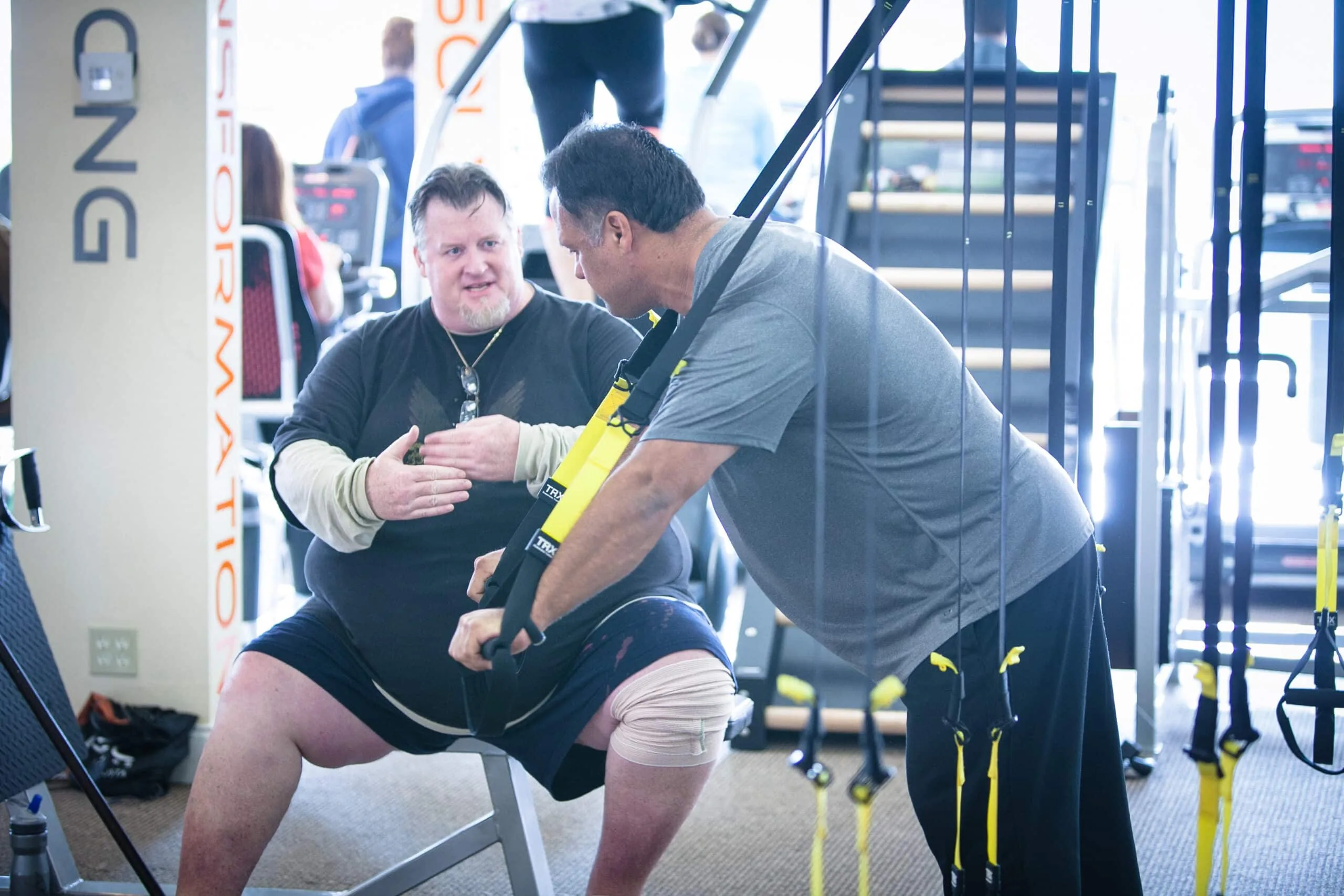
For individuals with osteoarthritis, low back pain, or significant deconditioning, low-impact modalities such as aquatic exercise, stationary cycling, elliptical training, and seated exercise are recommended. These options reduce joint loading while preserving cardiovascular and metabolic benefits. We build these choices into daily programming as standard modifications, not as separate or lesser tracks.
Licensed psychologists and behavioral health coaches lead group workshops on emotional eating, limiting beliefs, and life-work balance, with one-on-one counseling available for deeper work. Quality programs that emphasize emotional safety are typically staffed by multidisciplinary teams of licensed psychologists, psychiatrists, and counselors supported by wellness coaches, and we align with that standard.

Client Kerri, who arrived while managing complications from Type 1 Diabetes and depression, described her experience: “I immediately discovered little things starting to happen, like tying my shoes easier, breathing better, my posture had improved, I was standing taller. These small physical improvements built my confidence, which shifted my entire perspective. I realized it wasn’t so much about losing weight but what I was gaining: strength, energy, and a sense of fun.”
The Think, Eat, Move model never evaluates participants solely on physical output. Progress is measured across 17 data points each week, so every client sees concrete evidence of improvement in blood pressure, glucose, strength, and measurements, even when the scale moves more slowly.
The table below compares six programs on three metrics that matter to nervous first-time attendees. All data comes from publicly available program descriptions and the sources cited in this article. Programs without documented figures for a metric are noted.
| Program | Licensed Psychologist on Staff | Post-Program Virtual Coaching | Trainer-to-Client Ratio |
|---|---|---|---|
| Our Program (Carlsbad, CA) | Yes, licensed psychologists and behavioral health coaches on staff | Yes, virtual coaching, personalized meal plans, ongoing trainer communication | 3–4:1 (all sessions) |
| Hilton Head Health (South Carolina) | Yes, Anne Poirier, Director of Behavioral Health, documented in 2026 reporting | Not publicly documented | Not publicly documented |
| Pritikin (Florida) | Not publicly documented | Not publicly documented | Not publicly documented |
| Structure House (North Carolina) | Psychological services listed, specific licensure not publicly documented | Not publicly documented | Not publicly documented |
| Skyterra (North Carolina) | Not publicly documented | Not publicly documented | Not publicly documented |
| Canyon Ranch (Multiple locations) | Mental health professionals listed, specific licensure not publicly documented | Not publicly documented | Not publicly documented |
Our program is the only one in this comparison with publicly documented, DEXA-validated body composition data, a confirmed small-group trainer ratio across all sessions, and a structured post-program virtual coaching system. The Think, Eat, Move model integrates behavioral health, nutrition, and physical training into one cohesive experience rather than offering them as separate add-ons.
Gallup’s National Health and Well-Being Index reports that GLP-1 drug use for weight loss has nearly quadrupled since 2024. Roughly 11% of U.S. adults now take them, up from 3% in 2024. Many experience strong initial weight loss along with significant muscle loss, which can set the stage for rapid regain when medication is reduced or stopped.
Calibrate’s 2026 Results Report, based on data from more than 50,000 members, found that integrated behavioral support can significantly amplify GLP-1 outcomes.
Holly Toelke, fitness manager at Hilton Head Health, notes that strength training is crucial for GLP-1 users because muscle loss can be a side effect. Our approach for GLP-1 users centers on resistance training to rebuild and preserve lean muscle. This training requires adequate protein intake to support muscle synthesis, so our registered dietitians design protein-focused nutrition plans specifically for GLP-1 users. Beyond the physical work, behavioral health sessions address the psychological side of transitioning off or reducing medication and help clients build mental frameworks that support long-term change.
We do not discourage GLP-1 use. The program functions as the educational and lifestyle foundation that makes GLP-1 medications work long-term by addressing muscle loss, metabolic adaptation, and habit gaps that medication alone cannot fix. The fat-preservation outcome documented in our UCSD case study is particularly relevant for GLP-1 users who need to rebuild muscle while continuing to lose fat.
Ready to build the habits that make your results last? Book a free consultation to discuss how our program supports GLP-1 users at any stage of their medication journey.
When you compare beginner-friendly weight loss retreats with supportive coaching, several criteria help you separate programs that support lasting change from those that deliver only a short-term reset.
Our program meets every criterion on this list. We are located at the Omni La Costa Resort in Carlsbad, California, which offers a temperate climate year-round. The team includes licensed psychologists, small-group training, DEXA-validated body composition data, and structured post-camp virtual coaching built into the program.
A beginner-friendly weight loss retreat with supportive coaching is defined by its structure and team, not by amenities or marketing language. The most important factors include the credentials of the behavioral health staff, the trainer-to-participant ratio, the depth of nutrition education, the strength of post-program support, and the quality of outcome data. Research from 2024–2026 consistently points toward integrated, multidisciplinary, behaviorally grounded programs as the ones that produce durable results.
Our Think, Eat, Move model reflects these principles. With more than 1,200 reviews at a 90%+ five-star rating, DEXA-validated body composition data, small-group training, licensed psychologists on staff, and half of annual revenue coming from returning alumni, our track record shows strong client loyalty and outcomes.
Client Irene Tchaikovsky described her experience this way: “What began as a simple one-week reboot has transformed into a complete lifestyle shift.” Our program equips clients with the knowledge, tools, and support to make meaningful and sustainable changes.
If you are a nervous first-timer, a GLP-1 user looking for an exit ramp, or someone who has tried other programs without lasting results, the next step is a conversation. Book a free consultation with our team today, or call (888) 488-8936 to speak with someone directly. The consultation is free, personalized, and low-pressure. It is simply a chance to talk about where you are and where you want to go.
Yes. A well-structured beginner-friendly retreat is built for people with little or no exercise history. At our program, every fitness session accommodates the full spectrum of fitness levels, from individuals who can walk only 250 feet to those who train regularly. Small group sizes and low-impact modifications keep each exercise within a safe range for your current capacity. A comprehensive health assessment on day one, including blood work, body composition, vital signs, and a fitness test, establishes your baseline and informs a personalized plan. The all-inclusive format removes decision fatigue because meals, workouts, and education are all scheduled for you.
Weight regain after a program often stems from muscle loss during weight reduction and a lack of structured support afterward. We address both issues. Our UCSD case study showed strong fat loss with lean mass preserved or increased, which helps protect resting metabolic rate. After camp, we provide the structured post-program support described earlier, including virtual coaching, meal plans, fitness guidance, and direct trainer access. The 17-point weekly report card clients receive during their stay also builds self-monitoring skills and comfort with tracking key health data.
A typical weekday includes four to five hours of structured fitness training with options such as bootcamp, boxing, barre, TRX suspension, beach workouts, hiking at Torrey Pines or Double Peak, kayaking, and stand-up paddleboarding. All classes are designed so every fitness level can participate, with low-impact modifications available throughout. Meals and snacks are prepared on-site by wellness chefs and registered dietitians using fresh, farm-to-fork ingredients. Educational workshops on nutrition, behavioral health, cooking, and habit formation are woven into the schedule. Evenings offer time to enjoy the Omni La Costa Resort’s amenities, including three included spa treatments per week. The environment is warm, non-judgmental, and community-oriented, and many clients describe the social bonds as one of the most meaningful parts of the experience.
Yes. We welcome clients who are currently taking GLP-1 medications such as semaglutide or tirzepatide. The program is adapted to address the specific challenges these medications create, especially muscle loss and the need for sustainable habits that support weight maintenance if medication is reduced. Our registered dietitians design protein-focused nutrition plans to support muscle synthesis, and the resistance training component of the Move pillar focuses on rebuilding and preserving lean muscle. Licensed psychologists and behavioral health coaches address the psychological aspects of the transition. We do not judge or discourage GLP-1 use. Instead, we provide the educational and lifestyle foundation that helps the medication’s benefits last.
One week provides a powerful kickstart and measurable changes across several health markers. Two weeks build momentum and allow nutrition and behavioral education to sink in more deeply. Three weeks support more durable habit formation, and research often identifies this timeframe as a threshold for new behavioral patterns. Four weeks typically deliver significant, DEXA-validated fat loss with meaningful improvements across all 17 tracked health data points. Many first-time clients book one week and then extend their stay after experiencing the program firsthand. Extended stays of up to several months are available for clients with larger goals or those seeking deeper transformation. We offer 0% financing for up to six months with no down payment, and multi-week discounts are available.