 5-star Wellness Resort
 5-star Wellness Resort
Written by: Chris Butt, Certified Personal Trainer & Weight Loss Coach, Premier Fitness Camp
Most people who arrive at a weight loss retreat have already tried something else. They follow a diet, join a gym, or sign up for another program. They lose weight, then regain it, sometimes ending up heavier than when they started. That cycle reflects how many programs are built around restriction instead of education.
The traditional retreat model often relied on a kind of codependency. Clients lost weight in a tightly controlled environment, then went home without tools, nutrition knowledge, or a behavioral framework for handling stress, emotional eating, and daily life. The weight returned. Many clients did too, which quietly supported the business model for some operators.
The long-term results gap in this industry is real and measurable. Very few programs publish outcome data beyond the stay itself. Even fewer track clients at one, three, or five years after they leave. That lack of data says a lot. Programs that create lasting results tend to measure and share them. Programs that do not create lasting results often avoid long-term tracking.
This program follows a different philosophy. The “Think, Eat, Move” framework addresses the behavioral, nutritional, and physical dimensions of health at the same time. Lasting change requires all three working together. Clients leave lighter, but also educated and confident about how to maintain progress at home.
The data behind this approach, and what it means for long-term outcomes, shows how this philosophy performs in real life.
Talk with the team about your goals and see what a program built around long-term results looks like in practice. Call (888) 488-8936 or schedule your consultation online.
Clients with 40–70 pounds to lose average 3–4 pounds of fat loss per week. The more important question is what those pounds are made of. A case study conducted with the University of California, San Diego (UCSD) evaluated dozens of participants who stayed four or more weeks. Each received DEXA scans at the start and end of their program, which is the gold standard for measuring body composition.
The finding: 94% of total weight loss was purely fat. Most aggressive weight-loss programs reach about a 60/40 fat-to-muscle ratio at best. Standard dieting often performs no better. The 94% fat-loss rate reflects a deliberate focus on resistance training, protein-centered nutrition, and muscle preservation. That combination protects resting metabolic rate and makes long-term maintenance biologically realistic instead of fragile.
| Metric | Typical Dieting Program | Program (UCSD Case Study) |
|---|---|---|
| Fat loss as % of total weight lost | ~60% | 94% |
| Lean muscle outcome | Muscle loss common | Preserved or increased |
| Metabolic rate outcome | Often reduced | Protected or improved |
| Bone health outcome | Variable | Maintained |
Weekly progress tracking covers 17 data points. These include weight, body fat percentage, neck, waist, umbilicus, upper arm, chest, hip, and quad measurements, plus blood pressure, mile time, plank hold, push-ups, and LDL, HDL, triglycerides, and glucose levels. A 3–4:1 client-to-trainer ratio keeps every session coached, corrected, and tailored to the individual.
Schedule a personalized assessment to review your baseline metrics and discuss projected outcomes. You can also call (888) 488-8936 to speak with a program specialist.
Numbers describe outcomes, and alumni stories show how those outcomes feel and function in daily life.
Lauren M. arrived weighing 320 pounds and left at 180 pounds. Her 140-pound transformation later appeared on The Today Show. Years later, she credits the program not with handing her a diet, but with teaching her how her specific body responds to food and movement. In her words, “I found myself again; got my confidence back; learned how, for my body type, I needed to eat and exercise; and most importantly, I learned how to adopt a healthy, sustainable lifestyle.”
Alex lost 97 pounds, moving from 352 to 255, and continues to return. “I've been able to find the root of my binge eating disorder and progress towards recovery through healthy cooking. The program has given me the tools I've needed to lose over 100 pounds and cope with emotions in a healthy way rather than binge eating. I keep coming back.”
Irene Tchaikovsky describes what multi-year maintenance looks like in real life. “What began as a simple one-week reboot has transformed into a complete lifestyle shift. The program equips you with the knowledge, tools, and support to make meaningful and sustainable changes.”
Other alumni echo this pattern. Lin Vela has returned three times. Scott signed up for two weeks and stayed for eight. These examples match a broader trend of high alumni return rates. Over 1,200 reviews show more than 90% five-star ratings across more than 3,000 clients served.
Set up a call with the team to hear more about alumni experiences at one, three, and five years post-program. Call (888) 488-8936 or reserve a consultation time online.
GLP-1 medications such as Ozempic and Wegovy create real weight loss for many people. They also create real muscle loss when used without structured resistance training and protein-focused nutrition. Clients who lose 30 pounds on a GLP-1 but lose a large share of that as lean muscle arrive with a metabolic disadvantage. They have a lower resting metabolic rate, reduced strength, and a higher chance of regain if the medication dose drops or stops.
The approach for GLP-1 users centers on rebuilding and preserving lean muscle through resistance training. It also increases dietary protein to support muscle synthesis and builds nutritional habits that keep results stable over time. The body-composition findings discussed earlier, which showed muscle preservation during weight loss, directly apply to this group.
The program does not judge medication use. It functions as the education and lifestyle base that helps GLP-1 therapy work as intended. The medication becomes one tool inside a broader behavioral change framework instead of a standalone solution.
Support continues after checkout through a structured maintenance system. The stay ends, but the framework for accountability and guidance remains in place.
The support structure continues through four connected resources. Virtual coaching provides ongoing accountability and regular check-ins that prevent slow drift back to old habits. Personalized meal plans designed for home preparation translate the resort's nutrition principles into everyday cooking. Fitness programming bridges the gap between the resort environment and real life. Direct email access to the same trainers clients worked with on-site maintains continuity and reduces the feeling of being on your own after leaving.
The 17-point report card tracking system, introduced during the stay, becomes a template for self-monitoring at home. Multi-visit tracking across return stays shows health trends over years of engagement. Returning alumni see a longitudinal view of their progress that single-visit programs cannot provide.
A high alumni return rate signals strong long-term satisfaction. Clients who maintain their results and still choose to return, whether for an annual reset, for community, or to reach a new level, offer clear evidence that the program delivers on its promise.
Four dimensions predict long-term outcomes more reliably than marketing language. These include the depth of education, staff retention and consistency, the quality of aftercare, and the rigor of data tracking. The table below compares this program with primary competitors on those dimensions.
| Program | Education Depth | Staff Retention / Consistency | Aftercare Model |
|---|---|---|---|
| Program | “Think, Eat, Move” curriculum: psychologists, dietitians, wellness chefs, behavioral workshops, cooking demos | Low turnover; many trainers since founding; bachelor's/master's degrees required | Virtual coaching, personalized meal plans, trainer email access, 17-point tracking |
| Live In Fitness | Exercise and basic diet focus; limited behavioral or nutrition education | Higher turnover reported; less continuity across visits | Limited structured aftercare; residential home setting in Arizona |
| Canyon Ranch | Wellness-retreat focus; less results-driven curriculum | Established staff; premium setting | Retreat experience emphasis; less structured post-program follow-up |
| Unite Fitness Retreat | Fitness-focused; downtown Salt Lake City hotel setting | Variable; clients drive to off-site facilities | Limited; no integrated on-site education infrastructure |
Pritikin and Hilton Head Health both operate in Florida's high-humidity climate and tend to attract an older demographic with a slower program pace. Civana Wellness Resort and Spa focuses on the retreat experience more than measurable fitness and weight-loss outcomes. None of these programs publish a body-composition case study comparable to the UCSD-validated fat-loss ratio described earlier.
Ask detailed questions about aftercare and compare this model with any other program you are considering. Call (888) 488-8936 or speak with a program advisor online.
Choosing a weight loss retreat based on long-term results rather than short-term promises points in a clear direction. Programs that educate, preserve lean muscle, track meaningful data, and provide structured aftercare create outcomes that last. The UCSD case study, high alumni return rate, more than 1,200 reviews at over 90% five-star, and the weekly fat-loss rates documented in the case study represent one of the clearest long-term proof points in the adult fitness retreat category.
The program operates at the Omni La Costa Resort and Spa in Carlsbad, California. Stays start at one week. The all-inclusive price covers luxury accommodations, all meals prepared by wellness chefs, all fitness sessions at a 3–4:1 trainer ratio, educational workshops, health assessments, weekly report card tracking, three spa treatments per week, and post-camp support. Financing at 0% for up to six months with no down payment is available, which helps many clients align the investment with their budget.
Arrange a one-on-one consultation with the team to discuss your goals, timeline, and what realistic long-term results could look like for you. You can also call (888) 488-8936 to speak directly with a specialist.
Realistic long-term success means maintaining at least 10% of total body-weight loss at three or more years through genuine habit transfer rather than continued restriction. Clients who internalize the “Think, Eat, Move” framework, understand their nutritional needs, manage emotional triggers, and maintain consistent physical activity are positioned to sustain results indefinitely. A high alumni return rate reflects clients who maintained results and chose to return for continued progress, not because they regained weight and needed to start over.
Individual outcomes depend on starting weight, adherence to post-program habits, and life circumstances. The program's emphasis on education instead of dependency is specifically designed to support multi-year maintenance across a wide range of starting points.
Losing lean muscle during weight loss reduces resting metabolic rate, which is the number of calories the body burns at rest. A lower resting metabolic rate makes weight regain more likely because the body needs fewer calories to maintain its new weight while appetite often stays the same. Programs that create a 60/40 fat-to-muscle loss ratio make long-term maintenance harder with every pound lost.
The fat-loss ratio validated by UCSD, which showed pure fat loss with lean muscle preserved or increased, means clients leave with a metabolic rate that supports long-term maintenance instead of working against it. The scale number matters less than what that number is made of.
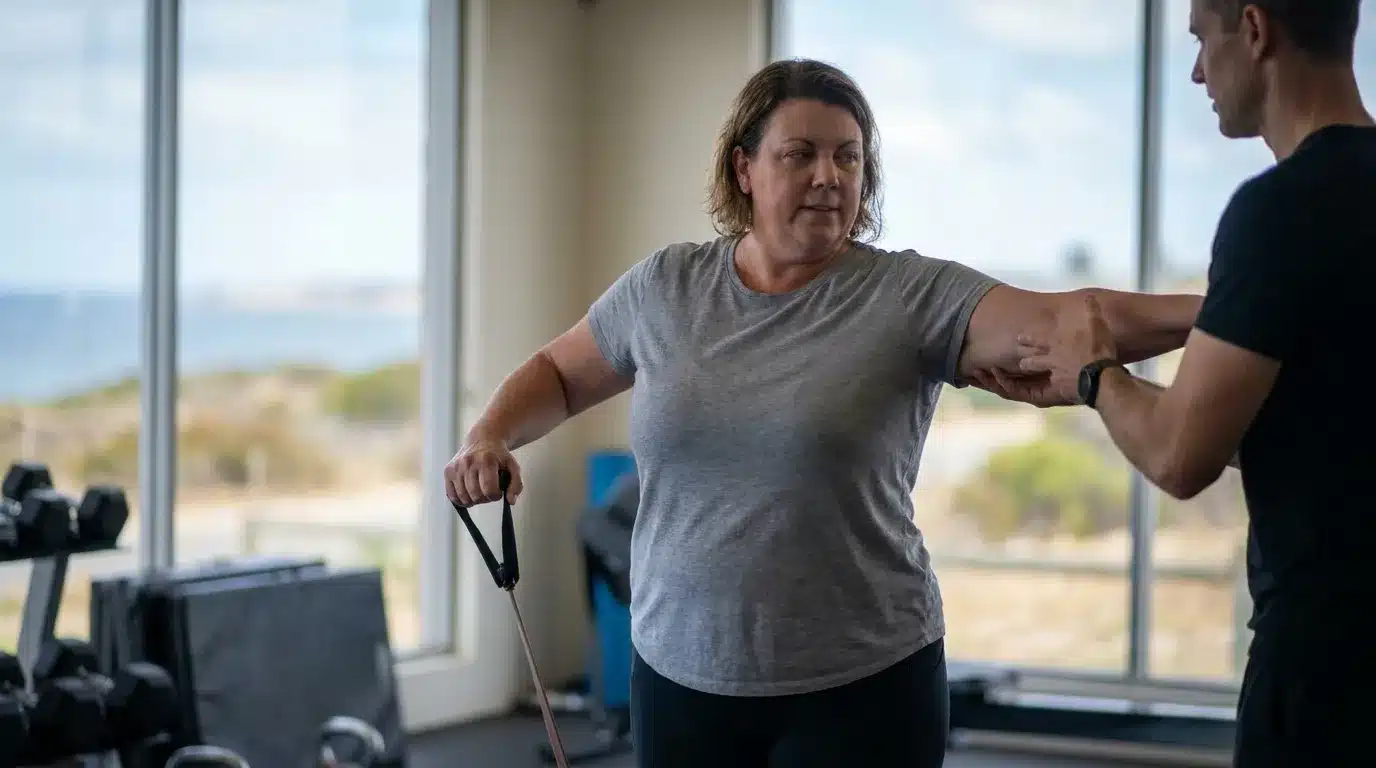
The program works with clients across the full spectrum of fitness levels, including individuals weighing 400 or more pounds who can initially walk only short distances. Every fitness session is structured so that all participants, from complete beginners to experienced athletes, receive appropriate challenge and modification. The 3–4:1 client-to-trainer ratio ensures no one is left without guidance or support.
Low-impact options exist for every exercise. Trainers hold at least bachelor's degrees, and many hold master's degrees, which supports safe work with complex health profiles. A comprehensive health assessment on day one, including blood work, body composition, and fitness testing, establishes a personalized baseline for each client's program.
The program does not discourage GLP-1 use. It addresses the primary risk associated with these medications, which is lean muscle loss, through resistance training and protein-centered nutrition. Clients on GLP-1 medications receive the same 17-point weekly tracking, behavioral health support, and nutrition education as other participants, with protocol adjustments that prioritize muscle preservation and metabolic protection.
For clients planning to reduce or discontinue medication, the program builds the habit foundation that makes the transition manageable. Sustainable eating patterns, consistent movement, and behavioral awareness reduce the risk of rapid regain when medication changes.
The scale measures total mass, which includes water, muscle, bone, and fat. A week in which body fat decreases, lean muscle increases, and waist circumference drops by an inch may show minimal change on the scale. That week can still represent significant positive progress.
The 17-point weekly report card tracks blood pressure, cholesterol, glucose, mile time, plank hold, push-up count, and seven body measurements because scale weight alone is an incomplete and often misleading indicator of health improvement. Many clients see dramatic improvements in blood pressure, glucose regulation, and cardiovascular fitness within the first two weeks, well before the scale reflects the full extent of body-composition changes. Tracking all 17 data points provides a clear and motivating picture of what is actually happening inside the body.