 5-star Wellness Resort
 5-star Wellness Resort
Written by: Chris Butt, Certified Personal Trainer & Weight Loss Coach, Premier Fitness Camp | Last updated: July 8, 2026
The wellness tourism market is expanding rapidly. North America accounted for 35.9% of global wellness tourism revenue in 2025, and the number of spas and retreat-style properties worldwide has grown in recent years. More options create more marketing claims and less clarity for consumers.
Six evaluation dimensions cut through the noise and keep the focus on outcomes:
Programs in and around San Diego fall into three broad categories: structured holistic camps that combine fitness, nutrition education, and behavioral health; spa-focused retreats that emphasize relaxation with fitness as an optional amenity; and medical programs centered on clinical intervention. Each category serves a different need.
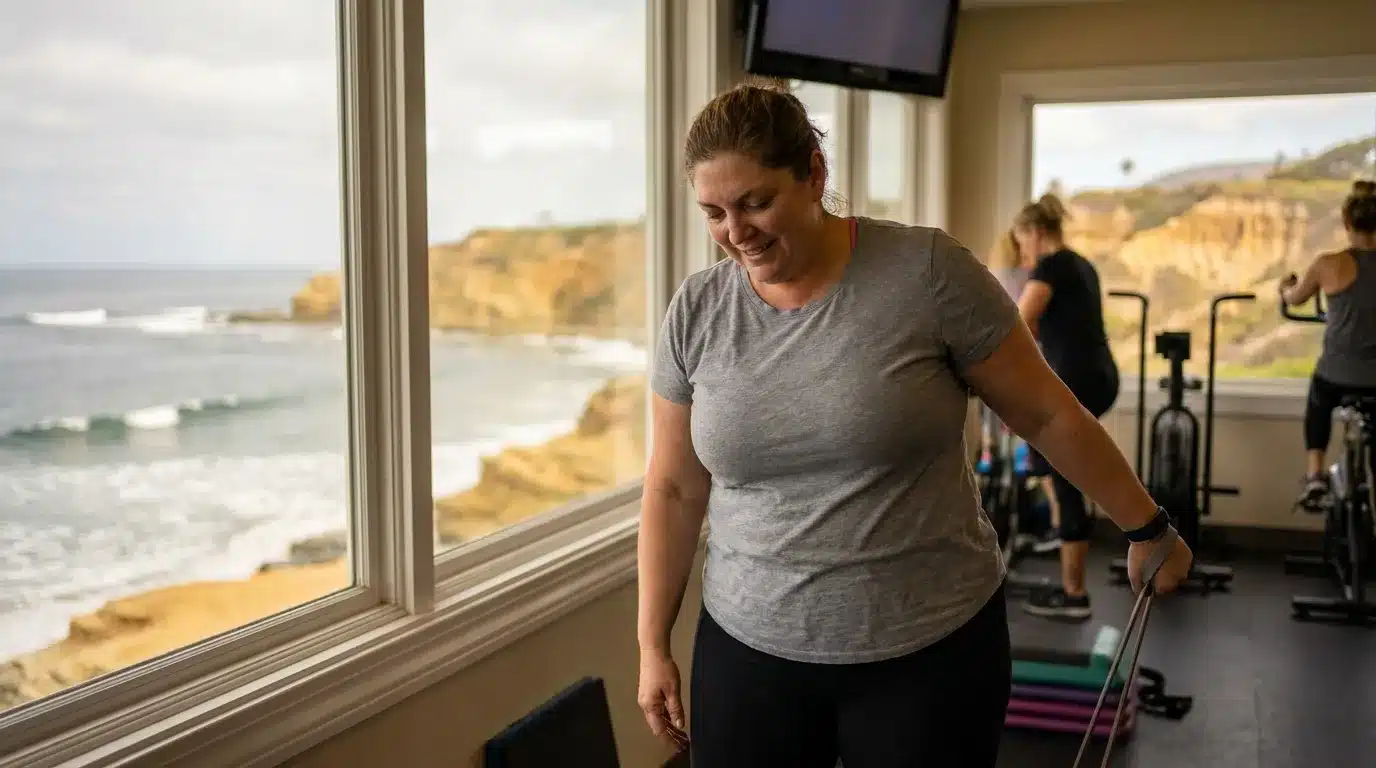
For programs in the first category, structured holistic camps that rely on outdoor training, San Diego’s climate becomes a meaningful differentiator. Carlsbad, in North San Diego County, offers moderate year-round temperatures, low humidity, and Pacific coast access. These conditions support beach workouts, coastal hikes, and water activities in any month. The Global Wellness Institute notes growing demand for nature-based immersion retreats that use the therapeutic effects of natural environments, a standard that coastal Southern California meets consistently.
The wellness activities segment, including fitness boot camps, structured nutrition programs, and holistic retreats, continues to expand as travelers prioritize structured, outcome-oriented experiences over passive relaxation.
The table below applies the six evaluation dimensions to three program types, showing that only structured holistic camps deliver the clinical credentialing, measurable outcomes, and post-stay support needed for lasting behavior change. Every data point is drawn from published sources or verified program specifications.
| Dimension | Structured Holistic Camp | Luxury Spa Retreat | The Program |
|---|---|---|---|
| Clinical & Educational Rigor | Registered dietitians, exercise physiologists, behavioral coaches, structured curriculum | Spa therapists, wellness guides, minimal clinical credentialing | Registered dietitians, licensed psychologists, wellness chefs, certified trainers (bachelor’s minimum), Think-Eat-Move curriculum |
| Program Design | 4–5 hours of daily structured training, nutrition and behavioral workshops | Optional fitness classes, primary focus on spa treatments and relaxation | 4–5 hours of daily training (Mon–Fri), half-day Saturday, daily nutrition education and behavioral health sessions |
| Environment & Location | Varies, some programs use off-site gyms or urban settings | Typically resort-based with limited dedicated fitness infrastructure | 450-acre Omni La Costa Resort, Carlsbad, all facilities on-site, beach, hiking, and water activities available year-round |
| Personalization | Group programming with some individual assessment | Minimal, amenity-based rather than outcome-based | Comprehensive day-one health assessment, 17 data points tracked weekly, 3–4:1 trainer-to-client ratio |
| Measurable Outcomes | Weight and basic fitness metrics, varies by program | Relaxation and subjective well-being, minimal objective tracking | UCSD case study: 94% of weight loss from fat (vs. typical 60/40 fat-to-muscle ratio), lean muscle preserved or increased |
| Aftercare | Some programs offer follow-up contacts, varies widely | Rarely included, guests return to prior habits without structured support | Virtual coaching, personalized meal plans, fitness programming, and ongoing staff communication post-stay |
Evidence-based obesity management programs integrate dietary change, increased physical activity, and behavior therapy delivered by trained interventionists including registered dietitians, psychologists, and exercise physiologists, a composition that luxury spa retreats rarely match. A 2022 Nutrients study found that culinary education interventions produced significant long-term improvements in dietary patterns one year after the program ended, which highlights why on-site cooking instruction matters beyond the stay itself.
For adults who have used GLP-1 medications such as Ozempic or Wegovy, this comparison carries extra weight. GLP-1s can accelerate scale-weight reduction, yet without structured resistance training and adequate protein intake, a significant portion of that loss comes from lean muscle. That shift harms metabolic rate and raises regain risk. A structured holistic program that emphasizes resistance training and nutrition education addresses this directly, while a spa retreat does not.
Ready to see how a structured approach compares to what you have tried before? Compare your options with the team in a no-obligation consultation. Call (888) 488-8936 or schedule your consultation online.
The Think-Eat-Move curriculum maps directly onto each evaluation dimension, showing how the program puts the framework into practice instead of only claiming to meet it. The breakdown below links specific credentialed professionals, structured activities, and measurable outcomes to each pillar.
Think addresses behavioral health through licensed psychologists and coaches who lead group workshops on emotional eating, stress, and limiting beliefs. One-on-one counseling is available for deeper issues. Core behavioral strategies in evidence-based weight loss programs include goal setting, daily self-monitoring, stimulus control, and cognitive restructuring. Each of these strategies appears in the behavioral curriculum.
The second pillar, Eat, is delivered by registered dietitians who design all meals and lead nutrition workshops. On-site wellness chefs prepare fresh, farm-to-fork meals and conduct cooking demonstrations. A 30-year Nature Medicine longitudinal study found that individuals most likely to maintain long-term health consistently followed whole, minimally processed nutrition habits over decades. Dietitians and chefs teach this pattern so clients can repeat it at home.
Move includes 4–5 hours of daily training, Monday through Friday, with a half-day on Saturday. Activities include bootcamp, boxing, barre, TRX, Tabata, beach workouts, hikes at Torrey Pines and Double Peak, stand-up paddleboarding, and kayaking. This range requires trainers who can adjust intensity and modify exercises across a wide fitness spectrum. All trainers hold a minimum bachelor’s degree, and many hold master’s degrees and have been with the program for years, which gives them the expertise to make those adaptations effectively. The 3–4:1 trainer-to-client ratio then ensures every participant, from a 400-pound beginner to a seasoned athlete, receives individualized attention and appropriate modifications.
Personalization appears through a comprehensive day-one health assessment and a 17-point weekly report card. Metrics include weight, body fat percentage, seven body measurements, blood pressure, blood lipids, glucose, push-up count, plank time, and mile time. The UCSD case study referenced earlier used DEXA scans at start and finish for participants who stayed four or more weeks, providing the body composition validation that most programs lack.
Post-stay, the program provides virtual coaching, personalized meal plans, and fitness programming, with ongoing access to staff via email. Monthly or twice-monthly long-term follow-up contact with an interventionist after the initial treatment phase is the most effective method for mitigating weight regain, and the post-camp support structure aligns with that standard. Fifty percent of annual revenue comes from returning alumni, which reflects both program satisfaction and the lasting relationships clients build with staff.
A brief self-assessment before selecting any program reduces the risk of a poor fit. The checklist below applies to any structured holistic program evaluation:
Common pitfalls share a single pattern: prioritizing how a program looks over how it performs. Many people select a program based on aesthetics or location photography instead of staff credentials and outcome data. That choice often leads to underestimating the importance of behavioral health support and to choosing a program without a defined aftercare structure. Programs that track only scale weight, rather than body composition, metabolic markers, and fitness performance, show this same issue by providing an incomplete picture of progress.
A holistic weight loss program integrates structured fitness training, nutrition education delivered by registered dietitians, and behavioral health support from licensed psychologists within a defined curriculum designed for measurable, lasting outcomes. A luxury spa retreat prioritizes relaxation and amenity access, with fitness usually offered as an optional add-on instead of a structured daily program. The difference appears in results. Clients who complete education-focused programs leave with skills and habits they can apply independently, while spa guests often return to prior patterns within weeks. The Think-Eat-Move curriculum follows the education-first model, with cooking demonstrations, nutrition workshops, and behavioral health sessions built into every week of the program.
The program works with clients across the full fitness spectrum, from participants who can only walk 250 feet at the start of their stay to seasoned athletes seeking to break through a plateau. Every class is structured so that all fitness levels can participate at the same time, with trainers providing modifications, progressions, and low-impact alternatives for every exercise. The 3–4:1 trainer-to-client ratio means no participant is left without individualized attention. A comprehensive health assessment on day one establishes a personalized baseline, and the 17-point weekly report card tracks progress across dimensions that extend beyond scale weight. Clients with physical limitations can see meaningful improvements in blood pressure, body composition, strength, and endurance even when weight loss is gradual.
GLP-1 medications can produce meaningful scale-weight reductions, yet without concurrent resistance training and adequate protein intake, a significant portion of that loss comes from lean muscle rather than fat. Muscle loss reduces resting metabolic rate and increases the risk of weight regain when medication is reduced or discontinued. The program’s curriculum emphasizes resistance training, registered dietitians calibrate protein and macronutrient targets for each client, and the UCSD case study confirms that participants preserve or increase lean muscle during their stay. Clients currently using GLP-1 medications are welcome. The program is designed to complement medication use and to build sustainable habits that support long-term results independent of pharmacological intervention.
The program is all-inclusive at approximately $6,000 per week. That price covers luxury accommodations at the Omni La Costa Resort, all meals prepared by on-site wellness chefs, all fitness classes and training sessions, nutrition and behavioral health education, the comprehensive health assessment and weekly report card, three spa treatments per week, access to all resort amenities, and post-camp virtual coaching and support. Programs listed on third-party platforms show that California wellness retreats range from a few hundred dollars for short stays to over $10,000 for five-day science-backed programs, with a seven-day spa program in Carlsbad priced from $6,095. The pricing is competitive within the structured, all-inclusive segment and reflects a program with credentialed staff, UCSD-validated outcomes, and a 90%-plus five-star rating across more than 1,200 reviews. Zero-percent financing for up to six months with no down payment is available, and the program may qualify as a tax-deductible medical expense.
The aftercare structure described earlier is designed for long-term accountability. Virtual coaching sessions maintain momentum, meal plans are calibrated to each client’s evolving nutritional needs, and fitness programming adapts to home or gym settings as routines change. Clients can communicate with their trainers after leaving, and many do so for months or years. The 50% alumni return rate reflects both the effectiveness of this ongoing relationship and the degree to which clients trust the program as a long-term partner in their health. For clients who used GLP-1 medications during or before their stay, post-camp guidance includes specific strategies for maintaining muscle mass and metabolic health as medication protocols evolve.
The six evaluation dimensions, clinical and educational rigor, program design, environment, personalization, cost and value, and aftercare, provide a reliable framework for distinguishing programs that produce lasting results from those that produce a pleasant experience. Luxury spa retreats serve a legitimate purpose, yet they are not built to deliver the behavior change, body composition outcomes, or post-stay accountability that adults seeking sustainable weight loss require.
The program at Omni La Costa meets every criterion in the framework. It offers a credentialed multidisciplinary team, a structured Think-Eat-Move curriculum, a 450-acre resort setting with year-round outdoor training, 17-point weekly personalization, UCSD case study data showing 94% fat loss while preserving lean muscle, and a defined post-stay support structure. With over 1,200 reviews at a 90%-plus five-star rating and the alumni return rate mentioned earlier, the outcomes are documented by the clients who have lived them.
Ready to take the next step? Schedule your personalized consultation to discuss your goals, timeline, and the program that fits your needs. Call (888) 488-8936 or schedule your personalized consultation online.