 5-star Wellness Resort
 5-star Wellness Resort
Written by: Chris Butt, Certified Personal Trainer & Weight Loss Coach, Premier Fitness Camp | Last updated: August 29, 2026
Use these five questions as a quick filter for any program you are considering.
Ready to talk through these questions with an experienced team? Schedule a personalized consultation to get answers tailored to your situation. Call (888) 488-8936 to speak with a program advisor.
Six core criteria separate programs that create lasting change from those that simply offer a pleasant week away.
California’s geography creates very different retreat experiences depending on the region you choose.
Northern California retreat centers, including 1440 Multiversity in Scotts Valley and Mount Madonna Center near Watsonville, sit among redwoods, Big Sur coastline, and wine country. The environment feels quiet, grounded, and reflective. Ratna Ling Retreat Center in Sonoma County spans 120 acres of coastal redwoods and focuses on yoga, meditation, and mindful movement. Northern California retreats often offer shorter stays, gentler programming, and a contemplative atmosphere. Climate varies by season, with coastal fog, cooler temperatures, and occasional rain affecting outdoor schedules.
Southern California retreats benefit from moderate temperatures, low humidity, and reliable outdoor training conditions throughout the year. Programs such as Cal-a-Vie Health Spa in Vista and Golden Door in San Marcos emphasize ultra-luxury, all-inclusive fitness and wellness weeks with structured schedules of hiking, fitness, yoga, spa treatments, and chef-prepared food. The Pacific coast supports beach training, ocean kayaking, and coastal hiking that Northern California programs rarely match at scale.
For first-time adults who prioritize structured fitness, measurable results, and outdoor variety, Southern California’s climate and coastal access usually provide a more consistent training environment than Northern California’s seasonal conditions.
During the first 24 hours of a wellness retreat, many participants experience a “Detox Dip,” which can include a dull headache, unexpected fatigue, or irritability as adrenaline fades and the body releases chronic stress. This reaction is normal and usually appears during the first few activities. Understanding this pattern helps you set realistic expectations for your first day. A realistic day-one timeline at a structured fitness retreat often looks like this:

Day-One Survival Checklist:
What to pack:
Common beginner mistakes to avoid:
The program operates exclusively at the Omni La Costa Resort & Spa in Carlsbad, California, a 450-acre luxury property in North San Diego County. Training, nutrition, behavioral health, cooking demonstrations, and spa recovery all take place on-site. You avoid vans, off-site gyms, and food delivered from external kitchens.

Compared with Live In Fitness. Live In Fitness operates in Arizona, where extreme heat limits outdoor programming for much of the year. Clients stay in a residential home and travel to basic gym facilities. Food is delivered instead of prepared on-site by a dedicated culinary team. Staff turnover is higher, and the overall experience does not match a resort-level standard.
Compared with Canyon Ranch. Canyon Ranch commands a premium price and strong brand recognition. Its focus centers on a high-quality retreat experience rather than a tightly structured, results-driven transformation program. The “Think, Eat, Move” curriculum at Premier Fitness Camp combines licensed psychologists, registered dietitians, wellness chefs, and degree-holding trainers to create measurable outcomes that a pure retreat model often does not target.
Compared with Unite Fitness Retreat. Unite Fitness Retreat operates from a downtown Salt Lake City hotel, where urban surroundings and cold winters shape the experience. Accessing additional amenities requires leaving the property. The 450-acre self-contained campus in Carlsbad removes that friction.
Compared with Pritikin and Hilton Head Health. Both programs are based in Florida, where high humidity can make outdoor training uncomfortable for many participants. They tend to serve an older demographic with a slower pace and a narrower activity menu. Premier Fitness Camp offers broader activity variety, including beach boot camps, Torrey Pines hikes, stand-up paddleboarding, boxing, TRX, tennis, pickleball, and golf.
Compared with Civana. Civana operates as a wellness resort focused on the retreat experience rather than structured fitness outcomes. Adults seeking measurable fat loss, body composition improvement, and behavioral health support often need the clinical rigor and data-driven tracking that define Premier Fitness Camp’s approach.
The UCSD case study, conducted over roughly one year with participants who stayed four or more weeks and received DEXA scans, found that 94 percent of total weight loss came from fat. Many aggressive weight loss programs produce a 50/50 split between fat and lean muscle loss, and standard dieting often yields a 60/40 ratio. Clients at Premier Fitness Camp not only preserved lean muscle mass but often increased it, which helps protect resting metabolic rate and reduces the risk of rapid weight regain.
The 17-point weekly report card tracks weight, body fat percentage, seven circumference measurements, blood pressure, four blood markers, mile time, plank hold duration, and push-up count. You see progress across many dimensions that the scale alone cannot show.
Client feedback reflects this structure. Julie Robinson wrote, “What a week!! Needed a reset and I found it at the program! The trainers, the staff, the Chefs! All amazing and work with all levels.” Irene Tchaikovsky shared, “What began as a simple one-week reboot has transformed into a complete lifestyle shift. The program equips you with the knowledge, tools, and support to make meaningful and sustainable changes.”
Half of annual revenue comes from returning alumni, which signals genuine satisfaction rather than marketing claims. More than 1,200 reviews report a five-star rating above 90 percent.
Considering your first structured wellness retreat in California? Talk to the team about your starting point, goals, and the right program length for your needs. Call (888) 488-8936 to speak with a program advisor.
The table below summarizes how Premier Fitness Camp performs against each evaluation criterion compared with a typical wellness retreat, so you can see the main differences at a glance.
| Criteria | Typical Retreat | Program | Notes |
|---|---|---|---|
| Staff credentials | Varies; industry largely unregulated | All trainers hold bachelor's degrees minimum; licensed psychologists and registered dietitians on staff | A polished website is not proof of qualified staff |
| Trainer ratio | Group classes; ratio rarely specified | Small-group sessions with close trainer attention | Crucial for beginners who need individualized modification |
| Progress tracking | Scale weight only or minimal metrics | 17 data points tracked weekly via personalized report card; optional DEXA scan | Includes blood markers, body composition, and fitness benchmarks |
| Post-program support | None or generic follow-up email | Virtual coaching, personalized meal plans, ongoing trainer communication | Most people lose retreat benefits within two weeks without structured follow-up |
| Fat-loss quality | Typically 50–60% fat, 40–50% lean mass | UCSD-validated fat-loss quality with strong muscle preservation | Maintaining lean muscle supports long-term metabolic health |
| Location and climate | Varies; seasonal limitations common | Omni La Costa Resort, Carlsbad, CA; year-round moderate climate, Pacific coast access | Supports daily outdoor training in every season |
| All-inclusive structure | Pricing often excludes treatments, transfers, and some meals | Fully all-inclusive: accommodations, all meals, training, education, spa treatments, assessments | No hidden costs; 0% financing available for up to six months |
For a structured fitness and wellness program, one week provides a meaningful introduction and enough time to see measurable changes across several health markers. Two weeks builds stronger momentum and allows behavioral patterns to start shifting. The average client stay is about 11 days, and many first-time participants book a single week, then extend after they experience the program firsthand. Extended stays of several months are available for deeper transformation. In general, longer stays support more durable habit change because behavioral research often points to roughly three weeks as the point when new routines begin to feel automatic.
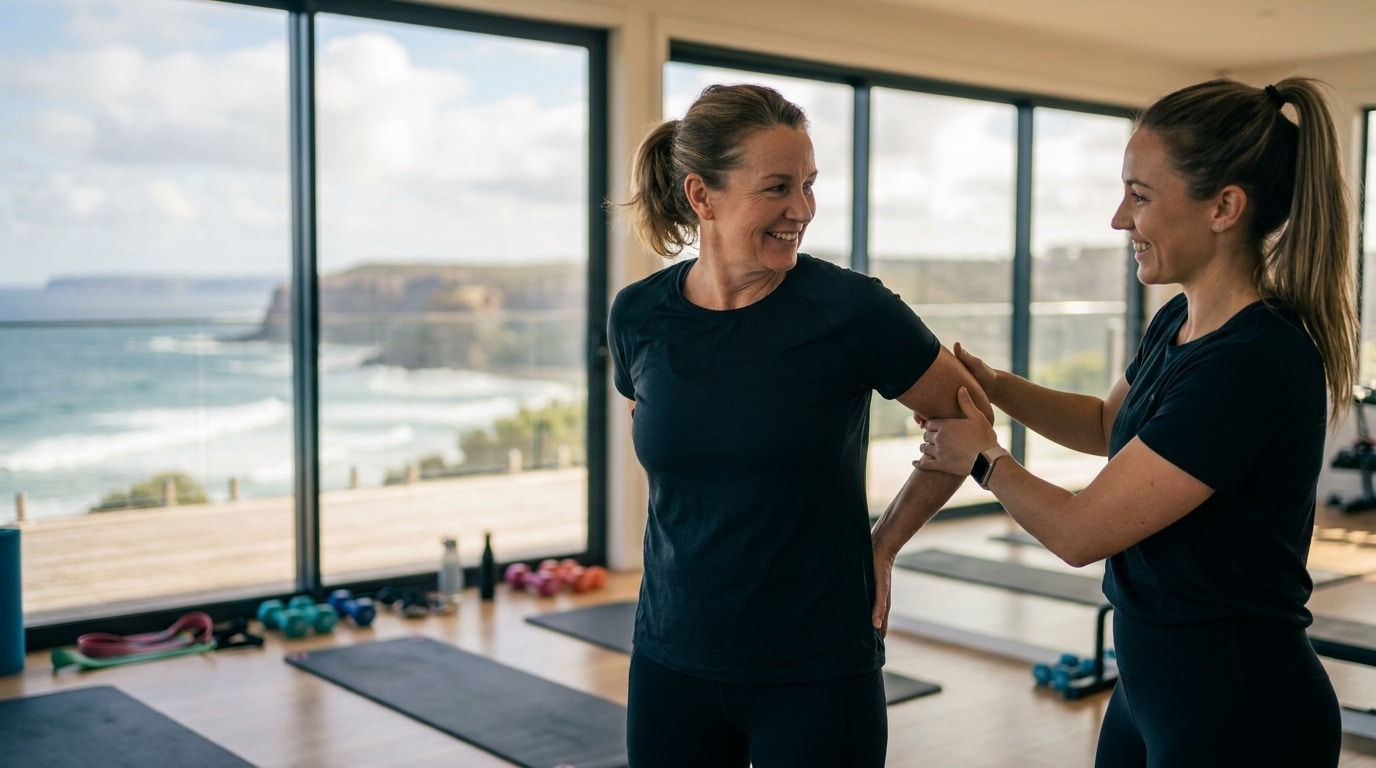
No prior exercise history is required. The program works with clients who can only walk 250 feet and with seasoned athletes who train four times per week. Every class is structured so all fitness levels can participate together, while trainers provide modifications, progressions, and low-impact alternatives for each exercise. The close trainer attention mentioned earlier ensures each participant receives individualized guidance instead of guessing at modifications alone. Clients with physical limitations such as knee issues, back pain, or joint problems are supported from day one through a comprehensive intake assessment that informs every training session.
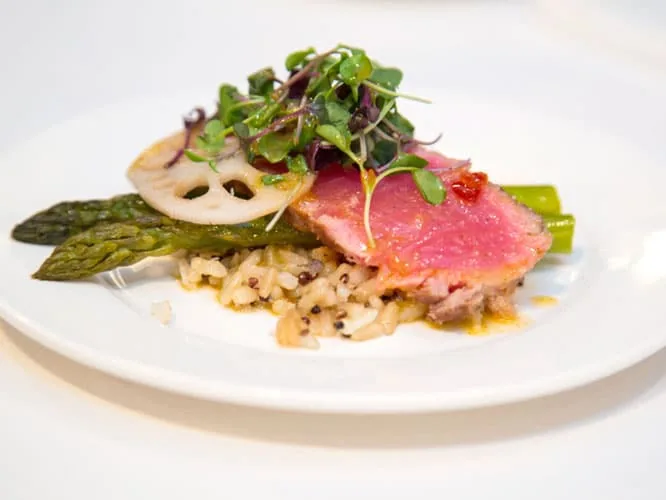
All meals at the program are included, including breakfast, lunch, dinner, snacks, and nutrition shakes. Wellness chefs prepare meals on-site using fresh, farm-to-fork ingredients, and registered dietitians design menus to be calorie-controlled, nutritionally complete, and satisfying. The food is flavorful and not typical “diet food.” Cooking demonstrations show you how to recreate healthy meals at home, and nutrition workshops cover macronutrients, portion control, smart shopping, and meal planning. The culinary education component matters as much as the meals themselves because it prepares you to maintain your nutrition independently.
The program offers structured post-program support that includes virtual coaching for accountability, a personalized home meal plan, individualized fitness programming, and open communication with staff. Participants can email their trainers at any time after departure. The 17-point weekly report card created during your stay provides a data baseline that guides post-camp recommendations. For returning clients, multi-visit tracking shows long-term health trends across years. The high rate of returning clients reflects the strength of these ongoing relationships and the effectiveness of the support structure.
Every trainer holds at least a bachelor's degree in a fitness or health-related field, and several hold master's degrees. Licensed psychologists and behavioral health coaches lead the mental health and emotional eating components. Registered dietitians design all meals and teach nutrition sessions. Wellness chefs with formal culinary training prepare all food on-site. Staff tenure is high, and many trainers have been with the program since its early years. Low turnover means returning clients often reconnect with the same team, which creates continuity of care in an industry where frequent staff changes are common.
Selecting a first wellness retreat in California does not require prior fitness experience, a certain body type, or complete clarity about your needs. It requires a clear evaluation framework and a program built to meet beginners where they are.
The six criteria that matter most, including clinical and educational rigor, program design, environment, personalization, cost transparency, and aftercare, tend to favor structured, immersive programs over short relaxation-focused retreats when your goal is lasting health change. The comparison between Northern and Southern California highlights Southern California’s reliable climate and coastal access for participants who need consistent training conditions. Day-one preparation, realistic expectations, and a specific post-program plan help your results continue after you return home.
The combination of a personalized training approach, comprehensive weekly progress tracking, research-backed fat-loss outcomes, licensed psychologists, on-site wellness chefs, and the Omni La Costa Resort setting aligns with every part of this evaluation framework. The high rate of returning clients and more than 1,200 reviews with a five-star rating above 90 percent reflect lived outcomes rather than marketing language.
Your first step is a simple conversation. Schedule a consultation with the team to discuss your goals, your starting point, and the program structure that fits your life. Call (888) 488-8936 or visit the consultation page to arrange your personalized session at no cost.