 5-star Wellness Resort
 5-star Wellness Resort
Written by: Chris Butt, Certified Personal Trainer & Weight Loss Coach, Premier Fitness Camp | Last updated: August 7, 2026
The California wellness retreat market splits into two clear categories: luxury spa experiences and results-focused fitness programs. Spa-oriented retreats deliver deep relaxation, skilled bodywork, and beautiful environments. They typically do not provide the clinical infrastructure, daily training volume, or behavioral health support needed for meaningful, sustained weight loss and lifestyle change.
To illustrate this gap, the table below compares leading programs across four dimensions that strongly predict lasting outcomes. These dimensions highlight how Premier Fitness Camp’s clinical structure and aftercare differ from spa-first retreats that emphasize ambiance over measurable results. The information for Premier Fitness Camp reflects its program specifications and observed outcomes showing that 94% of client weight loss was purely fat, compared with the 60/40 fat-to-muscle ratio common in standard dieting programs.
| Program | Clinical Rigor | Daily Training | Aftercare |
|---|---|---|---|
| Premier Fitness Camp | Licensed psychologists, registered dietitians, wellness chefs, UCSD-validated case study, 17-point weekly health tracking | 4–5 hours/day, Mon–Fri, 3–4:1 trainer-to-client ratio, all trainers hold bachelor's or master's degrees | Virtual coaching, personalized meal plans, ongoing trainer communication, 50% of annual revenue from returning alumni |
| Golden Door | Spa and wellness focus, limited published clinical oversight or outcomes data | Moderate daily movement, spa-integrated fitness programming | Limited structured post-retreat support documented publicly |
| Cal-a-Vie | Wellness spa model, fitness and spa integration without published clinical outcomes | Daily fitness classes, lower training volume than results-focused programs | Limited structured aftercare |
| Canyon Ranch | Established wellness brand, retreat experience focus rather than structured weight-loss outcomes | Varied fitness offerings, not structured around daily high-volume training | Some follow-up resources, not a structured coaching program |
| Live In Fitness | Fitness-focused, residential home setting, food delivered externally, high trainer turnover reported | Daily training, off-site gym access via van, Arizona location with extreme summer heat | Limited published aftercare structure |
| Unite Fitness Retreat | Fitness-focused, downtown Salt Lake City hotel, off-site gym access required | Daily training, cold climate limits year-round outdoor programming | Limited published aftercare structure |
| Pritikin | Longevity and cardiovascular focus, Florida location with high humidity, slower program pace | Lower training intensity, targets older demographic with less activity variety | Structured medical follow-up, less fitness-forward aftercare |
| Civana Wellness Resort | Retreat and spa focus, not structured around weight-loss outcomes or clinical tracking | Wellness classes, not a high-volume daily training program | Limited published aftercare |
| Hilton Head Health | Weight-loss focus, Florida location, guests housed off-site and transported daily to facilities | Daily programming, off-site accommodation requires daily transport, high humidity environment | Some follow-up programming, less comprehensive than Premier Fitness Camp's alumni model |
Premier Fitness Camp’s differentiators extend beyond the table. The 3–4:1 trainer-to-client ratio in every session, on-site wellness chefs preparing fresh farm-to-fork meals, licensed psychologists providing couples behavioral support, and the 17-point weekly report card that tracks weight, body fat, seven body measurements, blood pressure, blood lipids, glucose, and three fitness benchmarks work together as a unified system that spa-only experiences do not attempt to match.

As the Wellness Tourism Association notes, “leadership, intentional design, facilitation and alignment between all partners are what ultimately shape the participant experience in wellness retreats.” That alignment appears in every element of Premier Fitness Camp’s program design.
Compare Premier Fitness Camp’s program in a free consultation and see how it stacks up against any retreat you are considering.
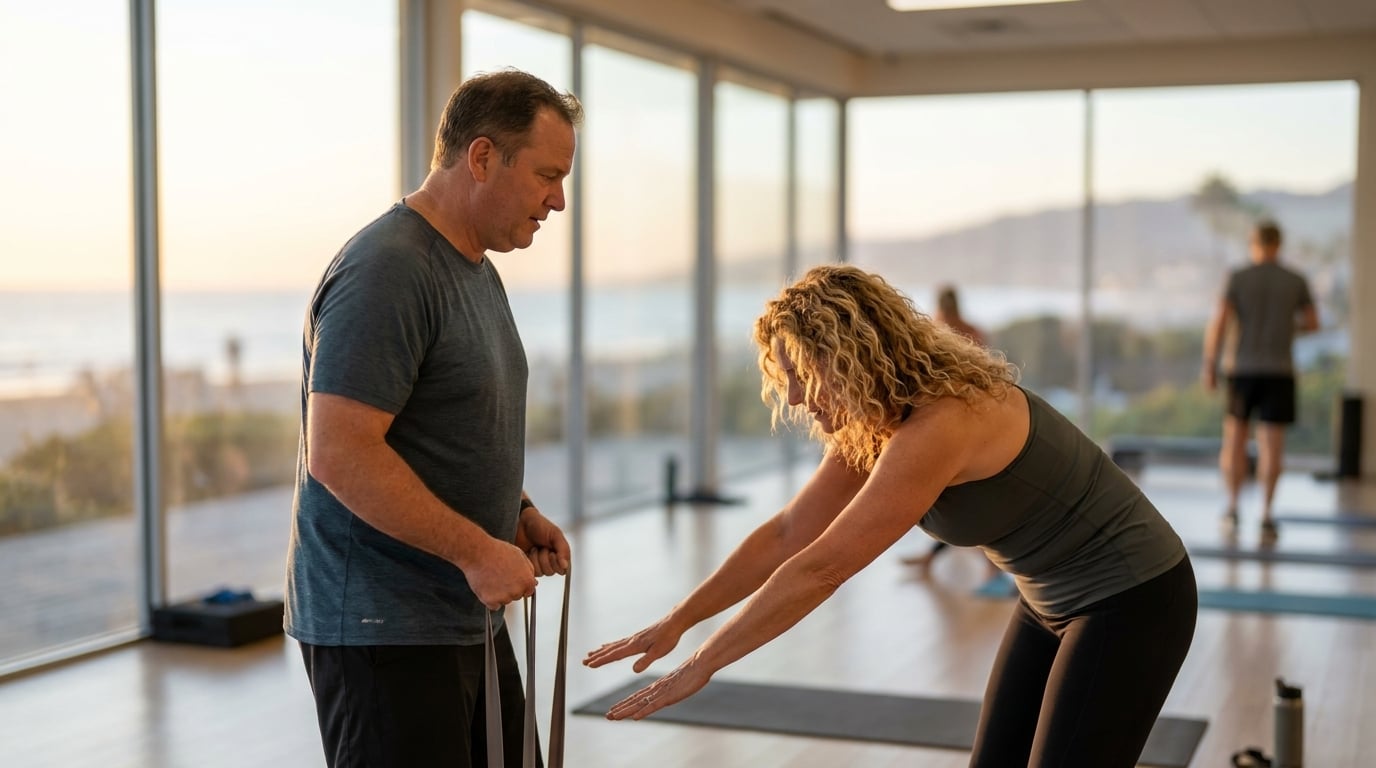
A typical week at Premier Fitness Camp starts with a comprehensive health assessment that includes blood work, body composition analysis, BMI, vital signs, measurements, and a fitness test. This baseline feeds into a personalized plan and the first of many weekly report cards. From day one, both partners receive individual attention based on their own starting points rather than sharing a single generic track.
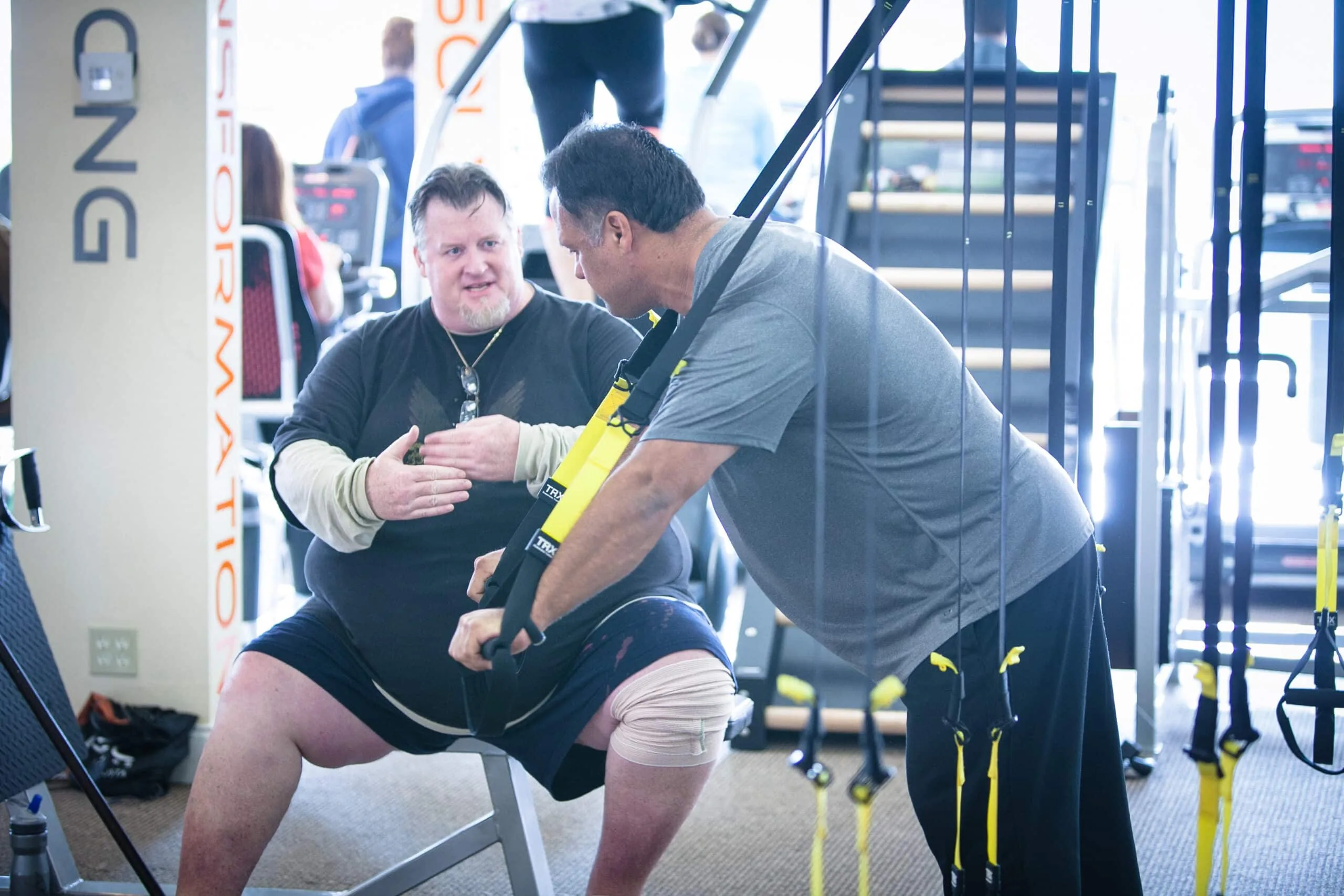
The daily structure follows Premier Fitness Camp’s “Think, Eat, Move” curriculum. Mornings include 4–5 hours of training that rotates through bootcamp, boxing, barre, TRX suspension, Tabata, interval and resistance training, beach workouts, and hikes through Torrey Pines and Batiquitos Lagoon. Every class is structured so participants at any fitness level, from first-time exercisers to seasoned athletes, can participate and progress. Afternoons feature nutrition workshops, cooking demonstrations led by on-site wellness chefs, and behavioral health sessions with licensed psychologists that cover emotional eating, habit formation, and relationship dynamics around food and fitness.
Couples using GLP-1 medications such as Ozempic or Wegovy can attend safely within a structured protocol. Unsupervised GLP-1 use carries documented risks including lean body mass loss and micronutrient deficiencies. Premier Fitness Camp addresses this risk by emphasizing resistance training and adequate protein intake to preserve and build muscle, the same approach validated in the UCSD case study mentioned earlier, where long-term clients maintained or increased lean muscle during weight loss.
Client Scott described his experience this way: “Premier Fitness Camp is a life-changing experience. I signed up for two weeks and stayed for eight. The facilities and staff are top notch.” Irene Tchaikovsky shared, “What began as a simple one-week reboot has transformed into a complete lifestyle shift. Premier Fitness Camp equips you with the knowledge, tools, and support to make meaningful and sustainable changes.”
Talk with the team in a free consultation to see how this daily structure can be tailored to both partners’ fitness levels and health goals.
Given the comprehensive structure described above, most couples next want to understand cost and value. Premier Fitness Camp is priced at approximately $6,000 per week and is fully all-inclusive. The fee covers luxury resort accommodations at the Omni La Costa Resort, all meals prepared by on-site wellness chefs, all fitness classes and training, educational workshops, health assessments, weekly report card tracking, three spa treatments per week, and access to all resort amenities. There are no hidden fees or à la carte charges for core program elements.
Premier Fitness Camp offers 0% financing for up to six months with no down payment, which makes the upfront cost more manageable for couples who want to commit to longer stays that also qualify for multi-week discounts. Because the program includes clinical oversight and medical assessments, it may qualify as a tax-deductible medical expense. A tax professional can advise on individual eligibility.
The value comparison between a results-focused program and a spa-only retreat goes beyond nightly rates. Structured programs with regular monitoring, follow-up, and ongoing plan adjustments based on progress data consistently outperform low-intensity approaches. A week at a luxury spa may cost a similar amount while providing relaxation without the clinical infrastructure, daily training volume, or behavioral support that produce lasting change. The UCSD-validated body composition outcomes described earlier show how Premier Fitness Camp preserves metabolic rate and lean muscle, which directly reduces the likelihood of weight regain and repeated program enrollment.
For couples who have already spent years cycling through diets, memberships, and programs without lasting results, the relevant comparison is not one week at Premier Fitness Camp versus one week elsewhere. The real comparison is the cost of continued frustration versus a program with a high alumni return rate and more than 1,200 reviews at a 90%+ five-star rating.
Southern California’s climate supports consistent outdoor programming that many competitors in Arizona, Utah, and Florida cannot reliably offer year-round. Extreme desert heat, mountain cold, and high coastal humidity are not factors in Carlsbad, where Premier Fitness Camp operates on the 450-acre Omni La Costa Resort campus in North San Diego County.
Mild temperatures in coastal San Diego reduce friction for physical activity, allowing movement to become integrated into daily routines rather than requiring deliberate motivation, while natural light exposure supports circadian rhythm alignment and metabolic regulation. These climate advantages explain why location plays a major role in the decision to attend a wellness retreat, because the setting determines whether outdoor programming is sustainable throughout the year or limited to specific seasons.
Premier Fitness Camp’s outdoor programming uses this setting fully through beach boot camps on the Pacific coast, hikes through Torrey Pines State Natural Reserve and Double Peak Park, stand-up paddleboarding, and kayaking. Nature-adjacent venues produce measurably better wellness outcomes than urban venues, including reduced cortisol levels, improved mood, and enhanced creative thinking, which contrasts directly with programs that operate in downtown hotel environments.
The Omni La Costa Resort also houses the La Costa Spa, ranked among the top wellness spas in North America by Travel + Leisure, with three treatments per week included in Premier Fitness Camp’s program fee.
Premier Fitness Camp’s support continues after departure so couples can maintain momentum at home. Every client leaves with a personalized meal plan, a fitness and exercise programming guide, and direct email access to their Premier Fitness Camp trainers. Virtual coaching is available to maintain accountability during the transition back to daily life.
Post-retreat integration planning is the factor most predictive of whether benefits translate into durable behavioral change. Premier Fitness Camp’s aftercare model reflects this through ongoing trainer communication, structured nutrition guidance, and a community of fellow alumni who share the same foundation. The effectiveness of this integration support is measurable, because half of the program’s revenue comes from returning clients, which signals that results hold well enough for clients to choose Premier Fitness Camp again rather than seeking alternatives.
Behavioral support components such as goal-setting, action planning, self-monitoring, and relapse-prevention strategies are essential to translate retreat-based learning into sustainable long-term habit change. Premier Fitness Camp builds these components into the “Think” pillar through licensed psychologists, group workshops on emotional triggers and limiting beliefs, and one-on-one counseling. Aftercare then becomes an extension of skills already practiced rather than a new system to learn from scratch.
Alumni like Alex describe the continuity this way: “I keep coming back! Premier Fitness Camp has given me the tools I've needed to lose over 100 pounds and cope with emotions in a healthy way rather than binge eating.”
These seven questions help couples apply the six-criteria framework to any California wellness retreat they are considering.
Choosing between couples wellness retreats in California and broader health and wellness retreats in California comes down to a clear decision about outcomes. Some couples want a restorative week away, while others want measurable, lasting change in how they eat, move, and think about health. For couples in the second group, the six-criteria framework of clinical rigor, program design, environment, personalization, cost and value, and aftercare consistently points toward Premier Fitness Camp.
The evidence is specific. Premier Fitness Camp offers UCSD-validated body composition outcomes, 17 data points tracked weekly per client, a 3–4:1 trainer-to-client ratio, licensed psychologists providing behavioral support, on-site wellness chefs, and year-round outdoor programming on the Pacific coast, along with alumni loyalty reflected in the program’s revenue mix and review profile. These details represent measurable outputs of a program built around education, empowerment, and lasting change.
Start your shared plan with a free consultation with the Premier Fitness Camp team to discuss your goals, your timeline, and how the program can be personalized for both of you. Call (888) 488-8936 or visit the Premier Fitness Camp consultation page to schedule your personalized consultation today.
Yes. Every class at Premier Fitness Camp is structured so that participants at any fitness level, from someone who has never exercised to a seasoned athlete, can train in the same session and receive an appropriate challenge. Trainers maintain a 3–4:1 client-to-trainer ratio and provide modifications, progressions, and low-impact alternatives for every exercise. One partner may walk a modified version of a beach circuit while the other runs intervals, yet both share the same session and move forward together. This structure helps couples feel motivated rather than frustrated, because neither partner is left behind and neither feels held back.
The day follows the structure described in the main article, with 4–5 hours of morning training across multiple formats, followed by afternoon nutrition workshops, cooking demonstrations, and behavioral health sessions. Evenings feature a gourmet, calorie-controlled dinner prepared by Premier Fitness Camp’s wellness chefs, and three spa treatments per week are included in the program fee. The key difference from a typical gym routine is integration, because every element connects to the “Think, Eat, Move” curriculum rather than existing as a set of unrelated activities.
Premier Fitness Camp fully accommodates participants on GLP-1 medications and uses a specific protocol designed for them. The primary concern with GLP-1 use without structured exercise and nutrition support is lean muscle loss, which reduces resting metabolic rate and increases the risk of weight regain when medication is reduced or stopped. Premier Fitness Camp addresses this concern by emphasizing resistance training and adequate protein intake throughout the program, which preserves and builds lean muscle while the medication supports appetite regulation. Participants on GLP-1s receive the same comprehensive health assessment, 17-point weekly tracking, and personalized nutrition guidance as all other clients, with adjustments that account for reduced appetite and the goal of protecting metabolic health for long-term sustainability.
Post-camp support includes virtual coaching for ongoing accountability, a personalized meal plan designed for the home environment, a fitness and exercise programming guide, and direct email access to Premier Fitness Camp trainers, the same staff members who worked with each client during their stay. Because Premier Fitness Camp maintains very low staff turnover, returning alumni reconnect with familiar faces year after year, and the relationships built during the program continue beyond departure. The strong alumni loyalty described earlier reflects how effectively this aftercare model sustains engagement, with many clients returning annually for a reset and some returning for more than 15 years. The goal of aftercare is to extend the education and habits developed during the “Think, Eat, Move” curriculum into daily life at home rather than create dependency on the program.
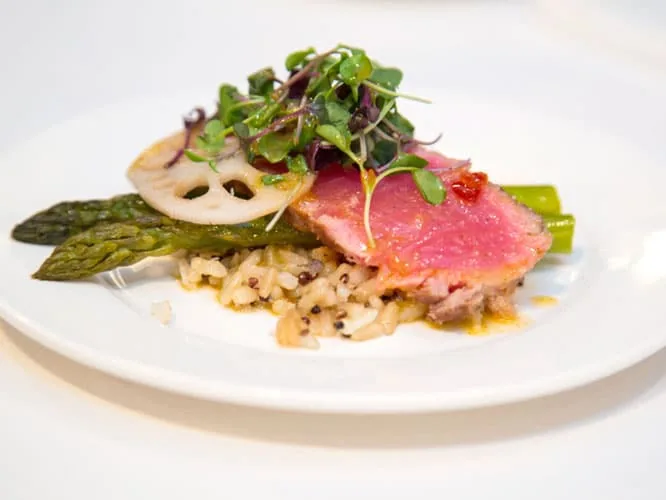
The program fee is fully all-inclusive. It covers luxury resort accommodations at the Omni La Costa Resort with private patios and plush bedding, all meals, including breakfast, lunch, dinner, snacks, and nutrition shakes prepared by Premier Fitness Camp’s on-site wellness chefs, all fitness classes and training sessions, educational workshops covering nutrition, behavioral health, and cooking, the comprehensive health assessment and weekly 17-point report card, three spa treatments per week at the La Costa Spa, access to all resort amenities, and post-camp at-home support materials. There are no additional charges for core program elements. Premier Fitness Camp offers 0% financing for up to six months with no down payment required, and multi-week discounts are available for longer stays. The program may qualify as a tax-deductible medical expense, and a tax professional can advise on individual eligibility.