 5-star Wellness Resort
 5-star Wellness Resort

Written by: Chris Butt, Certified Personal Trainer & Weight Loss Coach, Premier Fitness Camp | Last updated: August 14, 2026
| Time | Activity | Pillar |
|---|---|---|
| 6:30 AM | Hydration, vitals check, and morning intention setting | Think / Move |
| 7:00 AM | Gourmet chef-prepared breakfast + macro education | Eat |
| 8:00 AM | Mid-morning resistance training session | Move |
| 10:00 AM | Beach boot camp or outdoor fitness (Pacific coast) | Move |
| 12:00 PM | Farm-to-table lunch + live cooking demonstration | Eat |
| 1:00 PM | Specialty track: Golf Fit, Tennis Fit, or Spa Fit | Move / Think |
| 5:00 PM | Behavioral-health workshop and journaling | Think |
| 6:30 PM | Dinner with registered dietitian guidance | Eat |
| 7:30 PM | Nightly spa recovery treatment at La Costa Spa | Think / Move |
| 8:30 PM | Wind-down, reflection, and sleep preparation | Think |
Ready to see this schedule in person? Schedule a personalized walkthrough with the PFC team at (888) 488-8936 to explore what your day could look like.
The day starts at 6:30 AM with a calm, deliberate routine instead of a rushed alarm and sprint to the gym. Clients gather for hydration, a vitals check, and a brief intention-setting session that ties the day’s training to a personal purpose. This practice reflects the Think pillar of PFC’s “Think, Eat, Move” philosophy and sets the mental tone for the physical work ahead.

The World Health Organization’s 2020 physical-activity guidelines recommend at least 150–300 minutes of moderate to vigorous aerobic activity per week for adults, including those aged 18–64. That equals roughly 20–45 minutes per day. PFC’s structured schedule delivers several times that volume by midday, with every session adjusted to individual fitness levels.
Low-impact adaptations at this hour include:
These adaptations ensure no client is left behind, a commitment backed by PFC’s trainer qualifications. Trainers hold at least a bachelor’s degree, many hold master’s degrees, and long tenures at PFC help them read each client’s readiness before the first rep.
Breakfast at PFC is a sit-down, chef-prepared meal, not a protein bar at a check-in desk. Wellness chefs prepare every plate on-site with fresh, farm-to-fork ingredients, and registered dietitians design each meal to hit specific macronutrient targets. A short nutrition segment during breakfast covers topics such as protein timing, carbohydrate quality, and hydration strategy.
This personalized approach to nutrition education reflects broader industry trends. Many consumers who have traveled for health and wellness treatments plan to continue doing so, with personalization cited as the defining factor in long-term satisfaction. PFC’s meal program mirrors that standard, because no two clients share the same metabolic profile or goals.
Meals are calorie-controlled, satisfying, and, critically, delicious. This approach deliberately avoids the restrictive “diet food” model, because sustainable nutrition requires enjoyment rather than deprivation, a principle reflected in every plate PFC’s chefs prepare.
Curious how PFC’s nutrition program would match your needs? Talk with a registered dietitian about your goals and see how your meals would be structured.
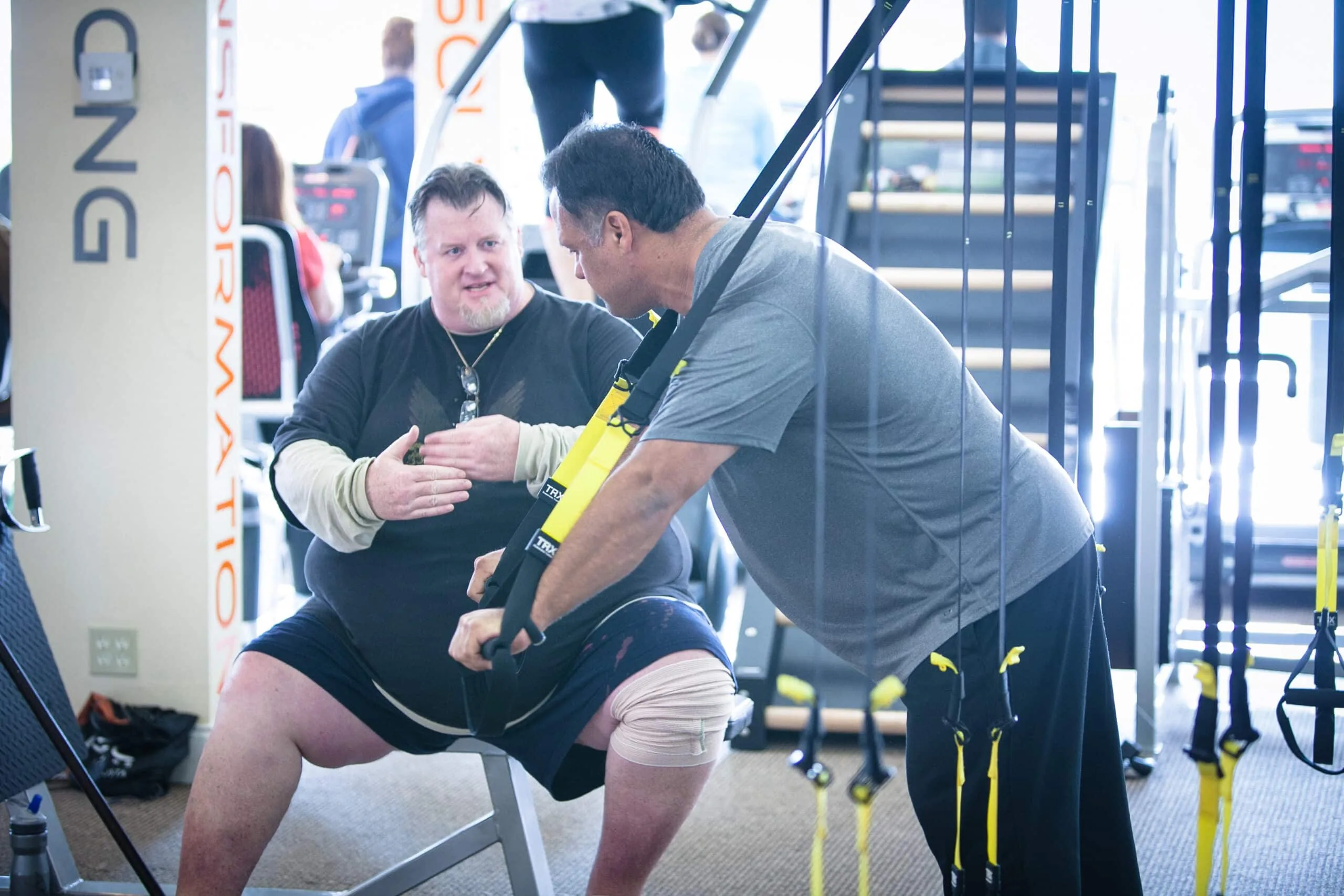
From about 8:00 AM to noon, clients move through two main training blocks: a structured resistance session and an outdoor fitness component on the Pacific coast or across the resort grounds. This window is where PFC’s 3–4:1 trainer-to-client ratio becomes most visible, with trainers close enough to correct form, offer progressions, and provide real-time modifications without slowing the group.
Training modalities during this window include:
Every class is structured so participants ranging from 400-pound beginners who can walk only 250 feet to seasoned athletes who train four times per week can participate and progress. Industry reports show growing interest in specialized expertise such as injury rehabilitation, and PFC addresses that demand through individualized low-impact tracks built into every session.
Midday at PFC focuses on refueling the body and teaching practical nutrition skills. The farm-to-table lunch, prepared by wellness chefs, is followed by a hands-on cooking demonstration that shows clients how to recreate healthy meals at home. Clients watch technique, ask questions, and leave with skills they can use in their own kitchens.
Cooking demo topics include portion control, healthy grocery shopping, meal planning for busy weeks, and macro-balanced recipe construction. The goal is empowerment. Clients who understand why a meal is built a certain way are more likely to sustain those habits after leaving Carlsbad.
As Julie Robinson, a PFC client, shared in her Google review: “What a week!! Needed a reset and I found it at PFC! The trainers, the staff, the Chefs! All amazing and work with all levels.”
Beginning around 1:00 PM, clients in specialty programs transition to their chosen afternoon track while still benefiting from the full morning curriculum. The La Costa resort provides the setting for three distinct options:
All specialty clients rejoin the full group for the 5:00 PM behavioral-health workshop, followed by dinner at 6:30 PM. Approximately 15% of PFC bookings are specialty programs, which reflects strong demand for personalized afternoon experiences within a structured wellness framework.
Luxury wellness programs in 2026 favor structured itineraries that combine training, recovery, and therapeutic interventions rather than open-ended leisure time, a model PFC has refined over years of programming at La Costa.
After the afternoon specialty tracks conclude, the 5:00 PM hour belongs to the Think pillar. Licensed psychologists and behavioral health coaches lead group workshops on emotional eating triggers, life-work balance, limiting beliefs, and habit integration. These sessions form a core part of PFC’s curriculum and help clients sustain results once they return home.
Workshop formats vary by week and include:
Industry reports identify mental wellness and recovery as priority areas for many coaches, recognizing that lasting results depend on the hours outside formal training. PFC has built that recognition into its daily structure since its founding.
After dinner, clients transition to the La Costa Spa for their scheduled recovery treatment. Three spa treatments per week are included with every PFC stay, with options such as massages, body scrubs, facials, red light therapy, manicures, and pedicures. These treatments form a deliberate recovery protocol that reduces inflammation, supports sleep quality, and sustains the physical output required by 4–5 hours of daily training.
Active recovery modalities including massage, mobility work, and stress management are shifting from niche offerings to everyday client expectations in 2026. PFC’s nightly recovery structure reflects that standard and sits within the core schedule rather than as an optional extra.
The evening closes with a wind-down period focused on sleep preparation. This routine reinforces the principle that adaptation happens during recovery, not during the workout itself.
Ready to experience structured recovery as part of your training day? Connect with PFC’s team to see how recovery fits into your plan.
PFC measures every client’s progress across 17 data points, tracked weekly through a personalized Report Card reviewed one-on-one with a trainer. Those data points include:
A case study conducted with the University of California, San Diego (UCSD) evaluated PFC participants who stayed four or more weeks and received DEXA scans at the start and end of their program. The case study found that 94% of total weight loss was purely fat, compared to the 60/40 fat-to-muscle ratio typical of standard dieting programs. Most long-term PFC clients not only preserved lean muscle mass but increased it during their weight-loss period, which protects resting metabolic rate and supports long-term maintenance.
Post-camp support includes virtual coaching, personalized meal plans, exercise programming, and ongoing communication with PFC staff. Clients can email their trainers at any time after leaving Carlsbad and often maintain that relationship across multiple visits.
Many prospective clients in the 40–60 age range wonder whether they can keep up with the schedule, and the answer is yes. Every class at PFC is structured so that each participant, regardless of starting fitness level, physical limitation, or prior experience, can participate and progress. The close trainer ratio ensures modifications, progressions, and low-impact alternatives for every exercise in every session.
Low-impact options available throughout the daily schedule include:
For clients on GLP-1 medications such as Ozempic or Wegovy, PFC’s program remains fully compatible. The training protocol emphasizes resistance work to preserve and rebuild lean muscle mass, the primary concern for GLP-1 users. The nutrition team adjusts protein targets and meal timing to support medication-aligned goals. PFC does not discourage GLP-1 use and instead provides the education and lifestyle foundation that helps those medications produce lasting results rather than short-term changes followed by muscle loss and metabolic slowdown.
A prospective chart review of 109 adults in a residential lifestyle medicine program found statistically significant reductions in blood glucose, total cholesterol, LDL, triglycerides, and blood pressure over a mean 14.5-day stay, outcomes consistent with the cardiometabolic improvements PFC tracks through its 17-point weekly Report Card.
Irene Tchaikovsky, a PFC client, described her experience this way:
“What began as a simple one-week reboot has transformed into a complete lifestyle shift. PFC equips you with the knowledge, tools, and support to make meaningful — and sustainable — changes.”
Scott, who enrolled for two weeks and extended his stay to eight, wrote:
“PFC is a life-changing experience. I signed up for two weeks and stayed for eight. The facilities and staff are top notch.”
Jake Younger captured the full-day experience in his review:
“PFC Fitness Camp exceeded all my expectations. The staff is incredibly supportive, knowledgeable, and truly passionate about helping you reach your goals. I not only lost weight but gained confidence, strength, and a healthier lifestyle.”
These responses reflect a consistent pattern across PFC’s 1,200+ reviews, more than 90% of which carry a five-star rating. Half of PFC’s annual revenue comes from returning alumni, which speaks to the durability of the daily structure and the relationships built within it.
Ready to Experience the Premier Fitness Camp Schedule?
The daily schedule at a luxury adult fitness camp functions as a precision-built system that blends training, nutrition, behavioral health, and resort recovery into a single, coherent day. At PFC, that system is delivered by degreed trainers, registered dietitians, licensed psychologists, and wellness chefs, all working together on the La Costa resort grounds.
Whether you are a Reset Seeker reclaiming your health after years of putting others first, a GLP-1 user seeking a structured foundation for long-term results, or someone who simply wants to see what a full day at PFC looks like before committing, the next step is a free, no-pressure conversation with the team.
Start your conversation with a PFC advisor today, or call (888) 488-8936 to speak directly with the staff. With more than 1,200 reviews and a 90%+ five-star rating, PFC has helped over 3,000 clients build the habits, knowledge, and physical foundation for lasting transformation.
Frequently Asked Questions
What should I bring to a luxury adult fitness camp for a week-long stay?
PFC recommends packing comfortable athletic wear for multiple daily sessions, including layers for early-morning outdoor training in Carlsbad’s mild coastal climate. Supportive cross-training shoes are essential, because sessions span resistance training, beach workouts, and hiking. Swimwear is useful for paddleboarding and kayaking activities. Because all meals are prepared on-site by PFC’s wellness chefs, no food preparation is necessary. Luxury accommodations at the Omni La Costa Resort include plush bedding and private patios, so personal comfort items are minimal. A journal is encouraged for the evening behavioral-health workshops. PFC’s team provides a detailed packing list during the pre-arrival consultation process.
How does the daily schedule at a luxury adult fitness camp differ from a standard wellness spa retreat?
A standard wellness spa retreat typically centers on relaxation, with fitness as an optional add-on and no structured educational curriculum. PFC’s daily schedule centers on 4–5 hours of expert-led training, chef-prepared meals with active nutrition education, licensed-psychologist-led behavioral workshops, and spa recovery, all delivered in sequence as an integrated system. The distinction is outcomes versus relaxation. PFC clients leave with measurable changes across 17 tracked health data points, practical cooking and nutrition skills, and behavioral tools for sustaining results at home. The La Costa Spa treatments support PFC’s recovery protocol rather than serving as the primary offering.
Is the daily schedule the same every day, or does it vary throughout the week?
The overall structure remains consistent Monday through Friday, with a half-day program on Saturdays. Each day follows the same rhythm of morning intention setting, training blocks, meals with education, afternoon specialty or recovery time, evening workshops, and spa wind-down. Within that structure, the specific training modalities, workshop topics, cooking demonstration recipes, and spa treatments rotate throughout the week to prevent adaptation and maintain engagement. Outdoor sessions such as beach boot camps, Torrey Pines hikes, and paddleboarding are scheduled based on conditions and client readiness. This predictable rhythm supports habit formation, while the built-in variety keeps multi-week stays engaging.
How does Premier Fitness Camp’s daily schedule accommodate clients on GLP-1 medications?
PFC’s program is fully compatible with GLP-1 medications including Ozempic and Wegovy. The training protocol emphasizes resistance work to address the muscle loss that commonly accompanies GLP-1 use, and the nutrition team adjusts protein intake and meal timing to match clients’ medication needs. Behavioral-health workshops address the psychological side of transitioning off or reducing medication over time. PFC does not require clients to stop or modify their medication as a condition of enrollment. Instead, the daily schedule builds the exercise habits, nutritional knowledge, and behavioral foundation that make GLP-1 medications more effective in the short term and less necessary in the long term.
What happens after the daily program ends, and is there post-camp support?
Post-camp support functions as a structured part of PFC’s program rather than an afterthought. After leaving Carlsbad, clients receive virtual coaching for accountability, personalized meal plans designed for home preparation, and individualized exercise programming. Clients can email their PFC trainers at any time, and many alumni maintain that relationship for years. Multi-visit tracking through PFC’s 17-point Report Card allows returning clients to see long-term health trends across multiple stays. The 50% alumni return rate reflects the strength of these ongoing relationships and the durability of the habits built during the daily program.