 5-star Wellness Resort
 5-star Wellness Resort
Written by: Chris Butt, Certified Personal Trainer & Weight Loss Coach, Premier Fitness Camp | Last updated: July 22, 2026
The post-GLP-1 era has reshaped what adults expect from weight-loss programs. Clinical trial data from the STEP 4 study show that roughly two-thirds of lost weight returns within 12 months of stopping semaglutide, even with monthly lifestyle counseling. This pattern drives interest in education-focused residential programs that address the root causes of weight regain. The SFIA 2026 Topline Report confirms that fitness participation has reached a new high, yet most Americans still fall short of the recommended 150 minutes of weekly activity. Immersive programs help close that gap by compressing months of learning and practice into a focused stay.
San Diego's year-round moderate temperatures and low humidity give local programs a structural edge over competitors in Arizona's desert heat, Utah's winter cold, or Florida's high humidity. The Carlsbad location in North San Diego County supports daily outdoor training on the Pacific coast, hikes through Torrey Pines and Double Peak Park, and water activities that inland or urban competitors cannot match.
To compare San Diego adult fitness camps, use the following six dimensions as a consistent evaluation lens:
Four broad program models operate in or near San Diego:
San Diego's climate and coastal geography give hybrid programs here a year-round outdoor training advantage that programs in harsher or more variable climates cannot easily replicate.
Programs that emphasize sustainable habits, behavior change, practical skills such as meal planning, and follow-up support achieve better long-term results than programs focused only on rapid weight loss through extreme measures. Intensity alone is not enough. High-volume training can accelerate early results, yet those gains fade without nutrition education and behavioral health support once participants return home.
Rapid weight loss can trigger metabolic adaptation by slowing metabolism and altering hormone levels, which increases the likelihood of weight regain, as seen in participants from “The Biggest Loser”. The UCSD case study on Premier Fitness Camp addresses this risk by documenting that 94% of client weight loss came from fat while lean muscle was preserved or increased, and resting metabolic rate remained protected. This physiological profile supports long-term weight maintenance.
The 2026 Follow Interventions Trial (FIT) project found that repeated engagement in structured lifestyle interventions produced meaningful long-term impacts, including significantly less weight and fat-depot regain at five-year follow-up compared with first-time participants. A 50% alumni revenue rate at Premier Fitness Camp reflects this pattern. Clients return because structured re-engagement compounds metabolic and behavioral benefits over time.
Immersive residential fitness programs in the United States span a wide price range, with costs shaped by clinical infrastructure, staffing ratios, and amenities. Programs that include comprehensive GLP-1 aftercare support usually require higher investment because they rely on multidisciplinary clinical teams. Premier Fitness Camp is priced at approximately $6,000 per week, all-inclusive. This rate covers luxury accommodations at the Omni La Costa Resort, all meals prepared by on-site wellness chefs, all fitness classes, educational workshops, health assessments, weekly 17-point report card tracking, three spa treatments per week, and post-camp support.
For context, personal training rates in the United States average $40–$100 per session. A dedicated client training three times per week receives roughly 3–4 hours of supervised exercise weekly. Premier Fitness Camp delivers 4–5 hours per day, five days per week, with a low trainer-to-client ratio similar to the small-group model highlighted later in this guide.
Clients can access 0% financing for up to six months with no down payment, and multi-week discounts are available. The program may qualify as a tax-deductible medical expense; a tax professional can confirm individual eligibility.
To review exact pricing, inclusions, and expected outcomes for your situation, book a free consultation with the team. Call (888) 488-8936 or schedule online.
The EUROACTION trial showed that a multidisciplinary team of specialist nurses, dietitians, physiotherapists, and cardiologists delivering a structured 16-week program produced greater improvements in physical activity, weight management, and risk-factor control than usual care. More than half of participants achieved at least 30 minutes of moderate-intensity activity on five or more days per week.
Premier Fitness Camp applies these principles at higher intensity. Every client completes a comprehensive baseline assessment that includes blood work, vital signs, body composition, BMI, measurements, and a fitness test. Progress is tracked across 17 data points each week, including weight, body fat percentage, multiple body measurements, blood pressure, lipids, glucose, push-ups, plank hold time, and mile time. A weekly one-on-one report card review with a trainer highlights every win, not just scale changes.
A 2026 retrospective cohort study in Frontiers in Public Health found that supervised small-group training with continuous professional oversight and social support achieved 51.7% retention at 12 months, far above the 3.7%–37% retention rates reported in conventional gyms. Premier Fitness Camp's low trainer ratio and stable staff help recreate these high-retention conditions.
GLP-1 medications such as semaglutide (Wegovy, Ozempic) and tirzepatide (Zepbound) support initial weight loss but carry a documented risk of lean muscle loss. A substantial portion of weight lost during rapid GLP-1-driven reduction can come from muscle when resistance training is absent.
Cleveland Clinic endocrinologist Anira Iqbal, MD, explains that combining strength training with aerobic exercise helps ensure that GLP-1-related weight loss targets fat rather than muscle and recommends ongoing progressive strength training after discontinuing GLP-1 medications. This approach preserves muscle mass, supports a higher basal metabolic rate, and improves the odds of sustained weight loss.
Participants currently on or recently off GLP-1 medications are welcomed without judgment at Premier Fitness Camp. The resistance-training focus, high daily protein intake guided by registered dietitians, and detailed body-composition tracking directly address muscle preservation. Cleveland Clinic also advises GLP-1 users to prioritize protein at every meal and consider protein shakes when appetite is suppressed, while working with a dietitian to determine individual needs. The on-site nutrition team follows this protocol daily.
The typical client, often 40–60 years old with 40–70 pounds to lose, averages 3–4 pounds of fat loss per week. The UCSD case study confirmed that nearly all of this loss came from fat while lean muscle was preserved or increased. These figures apply to participants who complete four or more weeks and receive DEXA scans at intake and exit.
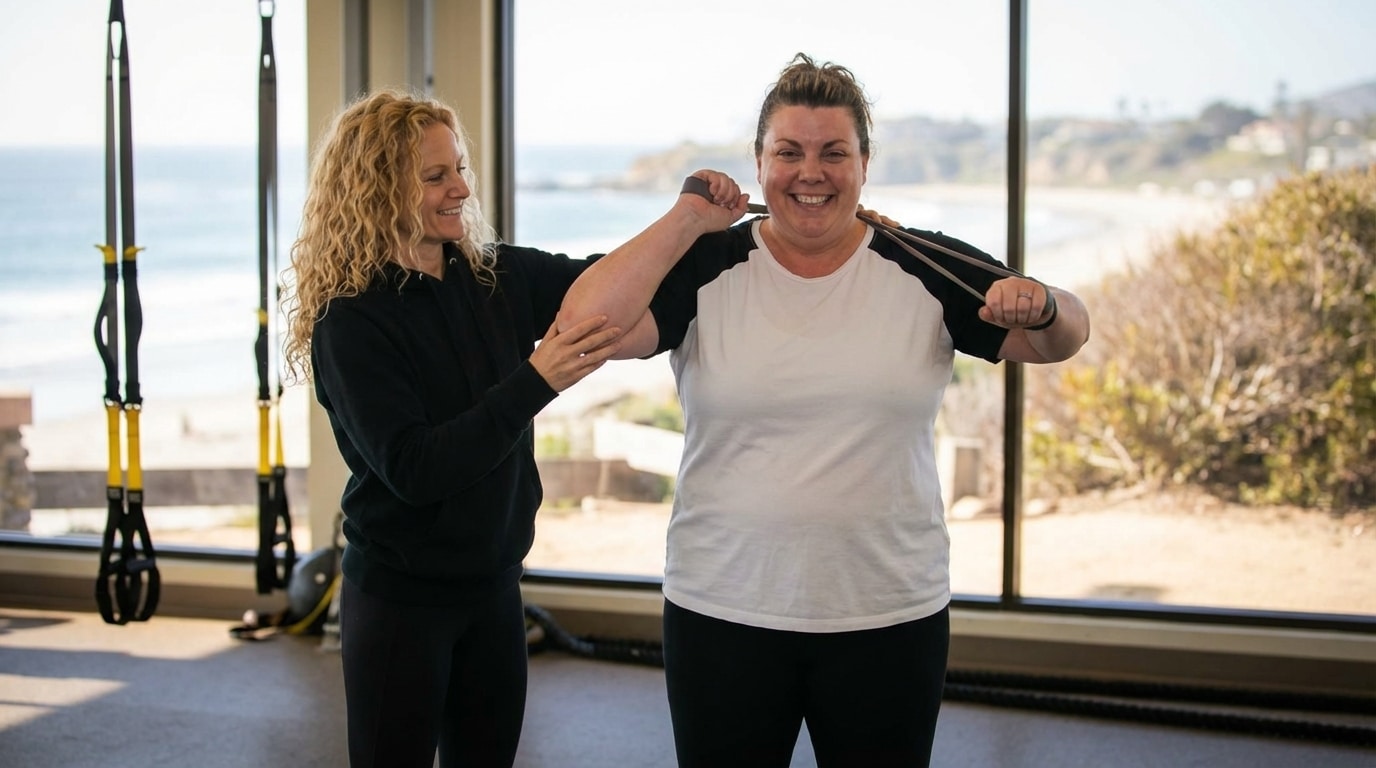
Beginners with no exercise history, physical limitations, or higher starting weights receive full support. Trainers work with a wide range of abilities, from clients who can only walk a short distance at intake to seasoned athletes. Every class includes options for all fitness levels, and low-impact modifications are available for every exercise.
A readiness checklist for prospective participants:
To confirm readiness and map out a personalized stay, speak with an advisor. Book a free consultation, call (888) 488-8936, or get started online.
Long-term success depends on education, post-program support, and the participant's commitment to real-world habit implementation after leaving the controlled camp environment. Programs that rely only on calorie restriction and do not teach cooking, shopping, emotional regulation, or independent exercise often see results fade within months.
Premier Fitness Camp's aftercare infrastructure includes virtual coaching for accountability, personalized meal plans for home, written exercise programming, and open email communication with trainers. Clients frequently describe ongoing relationships with staff, supported by very low staff turnover and long-tenured trainers.
The 2026 Frontiers in Public Health study links higher long-term retention in supervised small-group training to personalization, continuous professional oversight, and social support mechanisms aligned with Self-Determination Theory. These mechanisms foster autonomy, competence, and relatedness, and they are built into both the on-site program and the alumni community.
| Dimension | Premier Fitness Camp | Hilton Head Health | Unite Fitness Retreat |
|---|---|---|---|
| Clinical Rigor | UCSD case study: 94% fat loss, DEXA scan option, 17-point weekly tracking, licensed psychologists and registered dietitians on staff | GLP-1 Exercise Prescription by exercise physiologist, one-on-one dietitian consultations, biomarker testing | Behavior modification and habit-based curriculum, registered dietitians and certified trainers |
| Environment | 450-acre Omni La Costa Resort in Carlsbad, CA, year-round mild climate, Pacific coast outdoor training, all facilities on-site | Hilton Head Island, SC, high humidity, guests stay nearby and travel to a central facility daily | Downtown Salt Lake City hotel, cold winters, off-site gym access required |
| Personalization | Low trainer-to-client ratio, all fitness levels from high-BMI beginners to athletes, dedicated low-impact track | Custom fitness plans per medication phase, one-on-one dietitian sessions | Group-based program with available modifications |
| Aftercare | Virtual coaching, personalized meal plans, exercise programming, open trainer communication, strong alumni return rate | Mindset reset workshops and culinary workshops for post-program meal prep | App-based follow-up support and aftercare programs |
Traditional fitness camps focus on exercise and calorie restriction during the stay and spend little time teaching participants how to sustain results independently. Premier Fitness Camp's “Think, Eat, Move” philosophy integrates licensed psychologists, registered dietitians, wellness chefs, and certified trainers into one curriculum. Participants leave with practical cooking skills, a clear understanding of their nutritional needs, behavioral strategies for managing emotional triggers, and a personalized exercise plan.
Premier Fitness Camp serves clients across the full fitness spectrum, including those who arrive with very limited mobility. Every class is structured so all fitness levels can participate and benefit at the same time. Trainers maintain a low client ratio and provide low-impact modifications for every exercise. Clients with physical limitations such as knee pain, back issues, or cardiovascular conditions receive an assessment on day one and individualized adaptations throughout their stay.
Participants do not need to discontinue GLP-1 medications before attending. The program's resistance-training volume, high-protein nutrition protocol designed by registered dietitians, and daily body-composition monitoring directly address the muscle-loss risk associated with GLP-1 use. For participants preparing to taper off medication, the program builds a behavioral and metabolic foundation that includes sustainable eating habits, a consistent exercise routine, and strategies for emotional eating. Clinical evidence identifies these elements as essential for preventing weight regain after medication ends.
Many standard dieting programs produce a 60/40 ratio of fat-to-muscle loss, and some aggressive approaches see a 50/50 split. The UCSD case study on Premier Fitness Camp, conducted over roughly one year with participants who stayed four or more weeks and received DEXA scans at intake and exit, found that 94% of total weight lost was fat while lean muscle was preserved or increased. Lean muscle drives resting metabolic rate, so preserving it during weight loss reduces the risk of regain after the program ends. This research is a case study rather than a randomized clinical trial.
One week delivers a measurable kickstart with baseline body-composition data, new nutrition knowledge, and a structured exercise routine. Two weeks build momentum and begin habit formation. Three to four weeks usually create durable behavioral change and statistically significant body-composition improvements on DEXA scan. The average client stay is about 11 days. Many first-time participants book one week and extend on-site after experiencing the program. Extended stays of several months are available for clients seeking comprehensive transformation.
The six-dimension framework of clinical rigor, program design, environment, personalization, cost and value, and aftercare gives you a repeatable way to evaluate any immersive adult fitness program in San Diego or elsewhere. Programs that excel in only one or two areas, such as a beautiful resort without behavioral health support or a clinically rigorous program in an uncomfortable climate, rarely deliver the sustainable outcomes adults seek in 2026.
Premier Fitness Camp is the only San Diego-area program with a UCSD-validated case study documenting high fat loss with preserved lean muscle, a detailed 17-point weekly tracking system, low trainer ratios, on-site registered dietitians and licensed psychologists, and a 90%+ five-star rating across more than 1,200 reviews. A large share of annual revenue comes from returning alumni, which offers a practical signal of real-world effectiveness.
The next step is a free, low-pressure conversation with the team. Book a free consultation to discuss your goals, clarify program details, and decide whether the fit is right for you. Call (888) 488-8936 or schedule your consultation online.