 5-star Wellness Resort
 5-star Wellness Resort
Written by: Chris Butt, Certified Personal Trainer & Weight Loss Coach, Premier Fitness Camp | Last updated: October 14, 2026
Talk With A Premier Fitness Camp Program Advisor
This guide walks through four program models, a day-in-the-life breakdown, in-depth evaluation criteria, the muscle-preservation question, cost tiers, and post-camp support. Readers can use the following seven-dimension framework to compare any residential program:
Adult residential weight loss programs fall into four broad models. The right choice depends on matching the model to the reader’s goal, body, and budget. Cost generally rises as medical oversight, staffing levels, and personalization increase. The table below compares each model on structure, typical cost, and best-fit candidate. Cost ranges are indicative; published weekly rates for leading U.S. residential weight-loss programs generally range from about $2,000 to $7,000 per week, with some programs charging around $2,100 per week for private rooms with shared baths and others exceeding $6,500 for single-occupancy accommodations. Individual programs should be contacted for current pricing.
| Program Model | What It Is | Typical Cost Range (Per Week) | Best For |
|---|---|---|---|
| Clinical / Medical | Physician-led program with medical testing, medication management, registered dietitians, and behavioral health. Focused on metabolic and cardiovascular outcomes. | about $150–$600 per month (median advertised price $239/month across 483 prices from 326 US clinics) | Adults with significant comorbidities, post-bariatric follow-up, or complex metabolic conditions requiring physician oversight. |
| Fitness-Intensive | Structured daily training (5+ hours), nutrition education, behavioral coaching, and body-composition tracking. Exercise volume far exceeds what any gym membership delivers. | roughly $3,500 per week to more than $6,500 per week for single occupancy | Adults with 40–70+ pounds to lose who want measurable fat loss, muscle preservation, and sustainable habit formation. |
| Holistic Wellness Retreat | Structured schedule with yoga, mindfulness, optional fitness, spa services, and nutrition programming, organized around a wellbeing goal. | $1,000–$2,500 per week globally, with premium programs running $3,000–$8,000 or more | Adults seeking stress recovery, a mental reset, or a gentle re-entry into healthy habits without high training intensity. |
| Luxury Resort-Style | Combines residential lodging, gourmet meals, fitness programming, spa amenities, and lifestyle coaching in a premium resort setting. Personalization and comfort are central. | starting at around $6,000 per week, with some programs exceeding $8,600 | Adults who want proven outcomes while prioritizing environment, food quality, and strong relationships with staff. |
Premier Fitness Camp sits at the intersection of fitness-intensive and luxury resort. The program delivers 5 or more hours of daily fitness training with world-class certified trainers, nutrition education, behavioral health support, and resort-level amenities at the Omni La Costa Resort in Carlsbad, California. For adults seeking lasting fat loss with muscle preserved, it represents a highly comprehensive model. For a deeper look at how PFC compares to other California programs, see Best California Fitness Camps For Sustainable Weight Loss.
See Which Program Model Fits Your Goals
A well-designed residential program removes decision fatigue so clients can focus on effort and recovery. At PFC, a typical weekday follows a structured schedule that accommodates every fitness level, from clients who have never exercised to those who train regularly at home.

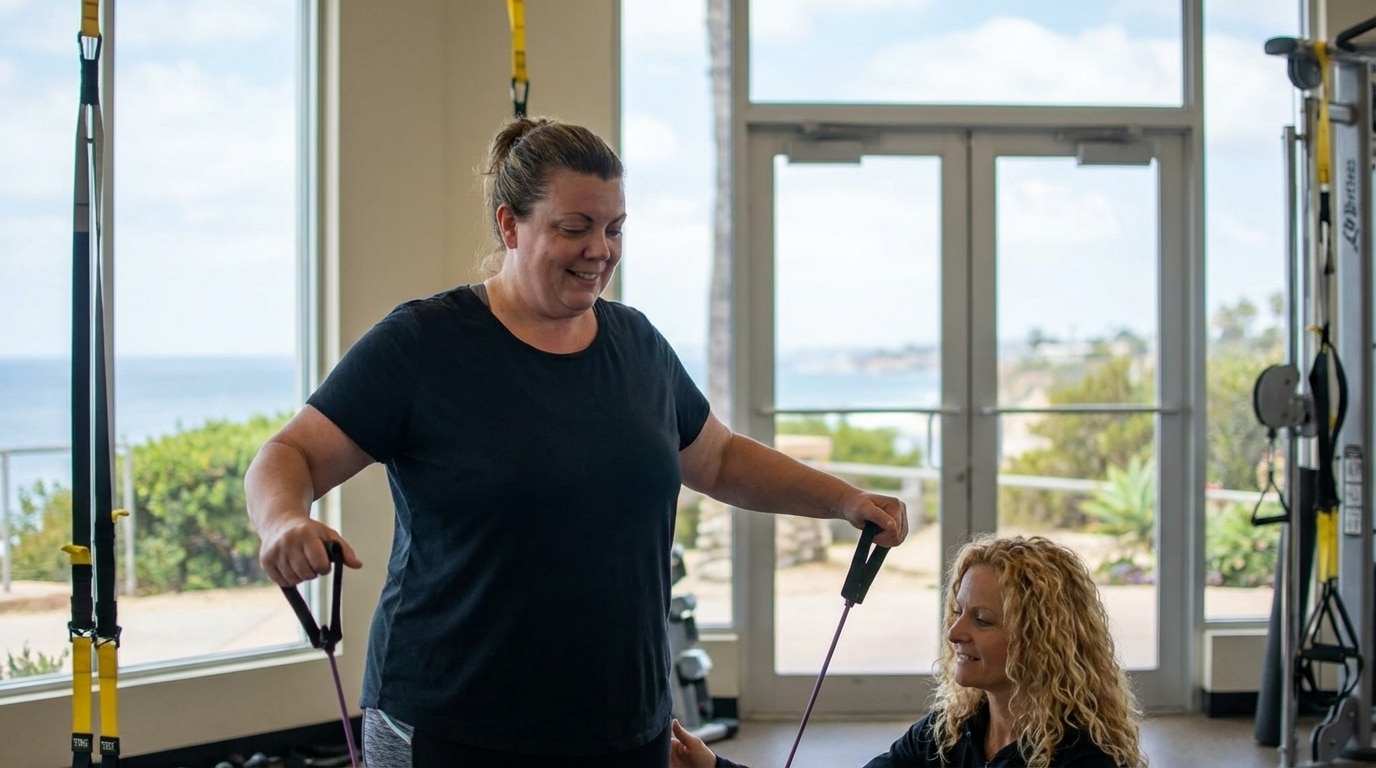
Many prospective clients worry about keeping up with the schedule. PFC addresses this through structure: small group sizes and individualized attention mean trainers can adapt every session. That support starts with a comprehensive fitness exam on arrival, which identifies physical limitations and determines needed modifications. Trainers then tailor workouts to each participant’s level, including a low-impact option for those who need a gentler approach. The team includes trainers with bachelor’s and master’s degrees and multi-year tenure, such as Program Director Megan Brandt (MS, Exercise Science and Health Promotion; BS, Athletic Training) and Nutrition Director Jessica Janc (Exercise Sports Science, University of Utah; at PFC since Oct 2011).
Most program comparisons stop at price and location. Outcome-focused comparisons look at who runs the program, how food is prepared, what gets measured, and what support continues after checkout.
Staff Credentials And Turnover: High staff turnover often signals a low-quality program. When trainers change frequently, clients lose the trust and continuity that drive behavioral change. PFC highlights long-tenured staff, including Program Specialist Eric Butt (with the program since January 2011) and Fitness Trainer Jenni Cook (since January 2017). The company was founded in 2009, and current trainers joined over time as the program grew. Many Premier Fitness Camp clients return year after year and reconnect with the same trainers and peers, as described in client testimonials.
Food Sourcing And Preparation: Some residential weight loss programs prepare meals on-site with their own chefs rather than relying on off-site kitchens. PFC’s wellness chefs prepare meals on-site using fresh, seasonal, local, whole ingredients, with menus designed by Executive Wellness Chef Ryan Orlando and Certified Nutritionist Katie Di Lauro. Cooking demonstrations show clients how to recreate healthy meals at home, which supports long-term sustainability.

Data Tracking Beyond The Scale: The NIDDK recommends that credible programs provide regular feedback and monitoring throughout, not just at discharge. PFC’s program includes weekly body fat percentage measurement and tracking at weigh-ins, along with a comprehensive fitness assessment. An optional DEXA scan provides gold-standard body composition data.
Post-Camp Support: The NIDDK recommends that adults aiming to prevent weight regain target at least 300 minutes of moderate-intensity physical activity per week, and notes that ongoing support is essential for sustaining results. After clients return home, PFC provides at-home planning sessions covering workout plans and grocery shopping tips, ongoing support through monthly newsletters, live stream cooking demos, and workout demos on social media, plus follow-up consultations and progress check-ins.
Location And Climate: Carlsbad, California has a mild, semi-arid climate (Köppen BSk) with moderate year-round temperatures averaging 62.5°F annually and generally low humidity. This climate enables consistent outdoor training throughout the year. PFC’s program is based at the Omni La Costa Resort & Spa in Carlsbad, which sits on 400 acres and places PFC facilities, including gym, dining, education rooms, outdoor training areas, and spa, on a single campus. Guests live and train on property with PFC’s team, which removes off-site logistics and maximizes time for training and recovery.
Review These Criteria With A PFC Specialist
Healthy fat loss focuses on changing body composition, not just lowering scale weight. A 2026 narrative review by Bosy-Westphal et al. in the Journal of Cachexia, Sarcopenia and Muscle reported that, in Roux-en-Y gastric bypass patients and a cohort of 36 healthy adults undergoing diet-induced weight loss, skeletal muscle accounted for 92%–97% of fat-free-mass loss during weight reduction. Disproportionate skeletal muscle loss is common with considerable weight reduction and may exceed physiologically expected levels, increasing the risk of sarcopenia during obesity treatment, though this concern is contested and may not apply to all weight-loss modalities such as diet-based interventions. Standard diet-induced weight loss in non-elderly adults with overweight or obesity typically results in skeletal muscle accounting for roughly 20–30% of total weight lost, corresponding to a fat-to-muscle loss ratio of about 70/30 to 80/20. In obese elderly individuals, caloric restriction without structured resistance training accelerates muscle loss, whereas resistance training prevents 93% of the lean body mass loss induced by caloric restriction.
The consequences are metabolic. Skeletal muscle accounts for approximately 80% of postprandial glucose uptake from the circulation, and for about 70–75% of insulin-stimulated glucose disposal during hyperinsulinemic clamps. Muscle also contributes roughly 20% of the basal metabolic rate (resting energy expenditure). Losing muscle during weight loss directly reduces the body’s ability to maintain a healthy weight afterward. A 2022 study in Medicine & Science in Sports & Exercise found that the percentage of fat-free mass lost is a significant predictor of weight regain at 1 year in premenopausal women with overweight. This pattern explains why programs that chase fast scale changes without protecting lean mass often see rapid regain.
PFC’s program responds to this risk by emphasizing resistance training and body-composition tracking. Clients follow individualized resistance training plans and classes, and comprehensive fitness assessments measure body fat and body composition. The nutrition component focuses on nutritionist-led guidance about food choices and portion sizes, with an emphasis on balanced, whole-food meals.
A 2026 narrative review identifies a practical protein working range of approximately 1.2–1.6 g/kg/day for many adults with obesity undergoing intentional weight loss, calculated using an appropriate weight reference such as adjusted body weight, target body weight, or estimated fat-free mass rather than actual body weight, while noting this range is not a universal rule. Evidence-based recommendations from the PROT-AGE Study Group advise that older adults (>65 years) consume at least 1.0–1.2 g protein/kg body weight/day, with higher intake (≥1.2 g/kg/day) advised for those who exercise or are otherwise active. When evaluating any program, ask specifically about protein targets per kilogram of body weight, the number of resistance training sessions included per week, and whether body composition is tracked throughout the stay rather than relying on scale weight alone.
A 2026 systematic review with pairwise and network meta-analysis in Diabetes, Obesity and Metabolism found that, compared with calorie restriction alone, mixed (combined aerobic and resistance) training produced the largest preservation of fat-free mass (MD = +1.20 kg, 95% CI: +0.67, +1.73; p<0.001), followed by strength training (MD = +0.83 kg), with mixed training ranked most effective for preserving fat-free mass. The authors note that combined resistance and aerobic exercise is an effective, evidence-supported strategy to prevent muscle mass loss during weight reduction, particularly in obese older adults, though it is not yet universally established as a standard of care. PFC’s daily programming integrates aerobic and resistance training, including bootcamp, boxing, interval training, and resistance training, within a 5+ hour daily fitness training block, as listed on PFC’s program page.
Across commercial weight loss programs, adult residential and related offerings span a wide price range. Price differences usually reflect structural elements such as intensity of medical monitoring, staff qualifications, and treatment approach rather than cosmetic upgrades alone.
At the lower end of residential weight loss programs priced around $2,000–$3,500 per week, clients typically receive basic or shared accommodations, group fitness sessions, and meals. At the Biggest Loser Resort Niagara ($2,990–$3,595/week), for example, meals are freshly prepared by on-site chefs and accommodations include standard or villa rooms. Across commercial weight-loss programs, staff qualifications vary substantially, ranging from successful lifetime members and company-trained counselors to licensed physicians and other health care providers. Post-camp support in weight-loss programs is often minimal or nonexistent, though some programs provide structured follow-on support such as 12-month maintenance programs or weekly group sessions. Industry guidance advises comparing the total package, including accommodation, food and beverage, room hire, AV, stipends, benefits, and bonuses, rather than the advertised nightly rate or headline rate alone.
Mid-range weight loss programs priced at roughly $3,000–$5,000 per week commonly include private or semi-private rooms, calorie-controlled meals prepared on-site, daily fitness classes, nutrition workshops and cooking demonstrations, basic health assessments, and access to spa or recovery amenities.
Premier Fitness Camp’s all-inclusive packages start as low as $3,950 per week (based on a 12-week+ booking with shared accommodations). Packages include luxury accommodations at the Omni La Costa Resort, three healthy meals daily prepared by PFC’s wellness chef, fitness sessions and educational workshops, comprehensive health assessments, and three spa treatments per week. PFC’s program offers 0% financing for up to six months with no down payment through CareCredit, and multi-week discounts apply for extended stays. Premier Fitness Camp’s program may qualify as a tax-deductible medical expense only if it treats a specific disease diagnosed by a physician (such as obesity, diabetes, hypertension, or heart disease). Otherwise, the cost is not deductible, so clients should consult a tax professional.
When comparing value, focus on outcomes and structure rather than headline price alone. PFC highlights results such as muscle preserved or increased, a strong base of returning alumni, and high independent review scores as part of its value story. For a detailed analysis of how to think about this investment, see Are Adult Weight Loss Camps Actually Worth The Cost?
Get A Personalized Cost And Value Breakdown
After a behavioural weight-loss programme, most participants regain weight, with about one-third to one-half of lost weight regained within the first year; however, in a 2021 BMJ meta-analysis of 249 trials, regain occurred at only 0.12–0.32 kg/year faster in intervention versus control groups, and the between-group weight advantage was maintained for at least five years. Weight regain after weight loss reflects sustained biological adaptations, including reduced resting energy expenditure, increased ghrelin, and decreased leptin, that can persist during weight loss and weight regain. The persistence of specific hormonal changes such as ghrelin during weight maintenance is debated, and the causal role of these adaptations in driving regain remains uncertain. Behavioural weight loss programmes that lack ongoing support and habit-education components are associated with weight regain after the programme ends, while evidence suggests that programmes allowing individuals to re-engage when they want to may best support longer-term weight management.
A 2024 rapid review of systematic reviews in Obesity Reviews (Hawkins et al.) found that self-monitoring and goal setting are the two most common behavior change techniques included in behavioral weight management interventions for obesity, and may be most effective when combined with other self-regulatory techniques such as problem solving, coping strategies, and relapse prevention. The authors recommend that post-program care provide practical tools for monitoring weight, food intake, and physical activity alongside continuing peer, coach, or clinician support. The CDC’s National Diabetes Prevention Program post-core phase similarly recommends that participants continue to self-monitor eating and activity, weigh themselves regularly, and communicate with the Lifestyle Coach and group to ask questions, identify barriers, and offer solutions.
PFC’s post-camp support structure reflects these principles. Clients receive at-home planning sessions covering workout plans and grocery shopping tips, plus ongoing support through monthly newsletters, live-stream cooking demos, and workout demos on social media. These resources help guests maintain progress and apply camp lessons in daily life. Trainers and staff remain accessible for post-camp support, including a coach who checks in with clients for 12 weeks following camp and an office team that helps clients troubleshoot challenges at home.

PFC’s program philosophy centers on empowerment and helping guests reclaim control over their health and motivation. The “Think, Eat, Move” curriculum combines behavioral health workshops, nutrition education, cooking demonstrations, and licensed psychologist support to build lasting habits. PFC also offers ongoing at-home support and special pricing for returning clients, which encourages re-engagement when needed. For a detailed breakdown of what effective post-camp support looks like, see How Adult Weight Loss Camps Help You Keep Weight Off.
Different goals map to different program priorities. The following framework helps narrow the decision:
For a comprehensive overview of what to expect across all program dimensions, see Weight Loss Camp For Adults: The Honest 2026 Guide.
PFC Fitness Camp is a structured, results-oriented residential weight loss program for adults that emphasizes high-intensity training and targeted nutrition, while adult weight loss camps more generally combine daily fitness sessions, nutrition education, behavioral coaching, and measurable health tracking. In residential weight-loss programs, attendance and participation follow a set schedule with mandatory morning meetings, group exercises, and fixed mealtimes. A wellness retreat is typically a three- to seven-day residential program with a daily schedule that includes guided movement (yoga, tai chi), meditation or breathwork, nourishing meals, workshops, and optional spa or bodywork treatments at extra cost, organized around a wellbeing goal. The distinction matters when choosing a program because, in overweight and obese populations, structured fitness programs combining supervised resistance training with a hypocaloric diet produce documented fat mass loss while preserving fat-free mass, whereas diet alone or unsupervised activity often leads to significant lean mass loss.
Published weekly rates for leading U.S. residential weight-loss programs range from approximately $2,100 per week (private room with shared bath) to about $7,000 per week, depending on accommodation type, included services, and program length. Premier Fitness Camp’s all-inclusive program at the Omni La Costa Resort covers luxury accommodations, three healthy meals daily designed by PFC’s Executive and Wellness Chef, 5+ hours of daily fitness training, daily expert-led education sessions, a comprehensive health assessment, and three spa treatments per week, with rates starting as low as $3,950 per week (based on a 12-week+ booking with shared accommodations). PFC’s program offers 0% financing for up to six months with no down payment through CareCredit, and multi-week discounts apply. When comparing programs, request an itemized breakdown of what is and is not included, because meals, assessments, spa services, coaching, and aftercare vary significantly across programs at similar advertised rates.
Post-camp support often determines whether results last. At Premier Fitness Camp, clients leave with at-home planning sessions covering workout plans and grocery shopping tips, along with ongoing support through monthly newsletters, live-stream cooking demos, and workout demos on social media. The “Think, Eat, Move” curriculum, which includes behavioral health workshops, nutrition education, and cooking demonstrations, is designed to help clients build lasting habits and maintain results. PFC also offers ongoing at-home support and special pricing for returning clients. Programs that end support at checkout tend to produce the regain pattern that research documents: roughly one-third to one-half of lost weight is typically regained within the first year, but relative to controls weight regain occurs at only about 0.12–0.32 kg/year and the weight-loss advantage persists for at least five years, with a median time to no difference of about 14 years.
Three questions help assess muscle preservation. Ask about daily resistance training volume and how it is structured relative to aerobic work. Ask about the protein target per kilogram of body weight and how that target is individualized. Ask whether body composition, not just scale weight, is tracked throughout the stay and which method is used. Programs that track only scale weight cannot demonstrate muscle preservation. Premier Fitness Camp tracks body fat percentage weekly and offers optional DEXA scans, which are considered a gold standard for body composition measurement. PFC’s program emphasizes resistance training and body-composition tracking to help preserve lean mass.
Evaluating value means comparing a program’s documented outcomes against the cumulative financial, physical, and psychological cost of approaches that produce temporary results. Premier Fitness Camp emphasizes resistance training and body-composition tracking to help clients preserve lean muscle while losing fat and highlights a strong base of returning alumni as evidence of lasting change. Premier Fitness Camp’s program may qualify as a tax-deductible medical expense only if it treats a specific disease diagnosed by a physician (such as obesity, diabetes, hypertension, or heart disease). Otherwise, the cost is not deductible, and clients should consult a tax professional. Zero-percent financing is available for qualified applicants. For adults who have spent years on approaches that did not work, the long-term cost of repeating short-term fixes often exceeds the investment in a structured residential program.
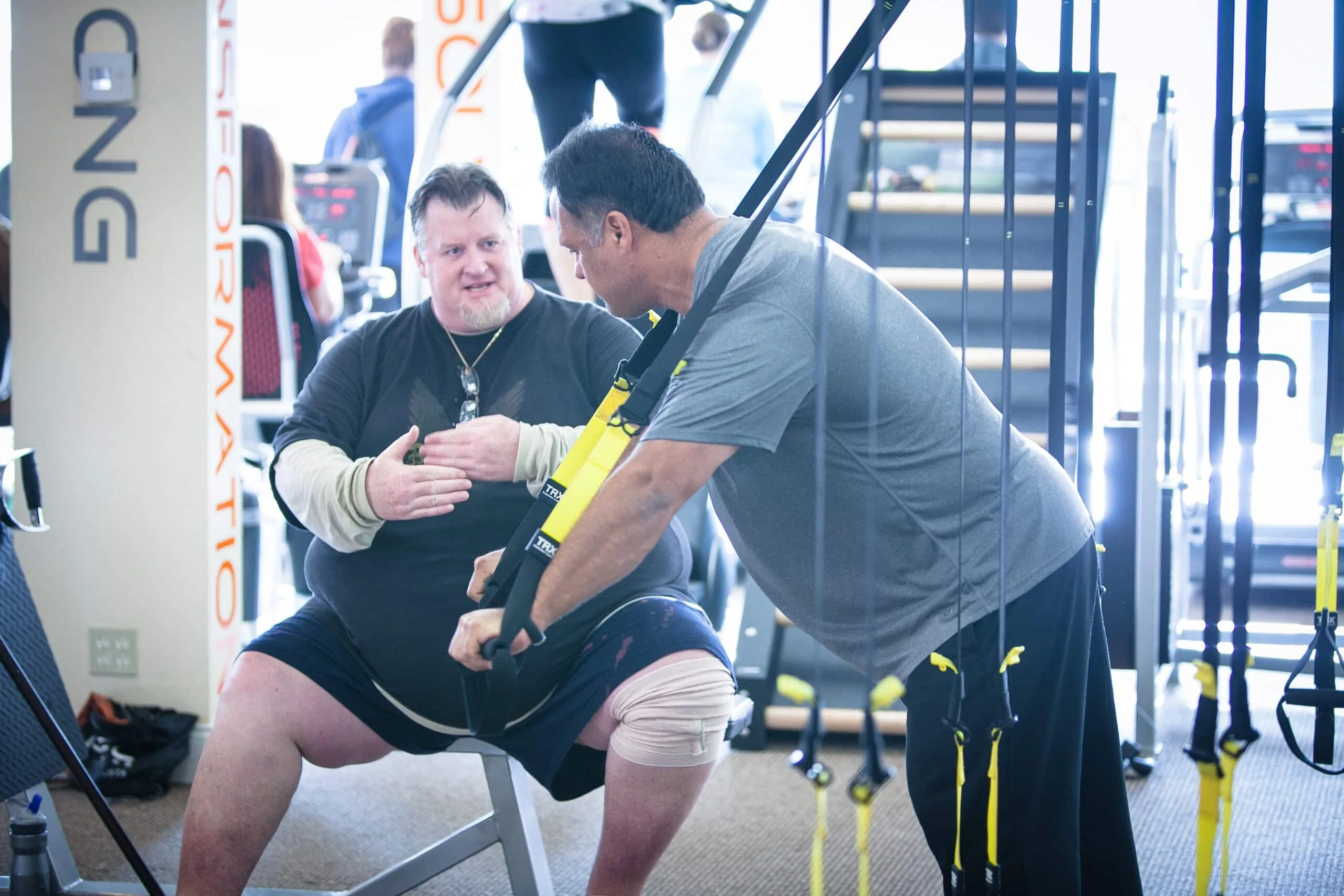
The right program accommodates every fitness level without requiring separate tracks or segregated classes. At Premier Fitness Camp, small group sizes mean every session is adapted in real time, with low-impact modifications for clients with joint limitations, progressions for athletes, and individualized pacing for everyone in between. PFC’s fitness programs are designed for people just beginning their fitness journey and for seasoned athletes. Upon arrival, a comprehensive fitness exam determines any physical limitations and needed modifications for the activities. Before booking any program, ask specifically how it accommodates beginners, significantly overweight individuals, older adults, and people with physical limitations, and request concrete examples rather than general assurances.
Discuss Your Fitness Level With A PFC Coach
The most effective weight loss camps for adults protect lean muscle, track meaningful health metrics, teach sustainable habits, and provide structured support after clients return home. The seven-dimension framework in this guide, covering program model, staff credentials and turnover, food sourcing and preparation, data tracking, post-camp support, location and climate, and cost and value, gives prospective clients a clear way to compare programs on substance rather than marketing.
Premier Fitness Camp delivers across each dimension as a fitness-intensive luxury program at the Omni La Costa Resort in Carlsbad, California. The program offers 5 or more hours of daily fitness training, small group sizes, on-site wellness chefs and certified nutritionists, behavioral health support from trained professionals, and a structure that emphasizes resistance training and body-composition tracking to help preserve lean muscle.
Use the following steps to move from research to a confident decision:
Plan Your Next Step With Premier Fitness Camp