 5-star Wellness Resort
 5-star Wellness Resort

Written by: Chris Butt, Certified Personal Trainer & Weight Loss Coach, Premier Fitness Camp | Last updated: August 28, 2026
Southern California hosts some of the most recognized wellness properties in the country, including Cal-a-Vie, Golden Door, and Canyon Ranch. Each delivers a premium experience. Most do not deliver a structured, education-driven program built around measurable fat-loss outcomes for adults with 40–70 pounds to lose.
The distinction matters. A genuine wellness retreat has set programming, a defined arc, and a per-person price, while a wellness-branded resort sells nights with optional spa add-ons and no fixed schedule. Wellness retreat gains often do not persist without a written follow-up plan sent home with the participant, which shows why post-program support must be built in.
This is precisely the gap that Premier Fitness Camp at Omni La Costa Resort in Carlsbad, California, was designed to address. A UCSD case study of participants who stayed four or more weeks and received DEXA scans found that 94% of total weight loss was purely fat, compared to the 60/40 fat-to-muscle ratio typical of standard dieting. Lean muscle mass was preserved or increased, and resting metabolic rate was protected. These outcomes determine whether results last.

See how PFC’s structured program and UCSD-documented outcomes apply to your situation by scheduling a free consultation at (888) 488-8936.
Adults evaluating fitness and spa resorts for a 40–70 pound weight-loss goal should score every program on five dimensions before booking.
Apply this decision framework to your own goals and book a consultation to discuss which program length and features match your weight-loss target.
The table below compares three leading Southern California programs on the five evaluation dimensions. Scores reflect publicly available program information and PFC’s documented outcomes. When direct numerical comparison is not possible, the notes column explains the relevant distinction.
| Dimension | Cal-a-Vie Health Spa | Golden Door | Premier Fitness Camp at Omni La Costa |
|---|---|---|---|
| Fitness Intensity and Structure | Moderate. Hiking, yoga, and fitness classes are offered, and the program is guest-directed with flexible scheduling. | Moderate-to-high. Daily hiking is a signature element, with strength and yoga classes included in small groups. | High. 4–5 hours of structured daily training, Monday through Friday, with a 3–4:1 trainer-to-client ratio. All classes adapt to every fitness level, from 400-pound beginners to seasoned athletes. |
| Nutrition Education and Culinary Support | Spa cuisine is included with some nutrition programming. Emphasis rests on enjoyment and balance. | Farm-to-table meals are included, with culinary classes available and a strong focus on food quality. | All meals are prepared on-site by PFC wellness chefs and registered dietitians. Cooking demonstrations, nutrition workshops covering macros and meal planning, and a personalized home meal plan are included. |
| Behavioral Health and Education | Wellness lectures and mindfulness sessions are offered, with no documented licensed psychology staff on-site. | Mindfulness and journaling components are included, and the program philosophy emphasizes reflection and renewal. | Licensed psychologists and behavioral health coaches are on staff. Group workshops cover emotional eating, triggers, and limiting beliefs, with one-on-one counseling available through the full “Think, Eat, Move” curriculum. |
| Spa Integration and Recovery | Spa treatments sit at the center of the experience and are included in program pricing, with a strong pampering focus. | Daily massage is included, and the spa functions as a primary program component alongside fitness. | Three spa treatments per week are included. La Costa Spa ranks among the top wellness spas in North America. Spa is sequenced as recovery support alongside structured training, not instead of it. |
| Post-Program Outcomes and Aftercare | No publicly documented multi-biomarker tracking or structured post-program coaching protocol. | No publicly documented multi-biomarker tracking or structured post-program coaching protocol. | Seventeen data points are tracked weekly, including weight, body fat, seven body measurements, blood pressure, LDL, HDL, triglycerides, glucose, push-ups, plank time, and mile time. A DEXA scan is available. Virtual coaching, personalized meal plans, and ongoing trainer communication continue after departure. A UCSD case study documented that 94% of weight lost was fat. |
Adults with 40–70 pounds to lose face specific requirements that most spa-centric programs do not meet. The criteria below highlight the program type most likely to produce lasting results for this group.
Apply this decision framework to your own goals and book a consultation to discuss which program length and structure align with your target.
Two populations have particularly specific needs that standard wellness resorts are not equipped to address: Reset Seekers aged 40–60 with significant weight-loss goals, and GLP-1 Graduates who have lost weight on medication but now face muscle loss, metabolic slowdown, and the risk of rapid regain. Both groups need structured programming that focuses on body composition and metabolic health, not just scale weight.
For Reset Seekers, PFC delivers the following in a single, all-inclusive program at the 450-acre Omni La Costa Resort in Carlsbad, California:
For GLP-1 Graduates, PFC’s approach is direct. The program emphasizes resistance training to rebuild lean muscle, registered dietitian guidance on protein intake and macronutrient balance, and a sustainable behavioral framework that functions as an exit ramp from medication dependency. The UCSD case study’s muscle-preservation finding is especially relevant for this population, whose primary risk is metabolic damage from muscle loss during medication-driven weight reduction.
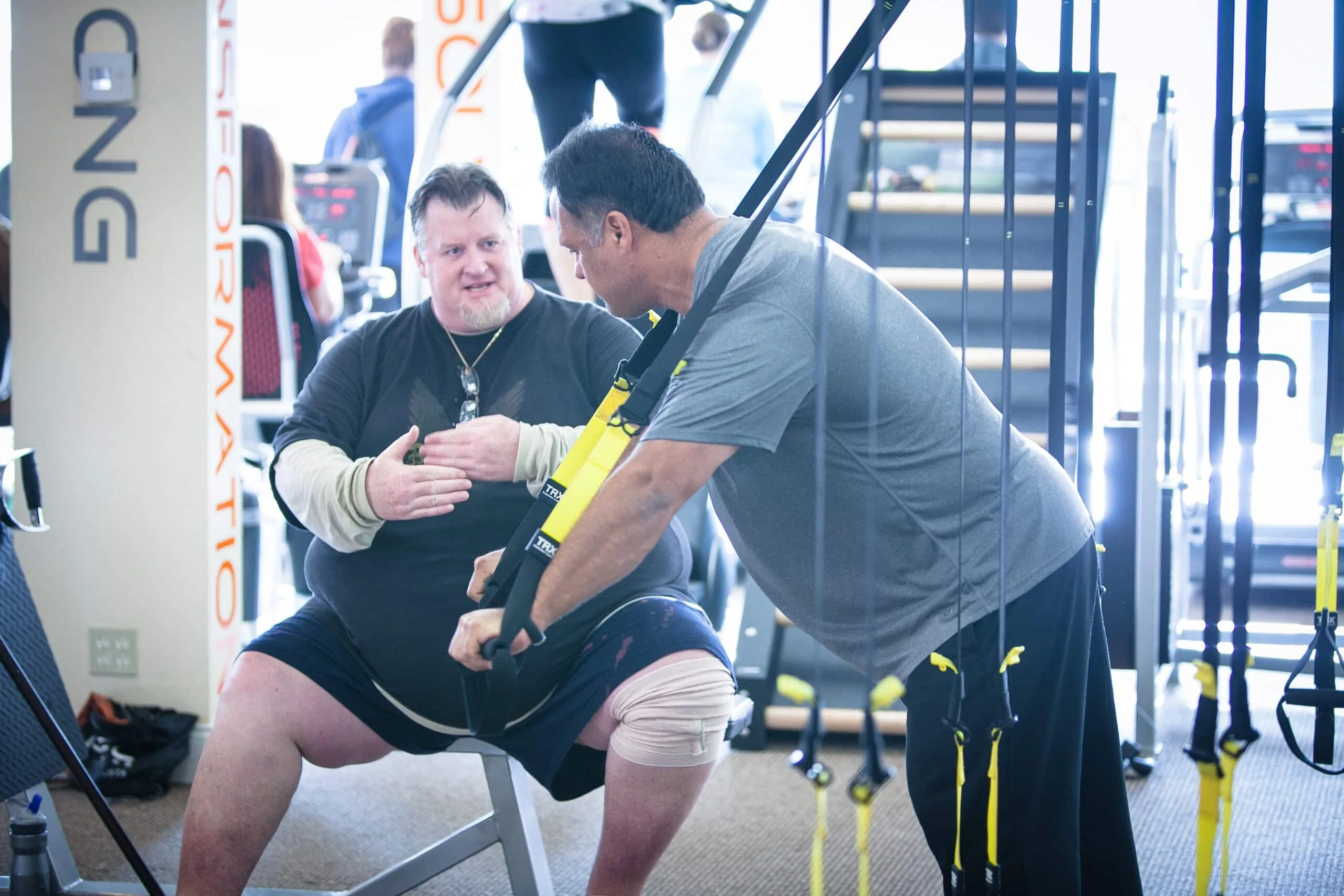
If you are a Reset Seeker or GLP-1 Graduate, talk to the PFC team about how the muscle-preserving protocol applies to your situation and schedule your consultation today.
PFC has earned more than 1,200 reviews with a 90%+ five-star rating, and 50% of annual revenue comes from returning alumni. That repeat rate reflects sustained client satisfaction more accurately than any single testimonial. As client Irene Tchaikovsky wrote, “What began as a simple one-week reboot has transformed into a complete lifestyle shift. PFC equips you with the knowledge, tools, and support to make meaningful and sustainable changes.”

The average client aged 40–60 with 40–70 pounds to lose can expect approximately 3–4 pounds of fat loss per week. Individual results vary based on starting weight, gender, height, hormones, and medications. As documented in the UCSD case study mentioned earlier, PFC’s approach preserves lean muscle while maximizing fat loss. Most dieting programs produce a 60/40 fat-to-muscle loss ratio, which damages resting metabolic rate and sets the stage for regain. PFC uses comprehensive weekly tracking so progress is visible across multiple dimensions even when the scale moves slowly.
Yes. PFC works with clients ranging from those who can only walk 250 feet to seasoned athletes who train four times per week. Every class is structured so that each participant receives an appropriate challenge regardless of starting fitness level. Trainers maintain a small trainer-to-client ratio and provide modifications, progressions, and low-impact alternatives for every exercise. A dedicated low-impact training track is available for clients with joint issues or chronic conditions. No prior fitness experience is required.
GLP-1 medications are accommodated without judgment at PFC. The program is well-suited to GLP-1 graduates because it addresses the two primary risks associated with medication-driven weight loss: muscle loss and metabolic slowdown. PFC’s protocol for this population emphasizes resistance training to rebuild lean mass, registered dietitian guidance on protein intake and macronutrient balance, and behavioral coaching to establish the sustainable habits needed to maintain results after reducing or stopping medication. The UCSD case study’s muscle-preservation finding is directly relevant to this group.
PFC is all-inclusive. The program price covers accommodations, all meals and nutrition support, fitness training and classes, behavioral health programming, weekly progress tracking, spa treatments, and post-camp support. Specialty programs such as Golf Fit, Tennis Fit, Pickleball Fit, and Spa Fit are available as add-ons. The program runs approximately $6,000 per week, with 0% financing available for up to six months and multi-week discounts offered. For a detailed breakdown of specific features, see the “Why Premier Fitness Camp Works for Reset Seekers and GLP-1 Graduates” section above.
Cal-a-Vie and Golden Door are respected properties that deliver high-quality spa experiences with fitness components. The structural difference lies in program design and outcome focus. PFC delivers 4–5 hours of structured daily training with a small-group trainer ratio, a full behavioral health curriculum led by licensed psychologists, registered dietitian-designed meals prepared on-site, and comprehensive weekly biomarker tracking within a single all-inclusive program built around measurable fat-loss outcomes. Spa treatments at PFC are sequenced as recovery support alongside structured training, not as the primary program offering. For adults with 40–70 pounds to lose who need education, behavioral change, and documented results, PFC’s program architecture is built for that goal in a way that spa-centric properties are not.
Southern California offers no shortage of beautiful wellness properties. Adults with meaningful weight-loss goals need a program that can produce lasting fat loss, preserve lean muscle, teach sustainable nutrition habits, and support behavioral change after departure.
The wellness tourism market is moving toward measurable outcomes. A large part of wellness tourism now focuses on diagnostics and personalized health protocols based on biomarker tracking rather than relaxation, and 84% of affluent travelers now expect wellness services tailored to their unique health goals. PFC has delivered exactly that, with documented outcomes, more than 1,200 reviews, and a 50% alumni return rate, long before outcome-driven wellness became a trend.
The UCSD case study result of 94% fat loss, the comprehensive weekly tracking, the small-group training structure, the licensed behavioral health staff, and the post-camp support infrastructure are structural reasons PFC produces results that last. Choose the program built for lasting results and book your free consultation to discuss your goals and timeline.