 5-star Wellness Resort
 5-star Wellness Resort
Written by: Chris Butt, Certified Personal Trainer & Weight Loss Coach, Premier Fitness Camp | Last updated: September 5, 2026
Most guests arrive expecting a relaxing retreat and quickly discover a structured, demanding schedule. At many fitness-led weight loss retreats, days run from early morning to evening, often 10–12 hours. Schedules typically include several hours of training, fitness assessments, and educational sessions, though the exact mix varies by program. Downtime is limited. The mental demands often feel as challenging as the physical work.
At Pritikin Longevity Center, guests follow a medically supervised program with daily guided cardio sessions, resistance training, and educational workshops, all customized by exercise physiologists and physicians. Hilton Head Health also structures full days around fitness, nutrition education, and behavioral support, with programming that emphasizes muscle preservation and psychological coaching.
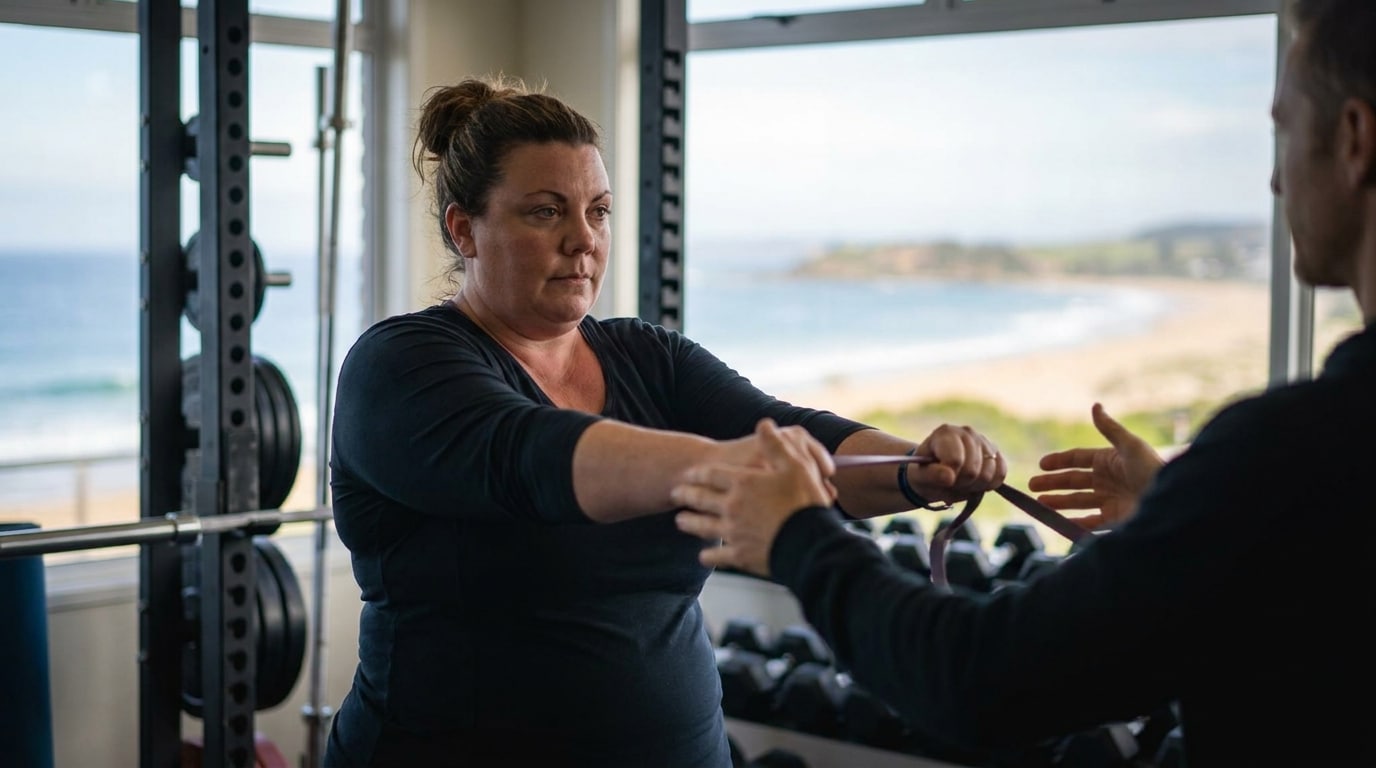
A clear picture of daily life helps you decide whether a program fits your needs and fitness level. At the program located at the Omni La Costa Resort & Spa in Carlsbad, California, days feel structured yet supportive. Guests train 4–5 hours daily, Monday through Friday, with a half-day on Saturday. Because the client-to-trainer ratio stays at 3–4:1, every participant, from beginners to seasoned athletes, receives personalized attention and modifications.
A typical day includes:
This structure is what keeps guests returning. Lin Vela, who has attended three times, describes the trainers as “knowledgeable, inspiring and make hard work fun.” Scott, who signed up for two weeks and stayed eight, calls it “a life-changing experience.”
Many resorts market dramatic results without context. If the scale drops far faster than 0.5 to 1 kg per week early in a stay, most of that loss is water weight, not fat, and it returns when normal eating and drinking resume. Guests who expect to lose 10 or more pounds weekly often feel discouraged when the scale moves more slowly. A weight loss retreat that promises a fixed, dramatic weekly number is either misinformed or misleading.
Realistic expectations prevent that disappointment. The average client, typically 40–60 years old with 40–70 pounds to lose, can expect to lose 3–4 pounds per week of pure fat. A UCSD case study showed that 94% of client weight loss at the program came from fat, compared to the 60/40 fat-to-muscle ratio typical of standard dieting. Most long-term clients actually increased their lean muscle mass during weight loss. Preserved muscle protects resting metabolic rate and serves as a primary defense against weight regain.
Guest Jake Younger reflects this experience: “I not only lost weight but gained confidence, strength, and a healthier lifestyle.” Irene Tchaikovsky, who came for a one-week reboot, says it “transformed into a complete lifestyle shift.”
Clear benchmarks help guests judge whether a program works and avoid frustration when results differ from marketing claims. Based on guest reports and data-driven tracking:
Food often makes or breaks the experience. Many guests worry about bland, restrictive “diet food.” At some resorts, this concern proves accurate. Meals may be prepared off-site and delivered, with limited variety and inconsistent quality. At Canyon Ranch Tucson, for example, guests should expect controlled portions and wellness-focused cuisine rather than indulgent dining.
At the program, guests consistently highlight the food as a standout feature. Wellness chefs prepare fresh, farm-to-fork meals on-site every day. Registered dietitians design each menu. Guest Julie Robinson raves: “The trainers, the staff, the Chefs! All amazing.” Lin Vela agrees: “The food is amazing!”
The approach centers on delicious, satisfying meals that feel realistic for everyday life. Cooking demonstrations show guests how to prepare healthy meals at home. This directly addresses the most common challenge of maintaining results: knowing what to eat after leaving the program. But even the strongest meal plan can fall short if mental barriers remain, which leads into the next challenge guests face.
Weight loss also tests mindset and emotions. Guests report feeling tempted when other resort patrons indulge in vacation meals. They also struggle with motivation mid-stay and fear judgment about their fitness level. When life gets quiet during a retreat, internal thoughts become louder, and for people whose identity is built around productivity or being “fine,” stillness can feel destabilizing. Without structured behavioral support, these moments can derail progress.
The “Think, Eat, Move” philosophy addresses the whole person. Licensed psychologists and behavioral health coaches lead workshops on emotional eating, triggers, and limiting beliefs. One-on-one counseling is available for deeper issues. Guests consistently describe the community as transformative. Camaraderie with fellow campers and staff often becomes a genuine lifeline.
Michael R. describes his experience: “Walking into the program was the start of a life-changing journey. It’s more than just a retreat, it’s everything I needed to rediscover myself.” The supportive environment ensures that no one is left behind, regardless of starting point. Lauren M., who lost 140 pounds, captured it this way: “I found myself again; got my confidence back; learned how, for my body type, I needed to eat and exercise; and most importantly, I learned how to adopt a healthy, sustainable lifestyle.”
Past guest reviews across the industry point to the transition home as the critical turning point. As Amanda Kahn, MD, a board-certified internist and longevity specialist, notes: “It’s easy to use the retreat as a starting point, but then the real work happens when you get home and you’re creating routines with your local health team to make them sustainable.” Without structured aftercare, guests often regain weight within months.
Effective fitness retreats treat the on-site experience as the beginning of a habit-change process and include support after guests leave, which determines whether results last six weeks or six years.
The post-camp support at the program includes:
This level of support helps explain why 50% of annual revenue comes from returning alumni. Irene Tchaikovsky’s experience captures the outcome: “The program equips you with the knowledge, tools, and support to make meaningful and sustainable changes.”
Weight loss resorts require a significant financial commitment. Costs range from approximately $3,850 per week at programs like Skyterra to over $7,000 at ultra-premium options, with Pritikin Longevity Center starting at $5,900 per week and Hilton Head Health running approximately $6,000 per week for standard programming. Unite Fitness Retreat in Salt Lake City starts at $4,650 per week.
The program runs approximately $6,000 per week and is fully all-inclusive. This covers luxury accommodations at Omni La Costa Resort, all meals prepared by wellness chefs, 4–5 hours of daily training, educational workshops, comprehensive health assessments, 17-point weekly tracking, three spa treatments per week, and post-camp support. Financing is available at 0% for up to six months with no down payment.
Value extends beyond the stay itself. Consider the cumulative cost of failed diets, unused gym memberships, and medical expenses from obesity-related conditions. Paula L., who lost 30 pounds, put it plainly: “Coming to the program is the best investment I made in myself.” To see how that investment compares across options, it helps to look at the major programs side by side.
To help you weigh your options, the table below highlights how Premier Fitness Camp stacks up against Pritikin and Hilton Head Health across focus, training, food, aftercare, cost, and validated outcomes.
| Dimension | Premier Fitness Camp | Pritikin Longevity Center | Hilton Head Health |
|---|---|---|---|
| Location | Omni La Costa Resort, Carlsbad, CA | Doral, FL | Hilton Head Island, SC |
| Primary Focus | Fitness, nutrition, and behavioral health (“Think, Eat, Move”) | Medical and longevity focus with supervised cardio and resistance training | Wellness and weight loss with behavioral and nutritional support |
| Daily Training | 4–5 hours, 5.5 days per week, 3–4:1 trainer ratio | Moderate-intensity, medically supervised, 45–60 minutes of cardio plus resistance work | Structured fitness programming with muscle-preservation emphasis |
| Food | On-site wellness chefs, farm-to-fork, dietitian-designed menus | Gourmet, physician-designed meals with cooking classes | Protein-focused, calorie-controlled resort dining |
| Aftercare | Virtual coaching, personalized meal plans, ongoing trainer contact | Virtual expert sessions with physicians, nutritionists, and fitness specialists | Structured support for habit continuation post-stay |
| Cost/Week | ~$6,000 (all-inclusive) | ~$5,900+ | ~$6,000+ |
| Validated Outcomes | UCSD case study: 94% of weight loss was pure fat; 1,200+ reviews, 90%+ five-star | 100+ peer-reviewed studies with documented improvements in cholesterol, blood pressure, and insulin resistance | Guest-reported outcomes with InBody scan tracking |
Weight loss resorts feel intense, expensive, and emotionally demanding. Past guest experiences across the industry show a clear pattern. Programs that prioritize education, behavioral health, and aftercare tend to produce lasting results. Programs that rely mainly on restriction during the stay usually deliver short-term change.
The program exemplifies the education-first approach. Its “Think, Eat, Move” philosophy, UCSD-validated 94% fat-loss rate mentioned earlier, 1,200+ reviews with a 90%+ five-star rating, and a 50% alumni return rate all reflect genuine, sustained satisfaction. Guests like Crissy, who lost 109 pounds, and Alex, who lost 97 pounds while addressing the root of his binge eating disorder, show what becomes possible when a program treats the whole person, including the number on the scale but not limited to it.
Results vary based on starting weight, gender, height, hormones, and medications. As a general benchmark, the average client, typically 40–60 years old with 40–70 pounds to lose, sees 3–4 pounds of pure fat loss per week. The UCSD-validated 94% fat-loss rate mentioned earlier supports this pattern. Most long-term clients actually increase their lean muscle stores during weight loss. That muscle protects resting metabolic rate and helps defend against regain. Weight is just one of 17 data points tracked weekly. Many guests see significant improvements in body composition, blood pressure, cholesterol, glucose, and fitness metrics even when the scale moves more slowly than expected.
Yes. The program works with clients ranging from those who can only walk 250 feet to seasoned athletes who train four times a week. Every class is structured so that each participant, regardless of fitness level, gets exactly what they need. Trainers maintain a 3–4:1 ratio and provide modifications, progressions, and low-impact alternatives for every exercise. A dedicated low-impact training track supports guests with health limitations such as bad knees, back issues, or significant deconditioning. The staff’s role is to figure out how to help every person be their best self, regardless of starting point.
The transition home is the most critical factor in long-term success, and many programs struggle here. The program provides virtual coaching to maintain accountability, personalized meal plans for home, fitness guidance and exercise programming, and ongoing communication with trainers, with open email access after departure. The 50% alumni return rate reflects the depth of the relationships guests build with staff and the strength of the aftercare. Guests like Scott, who signed up for two weeks and stayed for eight, and Irene Tchaikovsky, who came for a one-week reboot and experienced a complete lifestyle shift, show what becomes possible when a program invests in long-term success rather than just in-stay results.
For guests who treat the experience as an educational investment rather than a temporary fix, the answer is often yes. The key is choosing a program that teaches sustainable habits and provides tools for home. The program’s all-inclusive pricing at approximately $6,000 per week covers luxury accommodations at Omni La Costa Resort, all meals prepared by wellness chefs, 4–5 hours of daily training, educational workshops, health assessments, 17-point weekly tracking, three spa treatments per week, and post-camp support. Financing is available at 0% for up to six months. When weighed against a lifetime of failed diets, unused gym memberships, and medical costs from obesity-related conditions, guests consistently report that the investment delivers value far beyond the stay itself.
The program differentiates itself on every major dimension. The Omni La Costa Resort setting provides 450 acres of dedicated facilities, luxury accommodations, and year-round Southern California climate. This enables daily outdoor training on the Pacific coast and hikes through Torrey Pines that competitors in Florida, Utah, or Arizona cannot easily match. All meals are prepared on-site by wellness chefs using fresh, farm-to-fork ingredients, rather than delivered from off-site. Trainers hold bachelor’s and master’s degrees, and many have been with the program since its founding, which creates low staff turnover and allows returning alumni to reconnect with the same people year after year. The “Think, Eat, Move” curriculum, combining licensed psychologists, registered dietitians, wellness chefs, and certified trainers, addresses the whole person in a way that exercise-only programs do not. The UCSD case study validating 94% pure fat loss provides scientific evidence that the program’s approach delivers meaningful physiological change as well as a strong experiential result.